

South Africa has finally declared its foot and mouth disease (FMD) outbreak a national disaster and is now embarking on a major vaccination drive to try and contain the disease.
South African President Cyril Ramaphosa said the FMD outbreak is the worst the country has ever seen, and has done untold damage to the economy and agriculture industry.
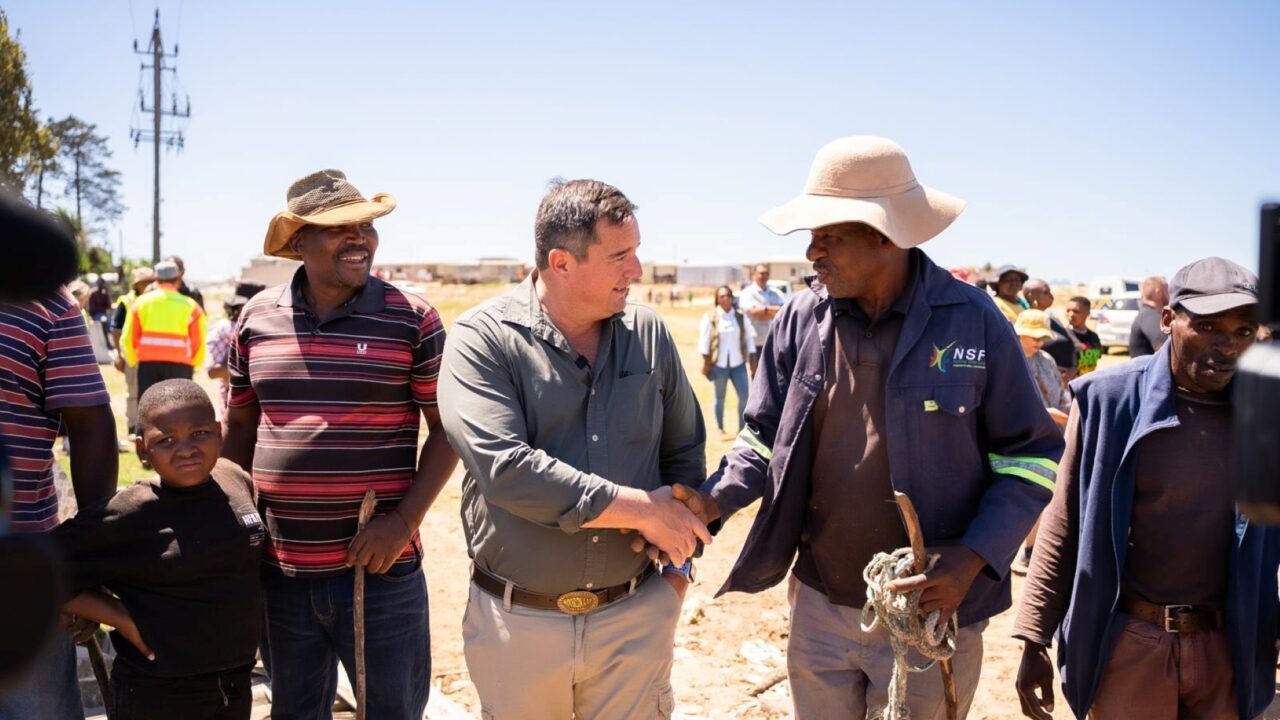
The government has set up a task team of farmer organisations and experts led by John Steenhuisen, Minister of Agriculture, and his department, to deliver the vaccination programme.
Minister Steenhuisen said: “Make no mistake, tackling FMD is a massive challenge, and it will take a collaborative and transparent, sustained effort to resolve.
“FMD has been a reality a long time before we came into government.
“We appreciate the enormity of the impact on farmers, both financially and emotionally.”
It is a mammoth task as the national herd of around 14 million head of cattle must be vaccinated over the next 12 months, requiring some 28 million doses.
Vaccination programme
However, farmers are somewhat sceptical that the vaccination programme will be successful, particularly as not all vaccines being used privately have been approved.

The president said some people want to source their own vaccines, but added it was important that the South African Health Products Regulatory Authority (SAHPRA) is the single organisation that will approve vaccines.
This is to ensure the correct vaccines are sourced for the relevant strains of FMD currently spreading around South Africa.
President Ramaphosa said: “This disease is damaging our economy, resulting in export bans, trade restrictions and devastation of herds.
“The state will facilitate the acquisition of the vaccines centrally to ensure that we get the right vaccine for the particular strain of the virus in South Africa.”
However, not everyone is happy with the rollout of the vaccination programme and indeed Minister Steenhuisen has come under pressure regarding his department’s handling of it.
Some have said the minister has been too slow to battle the disease given that it first hit South Africa during 2019 in the Limpopo Province, but in a smaller scale and was contained.
Exports from South Africa
During 2025, beef exports from South Africa fell by 26%, as countries such as China, one of its top three beef customers, started to ban the meat from entering their markets.
Neighbouring countries such as Zimbabwe and Botswana also imposed restrictions on livestock and meat from crossing their borders, a move now followed by Zambia.

This latest outbreak, now over a year old, is spreading much more rapidly and with more serious consequences.
South Africa’s livestock sector is worth around 95 billion South African Rand (US$5.9 billion) each year.
Cattle account for the majority of that at around 54 billion Rand (US$3.36 billion).
South Africa’s farm organisation, AgriSA, says the situation is bleak for many farmers who may not survive this crisis.
AgriSA chief executive officer, Johann Kotze said: “AgriSA is deeply concerned about the cumulative economic impact if the outbreak is not rapidly contained, particularly for small towns and communities that depend heavily on livestock-related activity.”