

While farmers cannot control weather, market prices or input costs, many of the key drivers of profitability are factors that can be controlled within the farm gate.
“Benchmarking helps farmers focus on those drivers and make decisions based on evidence rather than guesswork,” according to the College of Agriculture, Food and Rural Enterprise (CAFRE) beef and sheep adviser Faith Stewart.
Ronnie Duncan is a sheep farmer from Ballycastle, Co. Antrim, and has successfully managed to use benchmarking to improve his flock performance over the past 30 years.
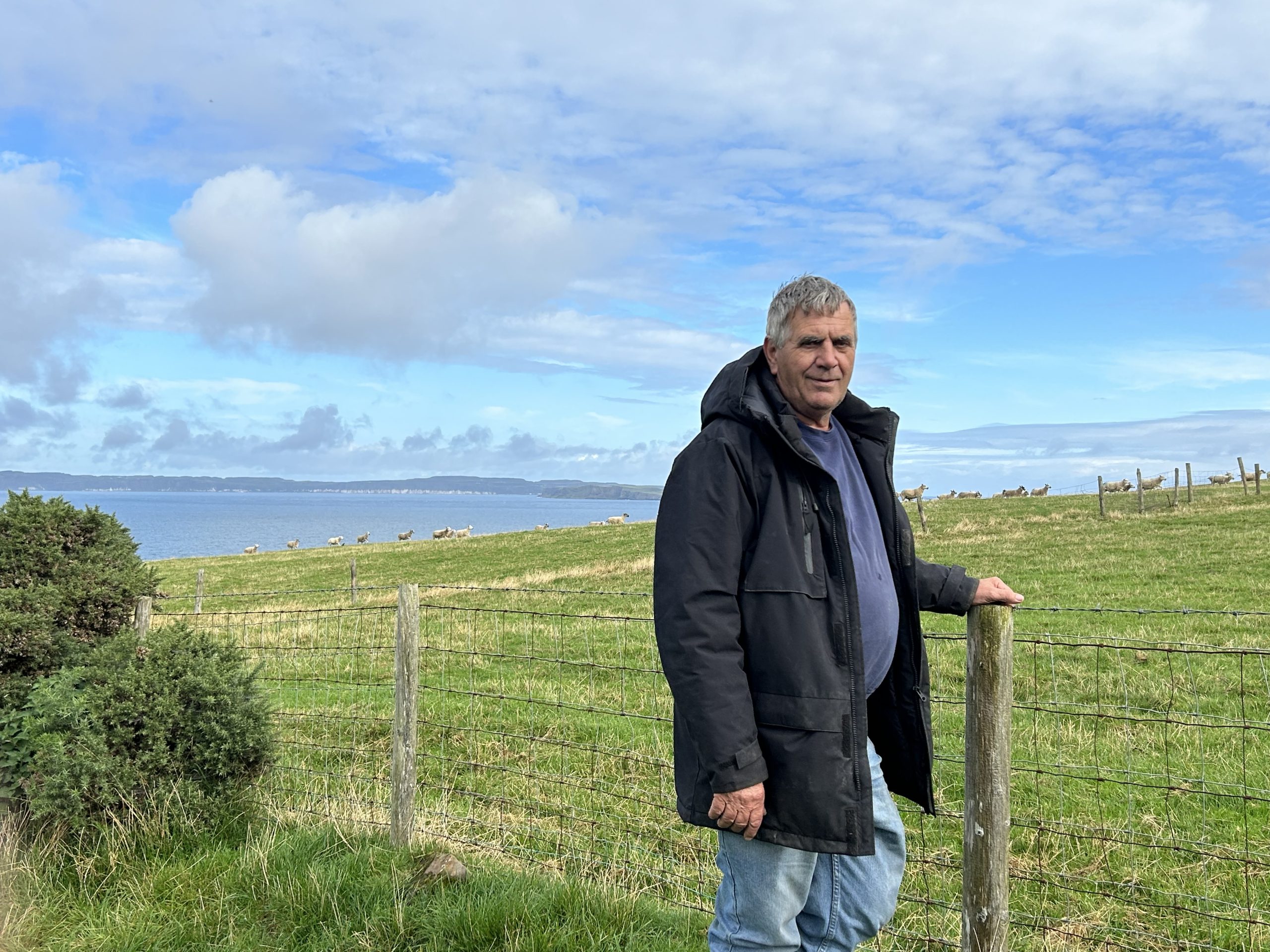
He participates in his local Business Sustainability Group (BSG), where benchmarking plays a central role in reviewing performance and guiding discussion with other sheep farmers.
As a BSG member, farmers have access to benchmarking reports produced by the CAFRE business team.
These benchmarking reports aim to simplify complex information and help farmers focus on what matters most within their own business.
The reports show how an individual farm is performing on a per head, per kilogram and per hectare basis and performance can be compared against industry averages as well as the top and bottom performing farms within each benchmark.
Benchmarking
Ronnie has used benchmarking for over 30 years to track performance, understand trends and assess the impact of changes made on-farm.
He believes benchmarking only delivers value when figures are actively reviewed and used.
“There’s no point collecting data unless you’re prepared to act on it.
"The figures give you the confidence to change things and invest where it really matters," he said.
The CAFRE benchmarking aims to break farm performance into clear financial components including:
- Output: livestock sales adjusted for purchases and changes in stock value;
- Variable costs: Feed, fertiliser and veterinary inputs;
- Fixed costs: Machinery, buildings, insurance and utilities;
- Margins.
Understanding how these costs interact helps farmers see where money is being made and where it is being lost.
Alongside financial results, benchmarking provides practical physical performance measures such as lambs sold or weaned per ewe, concentrate use, lamb weights and carcass output.
Ronnie uses this information to set clear goals for his farm and monitor progress year-on-year.
Comparing his results with other farmers highlighted opportunities to improve efficiency, leading to changes in breeding policy.
By focusing on carcass output per hectare, Ronnie moved from an all-Mule ewe flock to a mix including Texel crosses, improving carcass weights and grading.
Ronnie encourages farmers to use benchmarking to establish a clear baseline, compare performance with others and identify realistic opportunities for improvement.
A strong understanding of production costs allows farmers to target efficiency gains, control spending and plan with confidence.
Faith said: “Benchmarking is not about paperwork or ticking boxes.
"Used properly, it is a practical management tool that helps farmers make better decisions, improve profitability and plan ahead.
"Farmers who take the time to understand their figures and act on them are far more likely to build resilient and profitable businesses.”