

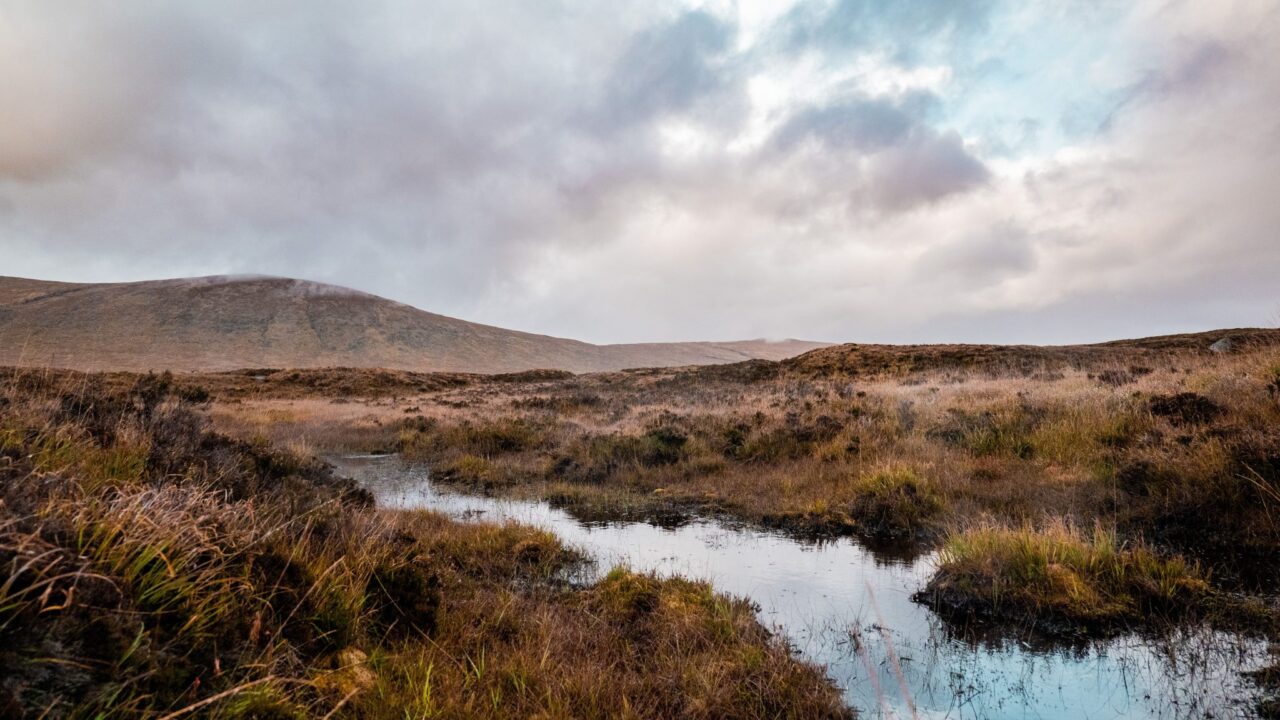
Viruses found in peatlands could play a more important role in carbon storage than previously thought and become indicators of ecosystem health, according to a study.
Scientists from the Universities of Edinburgh and Aberdeen in Scotland and Wisconsin–Madison in the US examined viruses in peatland soils from 66 locations across seven UK peatland sites, comparing natural, damaged and restored areas.
Their analysis revealed that viruses behaved in a similar way in each type of peatland, adapting their behaviour based on the stability of the habitat.
Carbon storage
Changes in viral behaviour affects the dynamics of the soil’s microbiome, influencing which bacterium are present and how efficiently bacteria can process and store carbon, the experts said.
Peatlands, like other types of wetlands, play a crucial role in storing carbon that would otherwise remain in the atmosphere and contribute to global warming.
Previous research has shown that despite covering only 3% of the Earth’s surface, peatlands are estimated to contain up to one-third of global soil carbon due to their oxygen poor conditions that drastically slows down the decomposition and release of carbon into the atmosphere.
However, these fragile ecosystems are under increasing threat from environmental disturbances including climate change, drainage and damage caused by land use, the researchers said.
Some areas are even switching from being carbon sinks to carbon sources.
Ecosystems
The scientists found that in natural peatlands, viruses were able to infect cells of microbes, replicate and then kill the cell before leaving to infect other cells.
This keeps microbe populations in check and the ecosystem relatively stable.
In damaged peatlands, they found that the viruses opt to hunker down in infected cells after replicating rather than immediately killing them.
Through looking at which viruses were present in a soil sample, researchers could determine if a wetland was natural, has been damaged or if restoration efforts are working.
The team believes the patterns of viruses observed across UK peatlands could be applicable on a global scale and as the research continues, they hope to investigate how viruses could be useful tools to influence the restoration of peatlands.
The study, published in Nature Microbiology, was funded by UKRI Natural Environment Research Council, Scottish Universities Partnership for Environmental Research and the National Science Foundation.
Future research
Since microbes including viruses play a key role in regulating greenhouse gas fluxes, “our results suggest that viruses can act as signals of peatland recovery by providing a window into what’s happening below-ground”, Dr. Ashish Malik, co-senior author and Chancellor’s Fellow in Climate and Environmental Sustainability, University of Edinburgh said.
Lead author James Kosmopoulos, a PhD student at the University of Wisconsin, said that viruses are “like a keystone predator in the microbial world”.
“Without them, everything in an ecosystem would be out of whack,” he said.
Meanwhile, Kartik Anantharama, associate professor of bacteriology at the University of Wisconsin, said that bacterial processes produce carbon dioxide and methane from this carbon-heavy, peatland soil.
The professor added: “But the question is: how do they actually do it, and are there any other components that we have missed out on? And that’s where viruses come in.”