

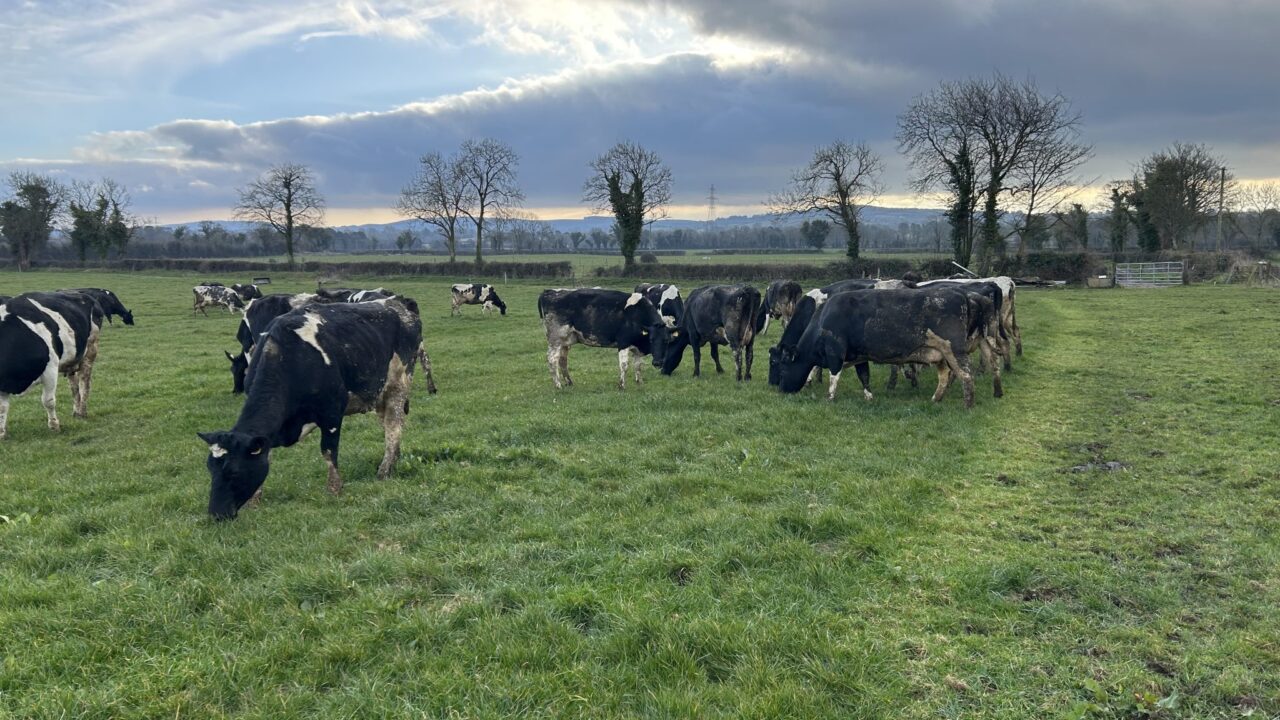
With one of the wettest starts to the year we have seen in a long time, grazing conditions are still in dire states.
Farms that typically get cows out to grass in early February are only just starting to chance a bit of on/off grazing this week.
Meanwhile, wetter farms that usually only get out at this time in a good year are still looking at another two to three weeks minimum before they can get grass in the diet.
The weather has without a doubt created a frustrating start to the season, especially as slurry storage fills and fodder depletes.
However, after last year’s grass growth there should be more than enough contingency silage in most yards.
Is it worth the work?
A lot of farmers have no intention of getting cows to grass during the week, while others who do will be wondering if it worth the work?
If getting cows out means causing severe poaching, then no, it is not worth it.
However, if you have drier land and can get cows out without causing heavy damage, then yes, getting grass in the diet is worth it.
Even for farmers with dry land, grazing may currently seem like more work than it is worth.
But the upside of grabbing a few hours of grazing in drier areas of the farm can be hugely beneficial for milk production, as grass has a rare combination of high feed value in energy and protein.
It is important to remember early grazing does not mean that the cows need to plough through the platform in 20-25 days.
Instead it is about getting the cows used to grazing again while simultaneously meeting their nutrient requirements.
Grazing
Dry farms that can get cows out will need to put measures in place to prevent damage to paddocks and around gap-ways and access points.
Freshly calved cows will require 13kg of dry matter (DM), including forage and concentrates, but their DM intake will increase by 0.8kg until they reach their maximum intake around 10 weeks post-calving.
These farms should be using on-off grazing and back fencing to manage both allocations and damage control.
Farmers need to be ready to take their opportunities when it comes to grazing, as even though the days are getting longer, there is no guarantee the weather will improve.
We may have had a dry March in 2025, but both February and March were wet in 2024, and you may recall the torrential rain we got in March of 2023.
If you do not take your opportunities this spring as soon as the paddocks dry out slightly, you may run into problems such as poor grass utilisation, poor residuals, high covers, and poor quality grass d the rain continues to pour.