

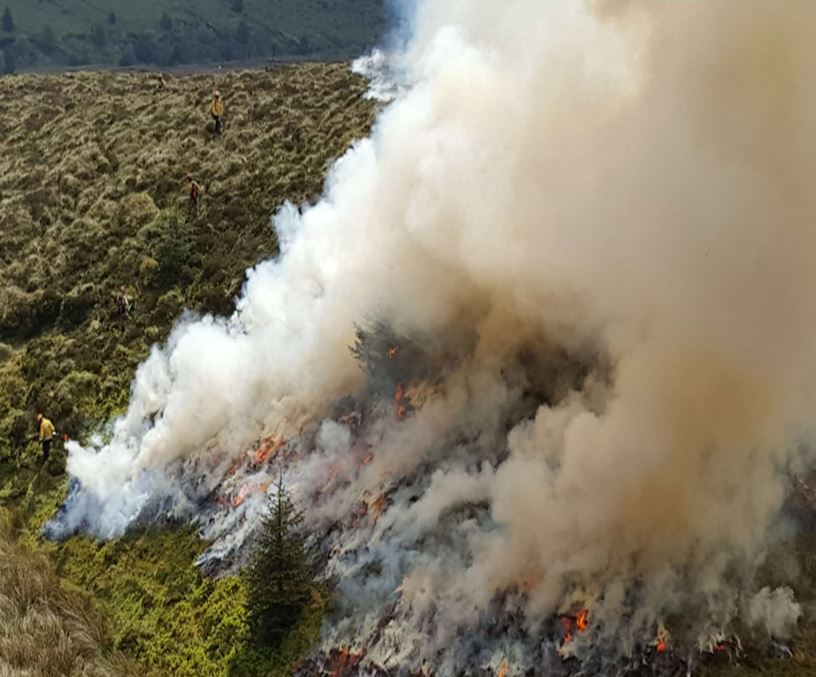
The Department of Agriculture, Environment and Rural Affairs (DAERA), Northern Ireland Fire and Rescue Service (NIFRS) and Police Service of Northern Ireland (PSNI) are asking everyone to be vigilant about wildfires.
Due to spring weather patterns and the state of upland vegetation, DAERA said this year a ‘Yellow’ or moderate wildfire risk will be deemed to exist across all areas that contain dead grasses, gorse and heather.
This default status will remain until the end of the wildfire season in September unless otherwise upgraded by the department.
Wildfires
DAERA said that wildfires endanger Northern Ireland’s people, landscapes, biodiversity, property and infrastructure, while also resulting in substantial public costs.
“Wildfires can have health impacts on peoples respiratory and cardiovascular systems and can also cause injuries and have harmful mental health effects. Children and vulnerable populations may be at increased risk,” the department added.
In Northern Ireland, it is an offence to burn or otherwise destroy any vegetation growing on any land not then cultivated between April 15 and August 31 each year.
Restrictions and consent requirements may apply where these activities have the potential to damage an Area of Special Scientific Interest (ASSI).
When a landowner is uncertain about their legal obligations in these matters, they should consult with Northern Ireland Environment Agency (NIEA) before undertaking burning.

DAERA Minister Andrew Muir issued a public appeal to protect people, property, and nature from wildfires this year.
“We all saw the damage that was done across Northern Ireland last year with devastating wildfires in the Mournes, Slieve Beagh and the Sperrins.
“I would urge everyone to act responsibly by heeding the advice, remaining vigilant and swiftly reporting to the Police anyone they suspect of maliciously starting fires in our countryside,” he said.
NIFRS Area Commander Ryan Thompson said the fire service responded to a significant number of wildfires throughout the spring and summer months in 2025.
He said this placed “intense pressure on our firefighters and our service”.
“As we approach this period again, we urge everyone to support their Fire and Rescue Service by staying alert to wildfire risks and acting responsibly in the countryside. With everyone playing their part, we can help prevent wildfires before they start,” he said.
Criminal offence
PSNI Superintendent Chris Hamill added that “deliberately setting a wildfire is a criminal offence for which you can face prosecution”.
“Where it is found that a fire has been maliciously started, it will be fully investigated by police, and when identified, those responsible can expect to be arrested and brought before court,” he said.
The agencies have issued the following advice due to the risk of wildfires in the coming months:
If you are in the countryside:
- Avoid using open fires in the countryside;
- Only use barbecues in designated areas and never leave them unattended;
- Ensure that barbecues are fully extinguished and cold before disposing of their contents;
- Extinguish cigarettes and other smoking materials properly;
- Never throw cigarette ends out of car windows;
- Be considerate in parking vehicles so as not to impede access by emergency vehicles.
If you are carrying out prescribed burning:
- Burn within the legally permitted period for prescribed burning;
- Ensure you have the necessary consents or permissions to carry out the prescribed burning;
- Ensure Northern Ireland Fire and Rescue Service is notified of the burn and when the burn is completed;
- Ensure necessary precautions are in place to contain and manage the burning;
- Landowners wishing to carry out prescribed burning during the legal period are legally required to notify in writing all forest owners within one mile, between not more than one month and not less than 14 days before the date on which it is intended to burn the vegetation.