

A significant number of farmers are now choosing new grass varieties on the basis on their disease resistance potential.
This was one of the points highlighted at Northern Ireland’s first UK Dairy Carbon Network (UK-DCN).
The event was hosted by the Williamson family, who farm close to Scarva in Co. Down.
Speaking at the event, Germinal’s David Little addressed the issue of the growing disease pressures that now exist in a significant number of grass swards.
He said: “Conditions such as Crown Rust are now a real challenge on a significant number of grassland farms.
“Spraying swards with a fungicide is not a commercial option, leaving farmers with the choice of re-seeding.
“In such circumstances, the option of investing in new grass varieties with a high disease resistance potential to Crown Rust becomes obvious.”
The Germinal representative went on to confirm the role of high sugar grasses in both improving ruminant output and the mitigation of gas emissions: specifically ammonia.
He explained: “Higher energy intakes improve the conversion of dietary nitrogen into animal protein, thereby reducing the potential for nitrogenous gas emission levels.”
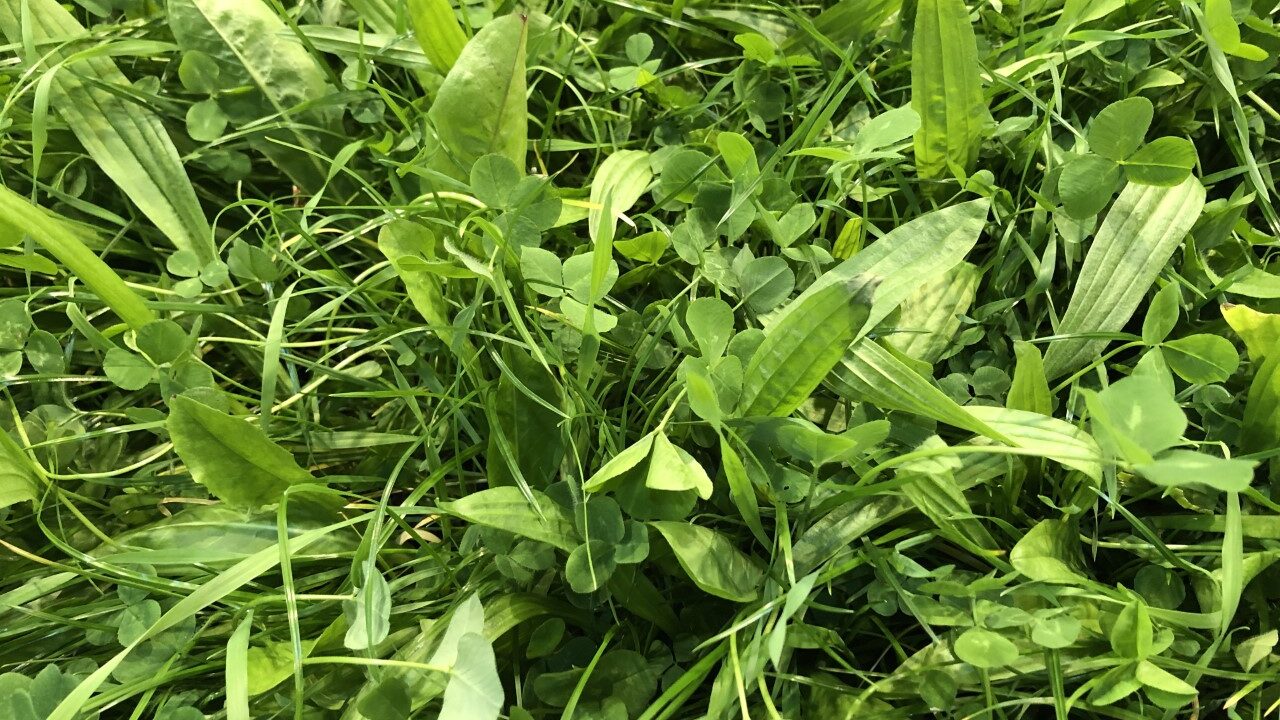
More generally, Little pointed to the role for white and red clovers in tandem with multispecies swards in helping to improve the efficiency of production levels on dairy farms reduce greenhouse gas emission levels.
The use of clover brings with it the key benefit of maintaining sward output while applying lower levels of nitrogenous fertilisers.
Re-seeding
Meanwhile, re-seeding is the key starting point to an investment in improved grass and clover varieties.
The Germinal representative also flagged up the opportunity provided by re-seeding for farmers to actively address the issue of soil fertility and specifically correcting pH imbalances.
“Re-seeding also allows farmers to actively address weed infestation challenges that have built up in grass swards.”
While acknowledging the growing use of min-till establishment systems in a re-seeding context, Little indicated that the use of the plough still offered many cultivation related advantages.
He continued: “Grass re-seeding will deliver a full repayment on the investment made within a relative short period of time.
“Driving this response is a combination of factors: the higher growth rates achieved by new and improved grass varieties, the higher sugar contents within these forages, and the role of legumes in fixing atmospheric nitrogen.
“New and improved swards also hold out the prospect of grazing seasons being extended in both the early spring and at the back end,” Little added.