

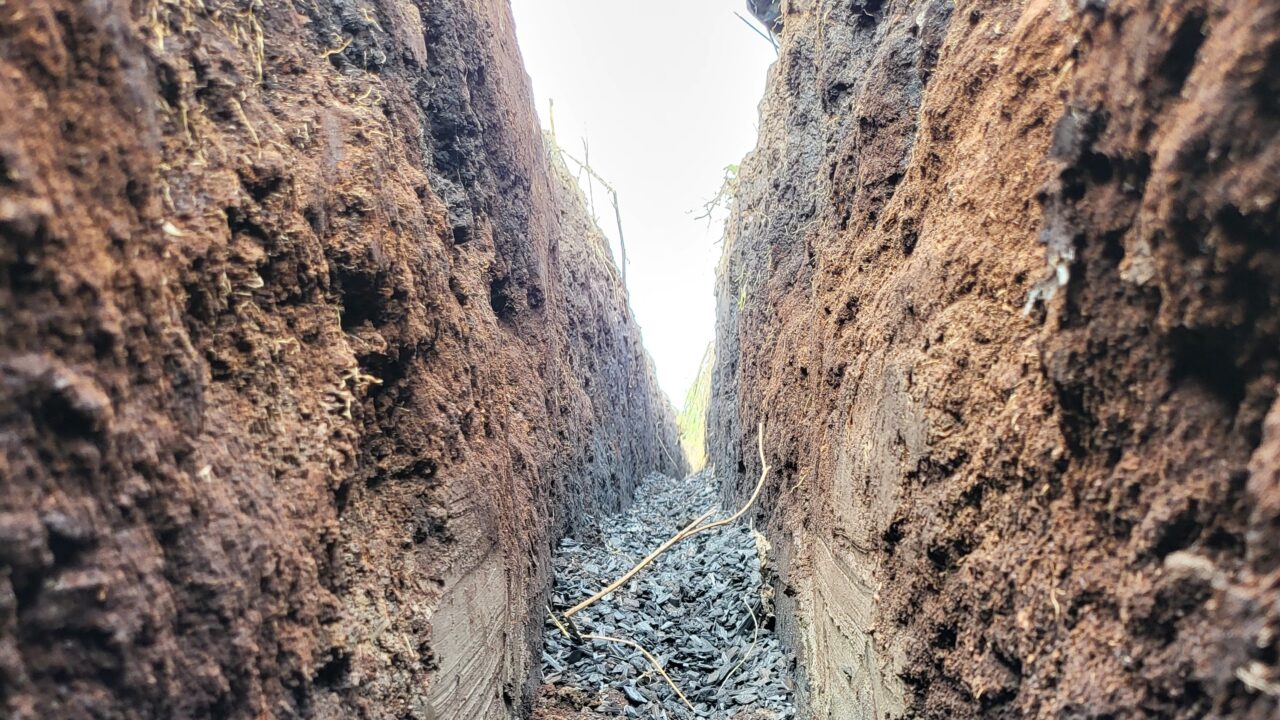
An on-farm trial is currently underway in Pawlett, Somerset, where a farmer-led project is exploring whether biochar-based underground drainage systems can help protect peat soils, improve water management, and reduce carbon emissions from agriculture.
The BioFlow Phase 2 project – which is being spearheaded by second-generation farmer Will Barnard – is installing conduits of biochar underneath peat soils to see if this will “regulate water movement while locking carbon into the ground long term.”
The project aims to investigate whether biochar, which is a stable form of charcoal, could provide a practical alternative to conventional drainage methods by allowing water to move through the soil without accelerating peat degradation.
BioFlow Phase 2 is being funded through the Department for Environment, Food and Rural Affairs’ (Defra) ADOPT programme, which is being delivered through Innovate UK to “fund farmer-led innovation projects.”
Trial
Based on the Somerset Levels and Moors, ADOPT described the trial’s location as “one of the UK’s most environmentally sensitive agricultural landscapes.”
The landscape, which Barnard farms on, predominately consists of peat soils, which served as the inspiration for the project.
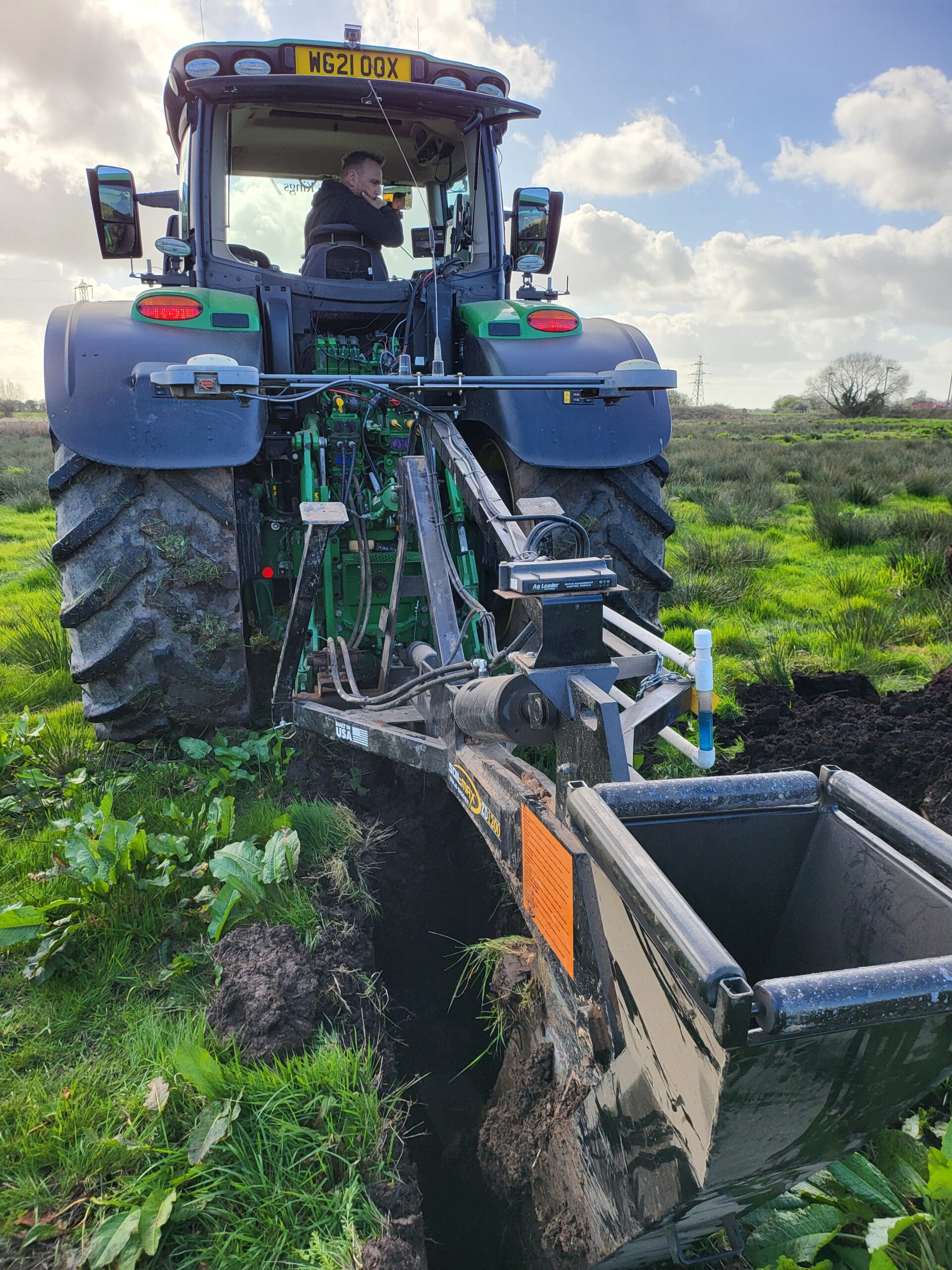
Barnard said: “I wanted to make sure the next generation would still have the opportunities I had growing up farming here.
“Looking at the way the landscape was changing, it became clear we needed to think more holistically about how we manage water, soils and farming systems if we want them to remain viable for hundreds of years to come.
“The Somerset Levels are incredibly special, but once peat soils dry out, they stop holding water and the soil erodes away,” he said.
Considering peat’s nature to decompose once drained, Barnard began his project with one simple question – “Could we create a system that helps manage water while protecting the peat itself?”
The earlier phase of the project reportedly demonstrated “that the mole draining biochar works and that water could successfully move through underground charcoal channels.”
The current and second phase of BioFlow now intends to assess performance in greater detail, including practical installation methods and longer-term impacts on soil function and water retention.
ADOPT
ADOPT (Accelerating Development of Practices and Technologies) offers grants from between £50,000 to £100,000 to collaborative projects, involving farmers, growers and foresters, which are designed to improve productivity, sustainability and resilience across the agricultural sector.
Barnard noted that the farmer-led structure and focus on innovation is what drew him into the ADOPT programme.
He added: “What appealed to me about ADOPT was that it recognised farmers as innovators.
“Farmers spend their lives solving practical problems, but we don’t always see ourselves as being part of research and development.
“ADOPT created the space to take an idea from the farm gate and test it properly, while still keeping the work grounded in real farming conditions.”