Dairy Focus: Making best use of grazing land on a Norway farm

Most dairy farmers have received that fateful call from neighbours, or indeed police, informing them the cows have broken out and are on the main road, or destroying someone’s garden.
Chaos ensues, and after the wanderers have been driven back to where they belong, the blame games begin as to who forgot to repair that broken fence.
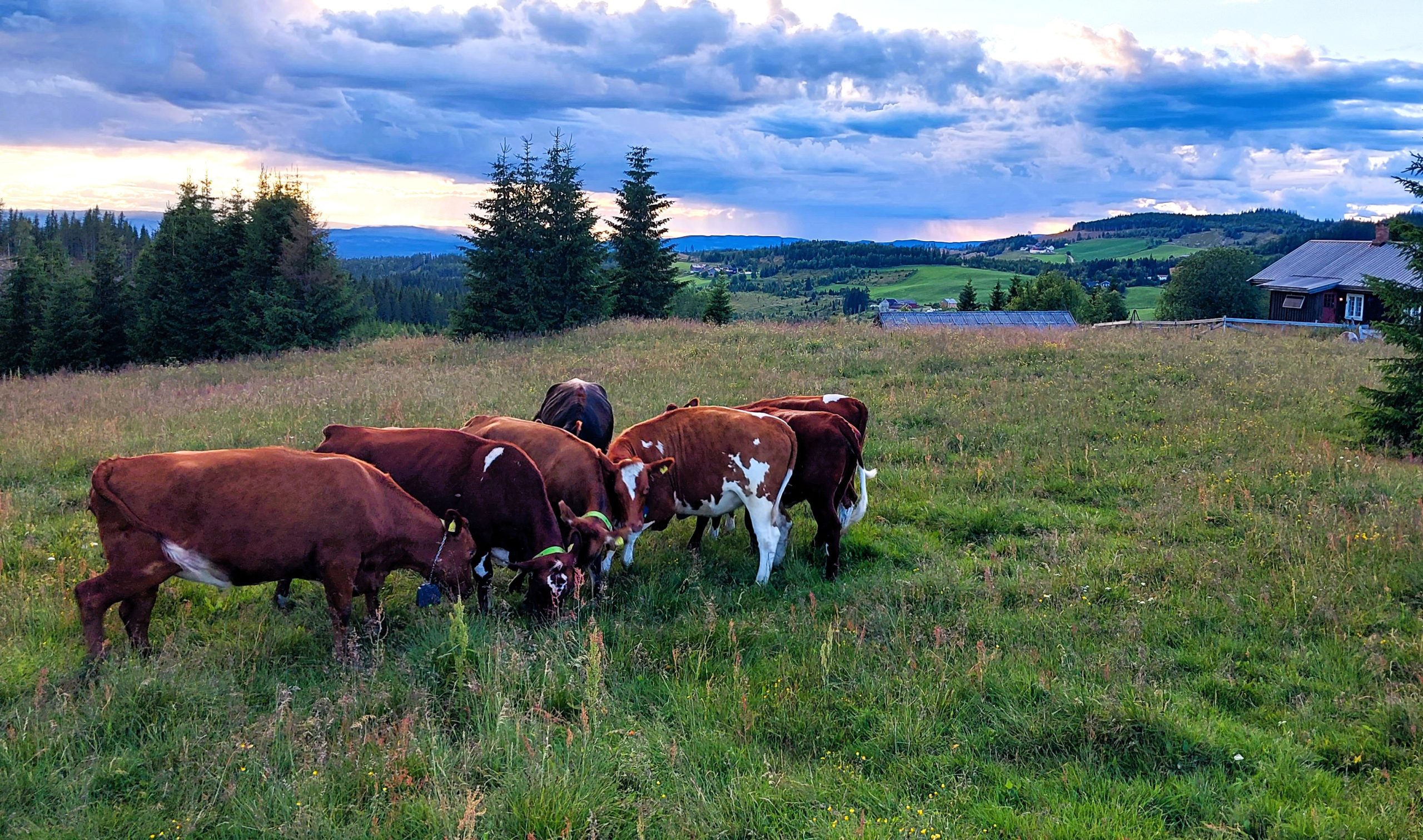
However, thanks to cutting-edge modern technology, cows can now be kept in the desired areas using no physical fencing at all, and are given a stern warning, digitally, if they try to abscond.
Grini Farm in Norway is one of those farms that is benefiting from virtual fencing, which is also allowing it to graze more areas of the farm with youngstock.
This farm dates back to the 1500s and is now run by Maren Grini and her husband Hans Olav, with their three young children, Ingebjorg (4), Margit (3), and Olav (6 months).
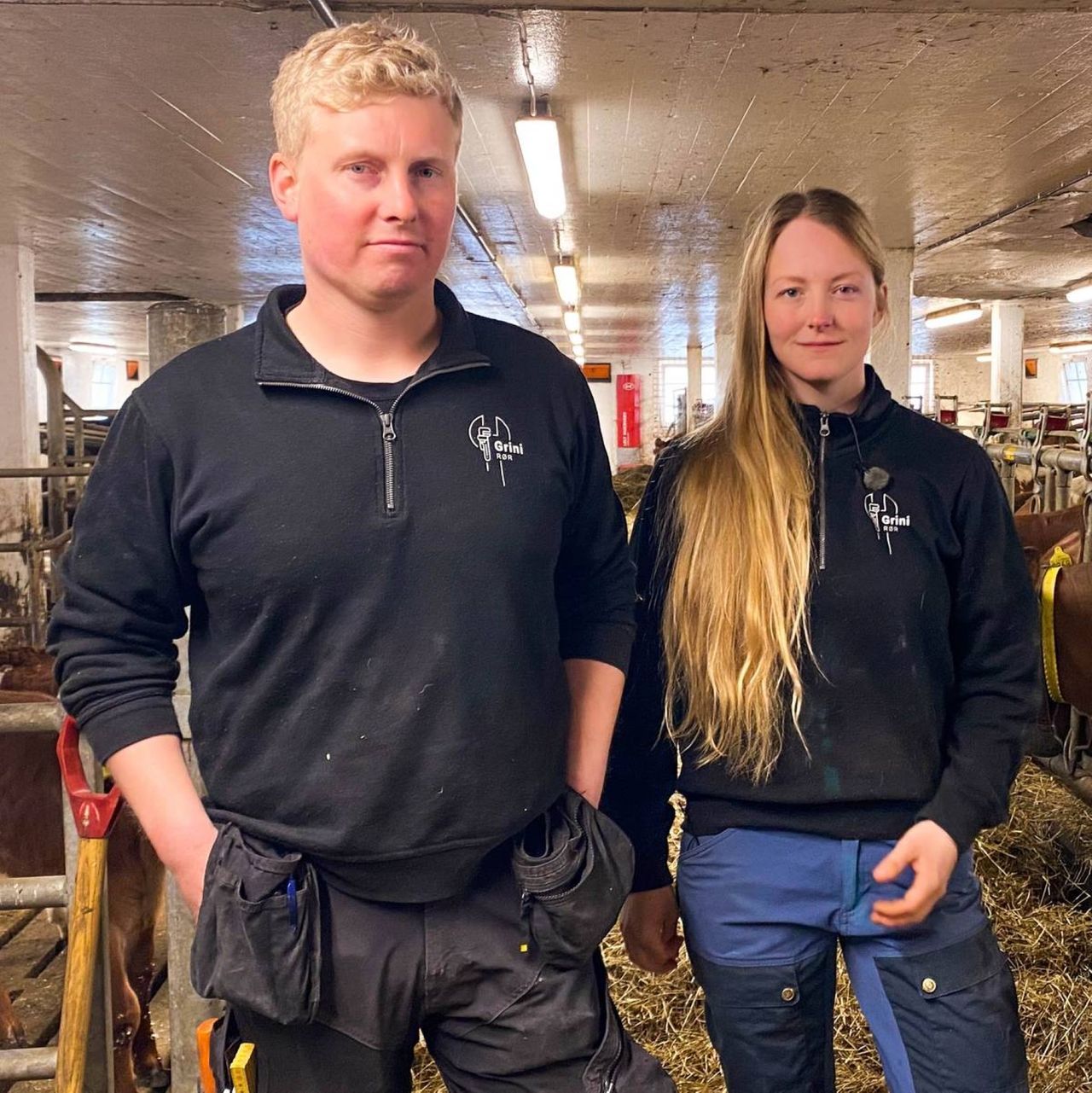
Maren works full-time on the farm, located in Ringsaker municipality, helped by her husband who also runs his own plumbing business.
Hans Olav’s father also helps out part-time.
Maren said: “We bought the farm in 2018, and converted to organic production the next year.
“The farm is primarily based on dairy and grass production, although in good years we also grow some grain.
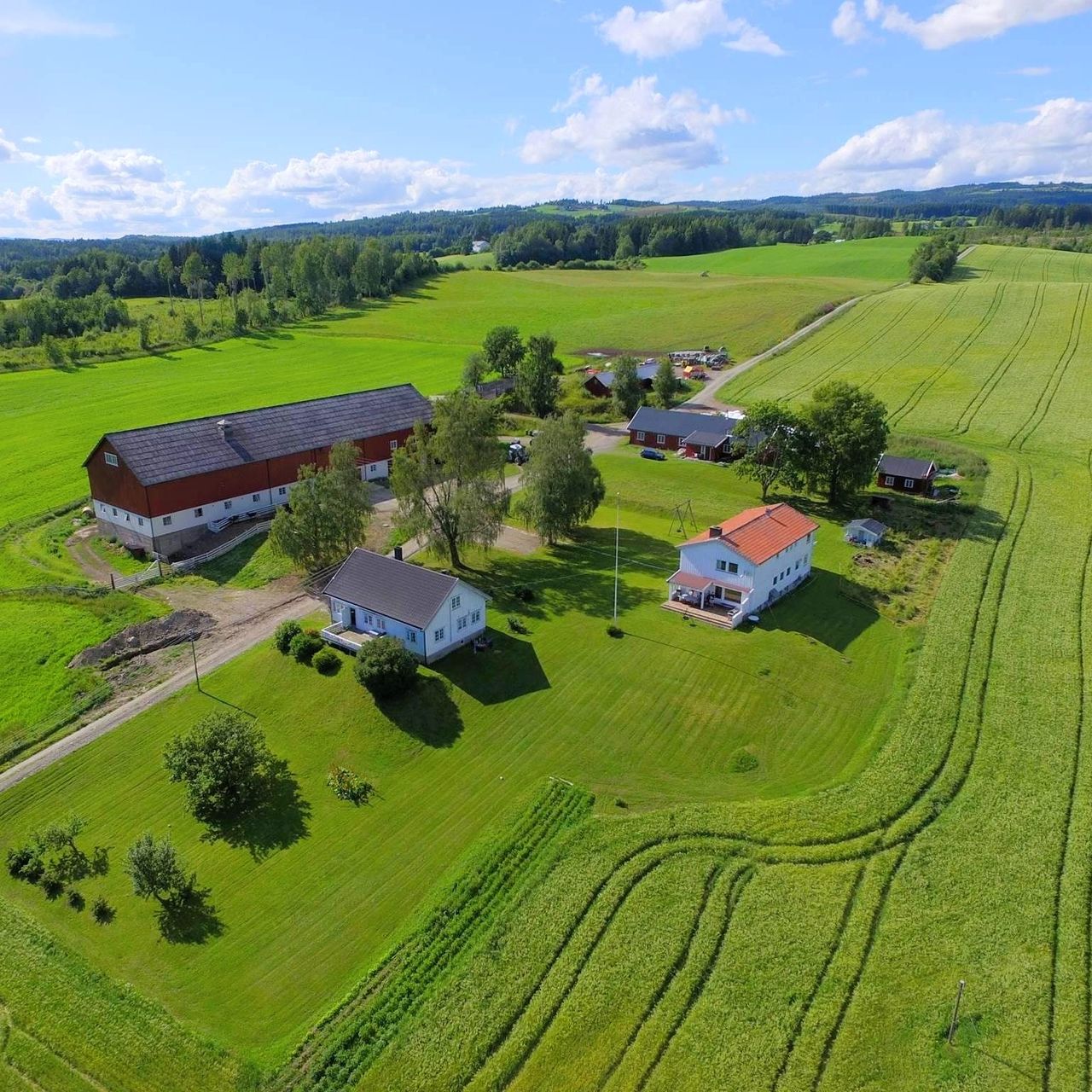
“The property extends to around 500ac, of which 408ac are forest and outlying land, and 92ac are fully cultivated.
“In addition, we rent another 60ac of fully cultivated land from a neighbouring farm.”
Dairy farming in Norway
The Grini family run a milking herd of 40 Norwegian Red and Jersey cows with an additional 70 dry cows and youngstock.
The farm has the capacity to produce 300,000kg of milk annually.
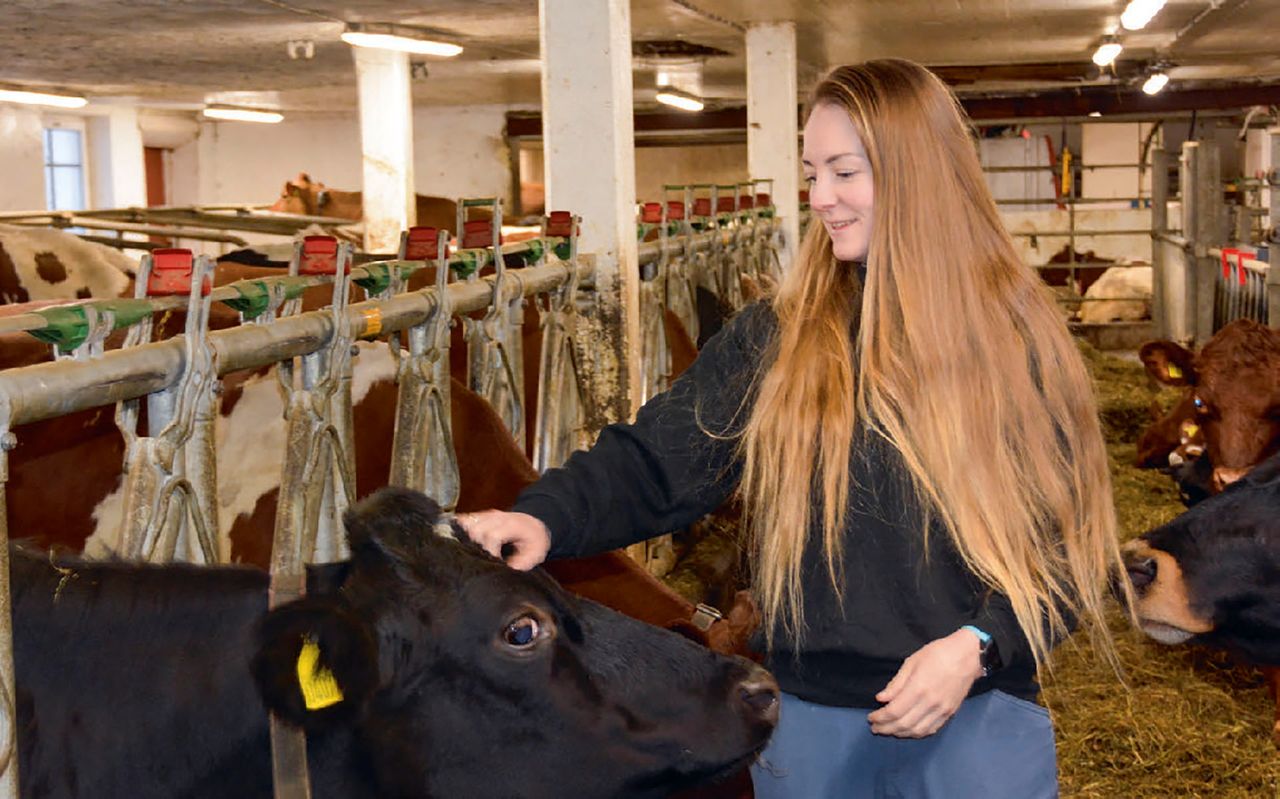
Maren said: “We use a Lely A5 robot to milk the cows in a renovated barn from 1960.
“We began converting it from a tie-stall to a free-stall system the year after we took over the farm.
“In terms of feeding the cows, in 2024, we achieved a roughage intake of 80.3MJ (11.3 feed units of milk) per cow per day and used 23kg of concentrate feed per 100kg of milk.”
This resulted in an average milk price of NOK8.38 (£0.63 or €0.73) per litre and an ECM (energy corrected milk) of 7,540kg.
The average butterfat is 4.6% and average protein is 3.7%, with the milk going to Tine, which is a cooperative with a legal obligation to collect the milk.
Breeding
Maren follows a strict breeding plan and selects artificial insemination (AI) bulls with genetics tailored to the individual needs of each cow. All heifers are genomic-tested.
The herd is mostly spring calving as the milk price is highest in Norway during the summer.
All bull calves are sold for finishing at three months-of-age.
Maren said: “We aim for a good proportion of Jersey due to their higher fat and protein content, and because their smaller size suits our barn well.
“The cows’ diet consists mainly of feed roughage from a grass seed mix that includes timothy, ryegrass, meadow grass, red clover, and white clover.
“In recent years, we have also tested more grass species to adapt better to changing weather conditions, including tall fescue.
“All our forage is stored in round bales, and we handle the entire harvest line ourselves.”
The forage is chopped with a bale cutter and fed out with a mini loader.
All concentrate feed is given in the robot, and the cows receive long-acting mineral boluses.
Grazing
Maren operates an intensive grazing system for the dairy cows with 14 paddocks and daily rotation.
The cows graze rye and ryegrass, which is mowed several times throughout the grazing season from early July until the end of September.
“Our calves are provided with unrestricted access to milk from birth,” Maren said.
“Initially, they remain with the dam for up to five days before being transferred to so-called nurse cows for the entire milk-feeding period, which lasts three months.
“Each nurse cow is responsible for three to four calves and is housed on deep straw bedding.”
Maren and Hans Olav have invested heavily in the barn to make it modern and more efficient.
In addition, they have invested in NoFence virtual fencing to make better use of the farm’s land.
“We have a lot of forest and outlying land that had not previously been utilised,” Maren explained.
“Using this technology allows us to extend the grazing season and save roughage.
“We bought our first 15 NoFence collars in 2023, and we can’t imagine ever using traditional fencing for youngstock and heifers again.
“Due to our snow-rich winters and forests full of moose, our traditional physical fences required a lot of repair every year.”
The cattle have apparently taken to the technology very easily.
They get a sound signal when they approach the virtual boundary, followed by a small electric pulse if they continue.