How does a new cross-border project plan to create ‘climate-friendly’ beef?

Underpinning the new cross-border project researching “climate-friendly beef” is the recognition that economic and environmental sustainability must be achieved in equal measure within Ireland’s cattle sector.
In other words, if farmers are not making profits their businesses will not have a viable future.
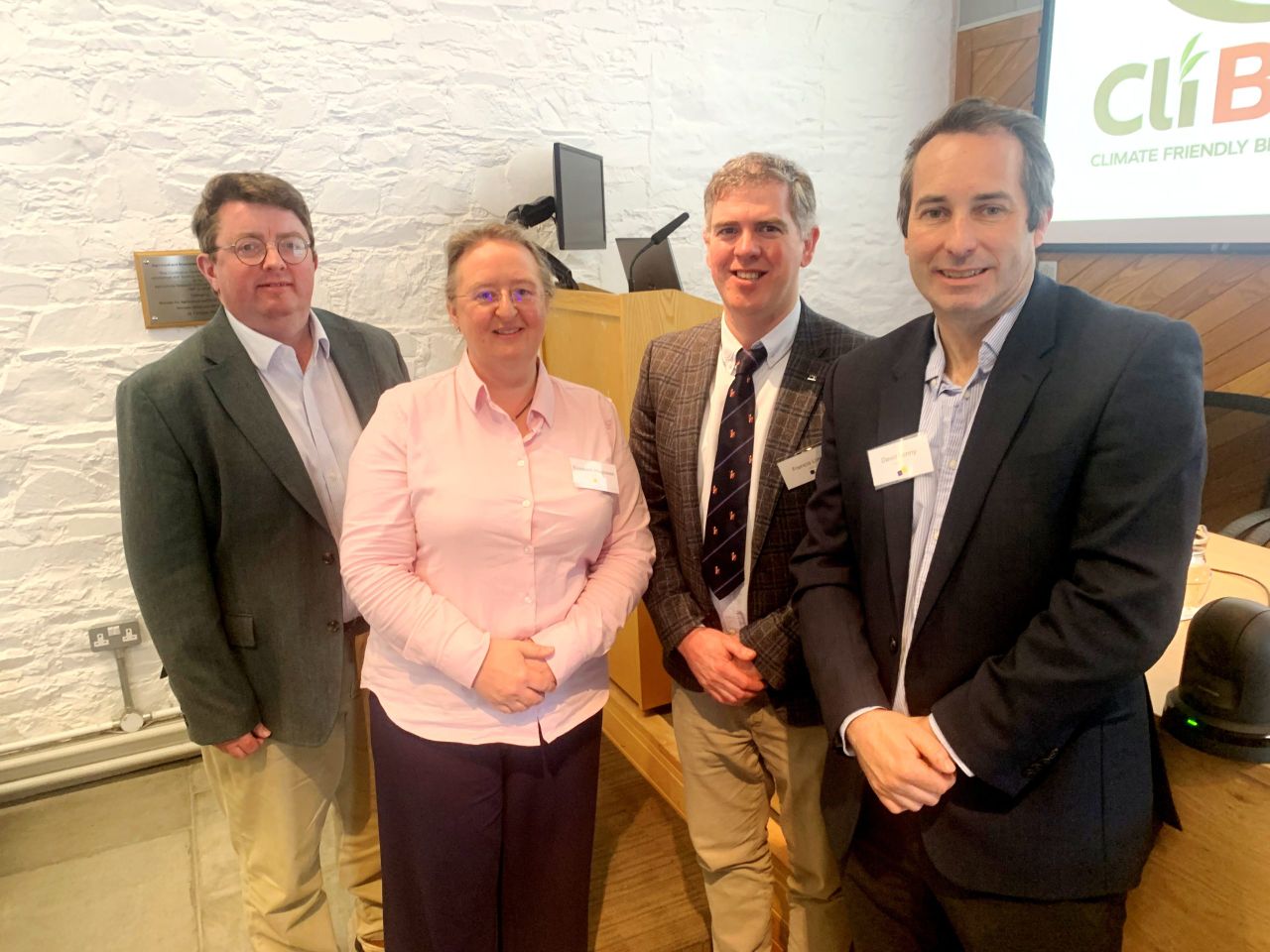
Teagasc’s Dr. David Kenny spoke at the launch of the new CliBeef research project, pointing out that improvements in efficiency at farm level will be key drivers in this regard.
In practical terms, this means finishing cattle at younger ages while taking the same approach when it comes to calving down replacement heifers.
Making this happen will be the feeding of quality forages at all time to animals, which will entail the securing of higher grassland management standards.
Where the issue of rumen-generated methane is concerned, the Teagasc research scientist confirmed that a wide range of possible inhibitors will be assessed under the auspices of the CliBeef initiative.
However, those that are deemed to be of potential significance must have a consistent impact that can be measured within the parameters of the ‘National Carbon Inventory’.
They must also be safe from a human consumption perspective.
CliBeef
CliBeef brings together the resources of the Agri-Food and Biosciences Institute (AFBI), Teagasc, AgriSearch and Queen’s University Belfast.
A grouping of 12 beef farmers, located across an equivalent number of counties on both sides of the border will be involved in the commercial ratification of the research-driven themes that emanate from the new project.
The redmeat processing sector is not formally involved with CliBeef.
However, courtesy of his presentation to the launch event, AFBI’s Dr Francis Lively stressed that its role will be pivotal in determining the consumer compliance of the potential recommendations coming from the project.
Reducing methane emissions
Finding ways of reducing the methane emission levels generated by cattle while at grass will be one of the key issues addressed by scientists involved with the CliBeef initiatives.
Options already under scrutiny in this context include the use of multi-species swards and the feeding of willow to suckler cows.
A replicated grazing trial carried our by AFBI scientists, involving beef steers, showed a 27% reduction in methane output when cattle grazed willow compared to ryegrass swards.
This effect is largely attributed to bioactive compounds in the willow, such as tannins.
These chemicals inhibit methane-producing microbes in the rumen.
AFBI’s work also shows that willow tannins also shift nitrogen excretion form urine to animals’ dung.