

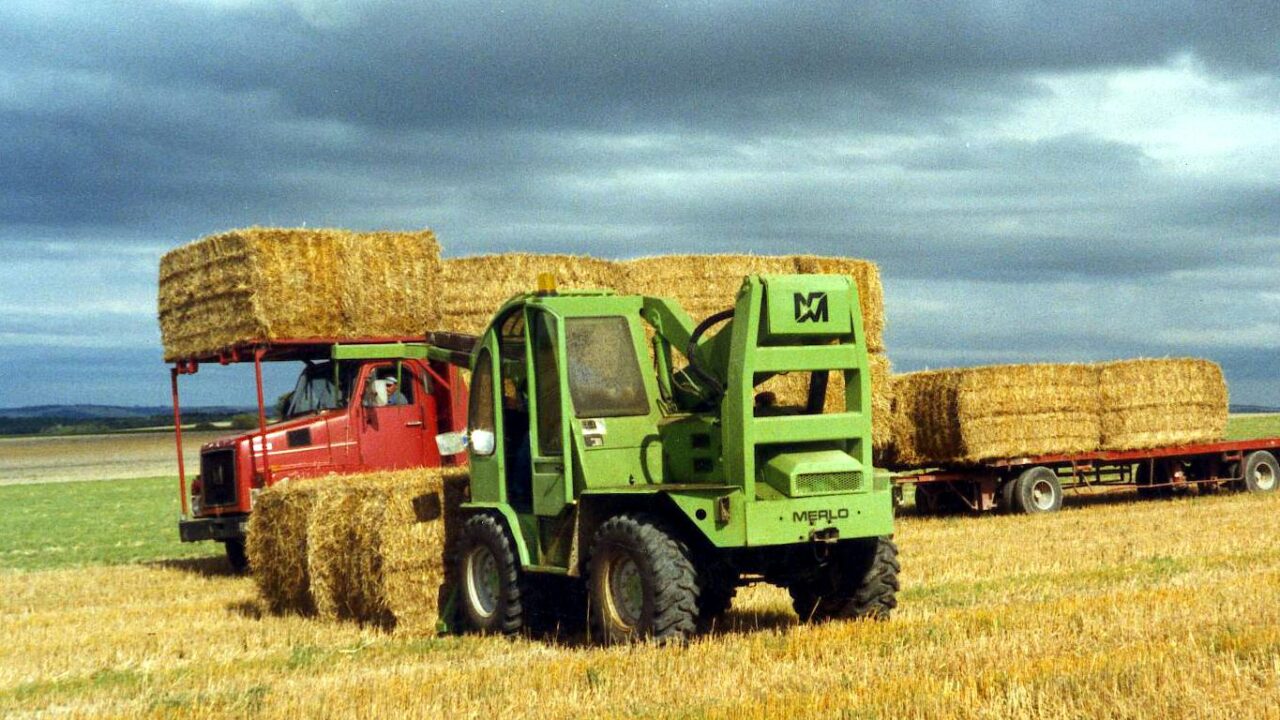
The telehandler has been around now for almost 50 years and its utility is well established with an ever increasing number of farmers turning to them in Ireland while in the UK they are virtually ubiquitous.
The reason is clear enough; the increasing size of farms and farm machinery required materials to be moved by bulk, grain in sacks had already faded from the scene due to the massive increase in yields brought about by the green revolution and inputs such as fertiliser, pioneered by the ICI Dumpy, were to follow.
Tractors of the 1970s were smaller than today with standard gear boxes rather than a shuttle, making them cumbersome and slow for front end loader work, especially if not blessed with power steering, as many of them weren’t.
Into this space stepped Merlo with its SM30 telehandler in 1981, debuted at the Paris agricultural show that year and to be celebrated at LAMMA 2026 in January.
Something old, something new
Merlo will be showcasing the original SM30 alongside the newest Turbofarmer models at its stand at LAMMA show and believes that a comparison between its first model and other machines on the market at the time underlines its legacy of innovation.
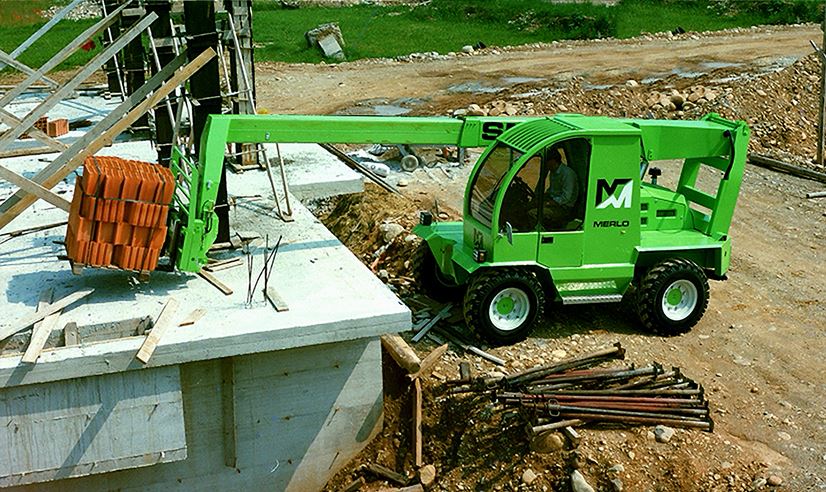
The company points out that when it unveiled the SM30 it introduced a range of features which were groundbreaking at the time and set the pattern for this type of machine, a format which is still with us today.
At its launch it offered permanent 4WD, four-wheel steering, and equal-sized wheels, delivering superior traction and manoeuvrability compared to conventional rough terrain forklifts and other telehandler designs.
Rough terrain forklifts of the time were little more than a tractor turned backwards so the fitting of a hydrostatic transmission relived the operator of working the clutch while when back and forth.
Safety first with the SM30
Merlo also claims that beyond its technical specifications, the SM30 represented a new philosophy in machine design and that is the maximising of vision.
Although the cab looks dated now, the curved front windscreen allowed overhead loads to be more easily viewed and this, combined with the stability and traction, set new standards of safety.
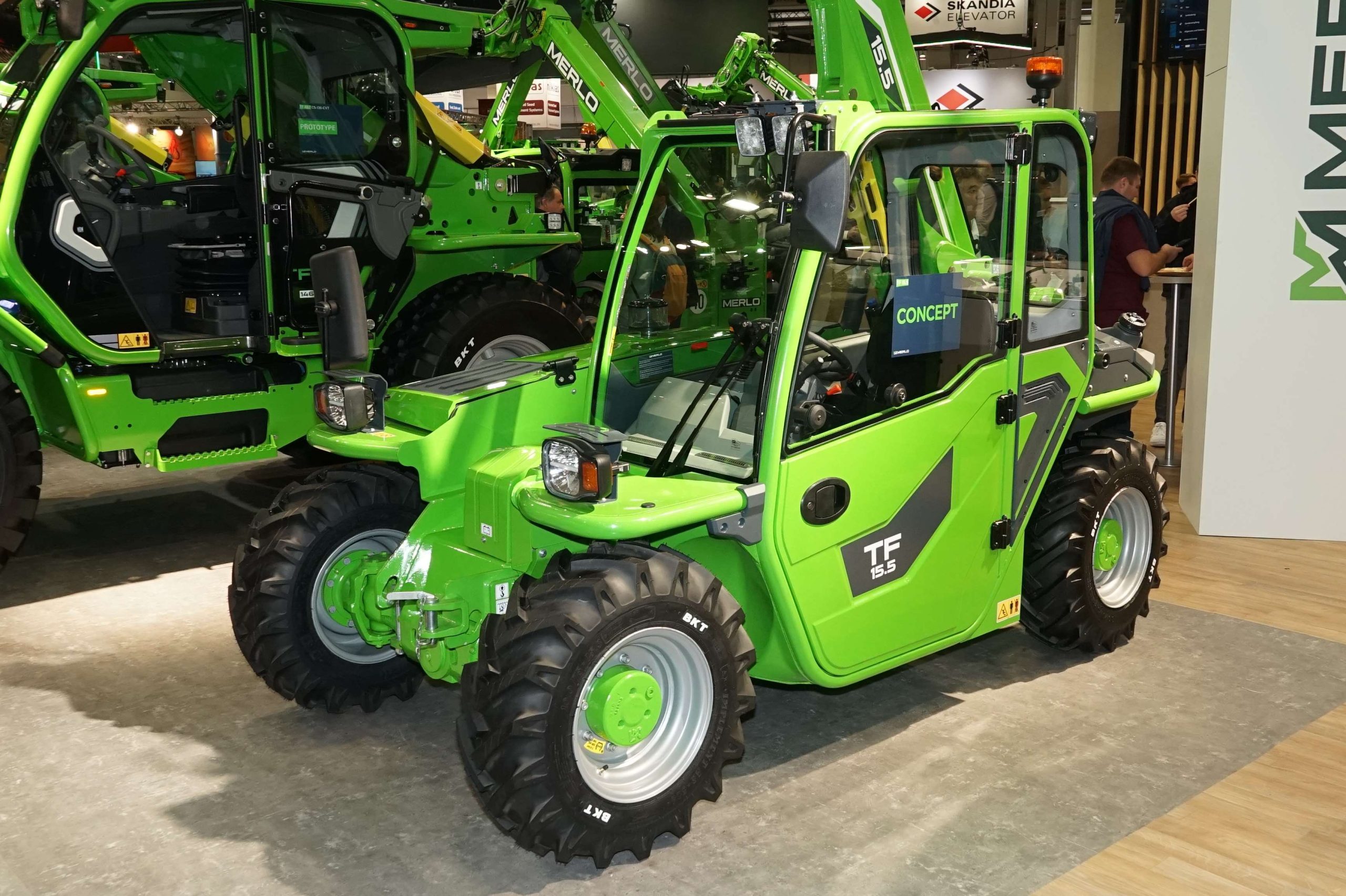
The machine type has evolved over the years, more power is provided, lift capacities have increased and there is a far wider selection of models to choose from to suit the needs of individual farmers.
Safety has also increased with greater stability due to the the lowering of the boom mounting point, there is extra glass in the cab to further improve vision while sensors can now indicate overloads and other out of parameter situations.
