

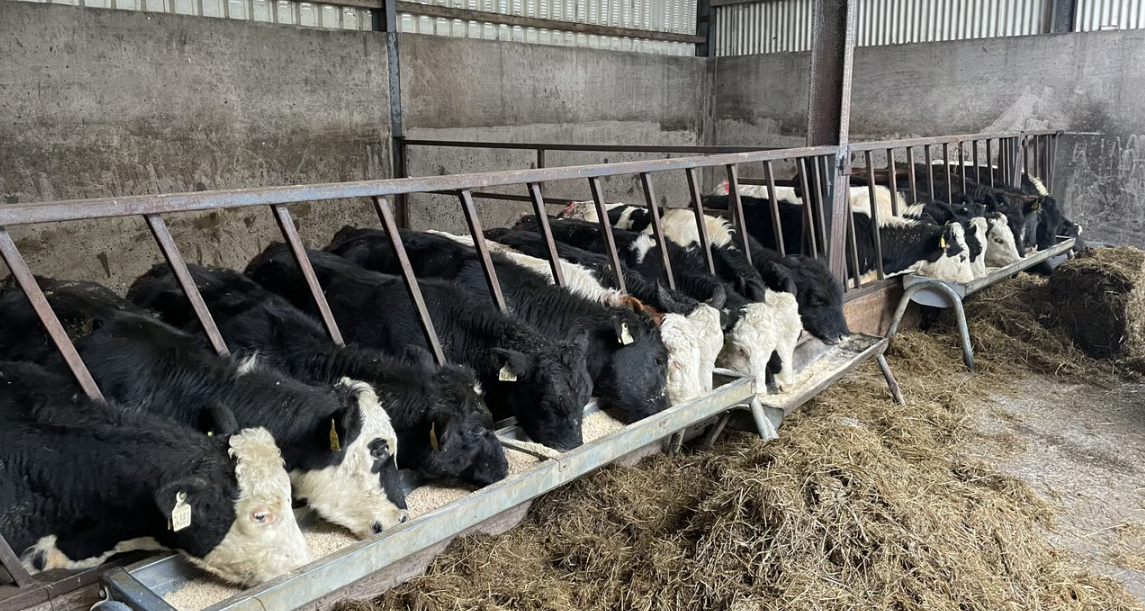
Improving air movement and ventilation in existing cattle sheds can be achieved in many cases without incurring significant construction costs.
Ventilation is rarely an issue in open-fronted cattle sheds and is more often a problem in sheds with cattle pens on either side of a central feed passage.
Some of the tell-tale signs of poor ventilation in cattle sheds include cobwebs accumulating inside shed rooves and walls.
Blackened timber or damp surfaces and a warm, stuffy atmosphere in the shed are also indicators of poor ventilation.
While effective shed ventilation is essential, avoiding draughts is also important, as these can be particularly harmful for calves and weanlings.
Shed doors left open continuously or used as air inlets often create draughts.
Doors should only be opened in mild weather and never relied upon for continuous airflow, according to Teagasc.
Often, the best place to start is to look at features immediately surrounding the shed such as trees, hedges or other obstacles that may be blocking airflow.
Most cattle sheds built in more recent times will have an air outlet at the apex of the shed and air inlets at the eaves of the shed.
Certain air inlet materials will allow more fresh air in than others. According to Teagasc, the typical porosity levels of inlet materials are as follows:
- Vented sheeting – 11%;
- Yorkshire boarding – 20%;
- Gale breaker – 35%;
- Mesh – 50%.
If there are no features surrounding the shed reducing airflow and the roof ridge is allowing sufficient stale air to exit from the top of the shed, then looking at making changes to the inlet source is advisable where issues with ventilation remains.
Fresh air is an effective disinfectant for housed cattle, and effective natural ventilation systems tend to work best for most common Irish beef systems.
A cattle shed with plenty of natural light and fresh air circulating effectively will, naturally enough, help to improve animal comfort and health.
