

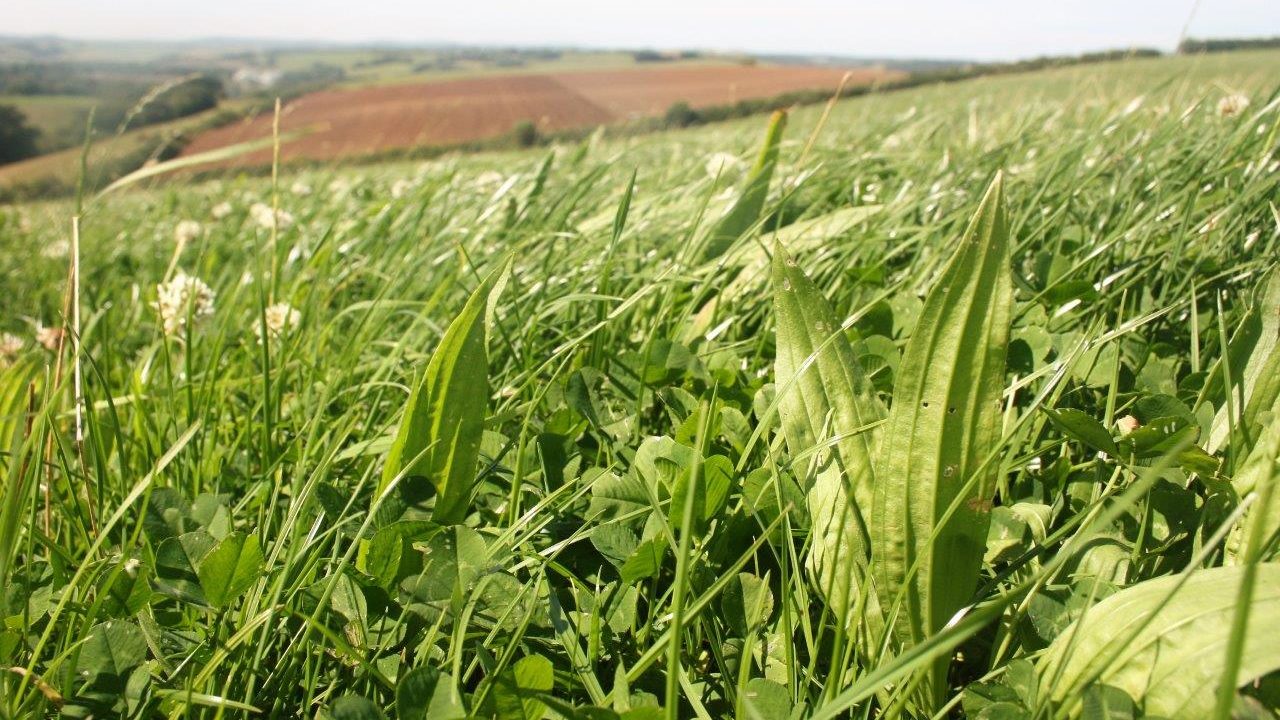
Higher plant diversity in agricultural grasslands increases yields with lower inputs of nitrogen fertiliser.
That is the main finding of a landmark, international study led by Trinity College Dublin (TCD), published today (Thursday, December 4) that paints a picture for more sustainable agriculture.
The research shows that under warmer temperatures, the yield benefits of more diverse grasslands further increase.
According to TCD, this highlights the climate adaptation potential of multi-species mixtures in an era where the global climate crisis is driving rising temperatures in many countries.
The research, published in leading journal Science, outlines the findings of a common experiment conducted across 26 international sites that spanned a wide gradient of temperate climates and local conditions.
The ‘LegacyNet’ sites include some in Ireland, as well as others in Europe – from Denmark to Italy, The Netherlands and the Czech Republic – and further afield, from China to the US, Canada and New Zealand.
Multi-species swards
Sown productive grasslands (used to supply forage for livestock or as a ley in a crop rotation) typically comprise low species diversity.
Two widely used grassland practices comprise: 1) a single grass species (monoculture) managed with high inputs of synthetic nitrogen fertiliser; and 2) a two-species grass-legume combination that receives lower inputs of nitrogen fertiliser.
In this study, the researchers considered whether adding more species (up to two grasses, two legumes, and two herbs) to these grasslands and creating ‘multi-species mixtures’ could maintain or improve yields while reducing the reliance of nitrogen (N) fertilisers that have negative environmental impacts.
The results showed that multi-species mixtures achieved high yields due to strong grass-legume and legume-herb synergistic interactions – the yield of the mixtures was much greater than the sum of the parts.
- Sowing two grasses, two legumes and two herbs each in approximately equal proportions can optimise yield and nitrogen-saving benefits;
- The six-species multi-species mixture produced on average 12.3t/ha per growing season, representing an 11% increase in yield compared to the grass monoculture that had more than double the N fertiliser, and an 18% increase in yield compared to the two-species grass-legume combination.
According to the researchers, this confirms that multi-species mixtures outperform two widely used conventional practices in agricultural grasslands.
Professor in Statistics at TCD’s School of Computer Science and Statistics and senior author of the research, Caroline Brophy said: “We urgently need to make agricultural grasslands more sustainable, but at the same time it is crucial that these systems maintain or improve agronomic performance and can adapt to changing climates.
“This is an internationally relevant issue as agricultural grasslands are globally distributed, economically important and threatened by the climate crisis.
“The big-picture message from this work is that transitioning to multi-species mixtures in agricultural grasslands can drive more environmentally sustainable forage production, improve yields, and enhance adaptation to a warming climate. That’s a win-win-win.”
PhD candidate at TCD School of Computer Science and Statistics and the first author of the research, James O’Malley added: “A major strength of our study lies in the broad geographic and climatic spread of sites in our experimental design, which spanned 26 different locations across Europe, North America, China and New Zealand.
“Having a common experiment at many sites enhances our statistical power and greatly improves the generality of our results.
“Statistical models applied to our multi-site data showed that sowing two grasses, two legumes and two herbs in equal proportions was a reliable strategy for delivering high yields across sites, and the yield benefits of multi-species mixtures compared to less diverse grasslands were even stronger under warmer climates.”
Meanwhile, senior researcher at Teagasc, Dr. John Finn, a co-author of the research, said: “Across a variety of sites and environmental conditions, our study shows conclusively that six-species multi-species mixtures are not only better yielding than grass monocultures with higher inputs of nitrogen fertiliser, but they also outyield combinations of perennial ryegrass and white clover.
“This research provides farmers with the knowledge to better design grassland leys (2-3 year duration) by sowing approximately equal proportions of grasses, legumes and herbs.
“For longer term grasslands, it shows the high potential benefit of grassland management strategies to maintain those proportions over time. Ultimately, we show that multi-species mixtures deliver more yield from less nitrogen fertiliser.”
Research
This research is part of the ‘LegacyNet’ network of researchers which was founded and is co-Directed by Prof. Caroline Brophy, Dr. John Finn and Dr. Carsten Malisch, a tenure-track assistant professor at Aarhus University, Denmark; support for LegacyNet was provided by the institutions of all participating member sites.
The research was also supported by several funding agencies, including Research Ireland (via the Frontiers for the Future programme); the Department of Agriculture, Food and the Marine (DAFM), and the Department of Agriculture, Environment and Rural Affairs (DAERA); the European Union’s Horizon 2021 doctoral network programme under a Marie Skłodowska-Curie grant; and a TCD postgraduate research studentship.
