

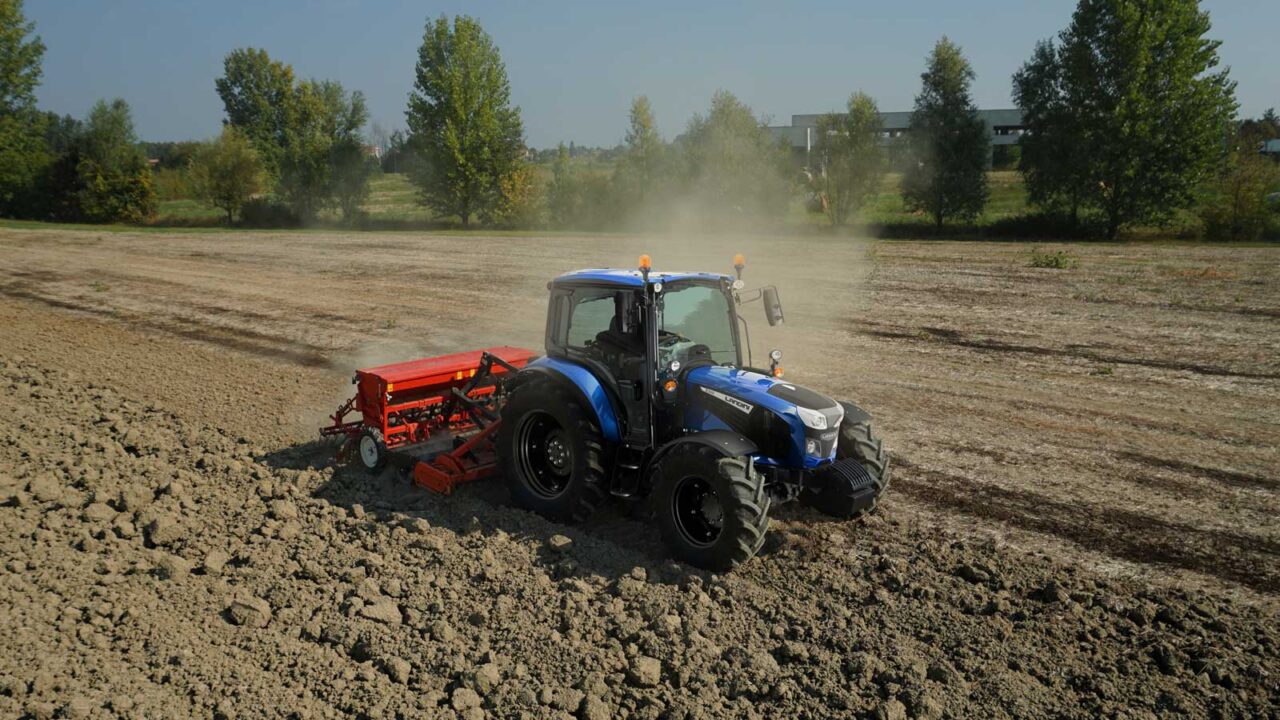
Most winter cereal crops are looking very well at the present time across the UK, according to the Agricultural and Horticultural Development Board (AHDB).
Given the very good autumn drilling conditions, the prospects for 2026 winter crops are reported to be very good.
Overall, summer 2025 in the UK was hot, sunny, and relatively dry. As a result, soils entered the drilling window very dry and hard, enabling good access for drilling machinery but low seedbed moisture.
September was wetter than average across most of the UK, helping to soften seedbeds, and drilling continued without disruption.
October began warmer than average and was generally wet, although with some regional rainfall variation. All in all, according to the AHDB, drilling progressed well in all regions and countries of the UK.
November started mild and wet. Storm Claudia brought additional rainfall in mid-month, with little impact other than rebalancing the soil moisture deficit, arriving after the drilling campaign and with most spraying completed.
Late November then saw widespread snow, ice, and sub-zero temperatures, bringing any remaining drilling to a close.
Crop development
A large carryover of nitrogen from fertiliser applied between April and June has been reported, which AHDB said may have contributed to this season’s rapid crop development so far.
Management of dense, forward crops may be required if mild conditions persist throughout the winter.
Crop potential for harvest 2026 looks promising, and there is hope that higher yields will help offset current low prices.
However, the AHDB said it is important to remember that farmers have experienced two very difficult financial years.
Low margins are a challenge, with depressed malting and milling premiums adding pressure.
Winter wheat
The drilling of winter wheat crops is almost complete (97%), with 41% drilled in September, 50% in October, and 6% in November.
According to the AHDB, this is the best crop establishment seen for many years.
The earliest crops are at the tillering stage, and some P and K applications have been carried out when conditions allow.
Significantly, manganese deficiencies have been reported, especially in the south-east of the UK, where crops are forward and require more of the element than usual.

Pre-emergence herbicides were applied to crops with blackgrass or rye-grass pressure.
Where both pre- and post-emergence herbicides were applied, generally crops are currently clean, with very little blackgrass present.
However, more blackgrass and brome have been reported in crops following some Sustainable Farming Incentive (SFI) options.
Low aphid and slug pressure is reported. Some gout fly has been reported, but this is mainly in early-drilled wheats.
The main disease pressure is from mildew on the most advanced crops, but the AHDB said this has been curtailed by recent frost. Yellow rust has been reported on some varieties.
Meanwhile, the prospects for the 2026 wheat crop are reported to be very good, with 83% of the crop rated good-to-excellent.
In comparison to last November, when 18% of crops had yet to be planted or emerge, just 44% of the crop was rated good-to-excellent.
Winter barley
The drilling of winter barley is now complete. AHDB is confirming that 64% of the crop was drilled in September, 34% in October, and 2% in November.
Establishment is good, and an estimated 54% of crops nationwide are now tillering, according to the AHDB.
Where nutrition is concerned, manganese is needed on many crops.
Growers are reporting that there is good weed control overall, with only a few crops containing broadleaf weeds where no herbicides were applied.
Grass weeds have been reported. However, fields with very high infestations have been re-drilled where necessary.

Gout fly and aphids have been reported in some areas, but any impacts on the crop have yet to be seen.
Net blotch has been reported at low levels. Mildew has also been reported, particularly in the south-west of the UK.
Prospects for 2026 winter barley are reported to be very good, with 89% of the crop rated good-to-excellent.
A year ago, with drilling almost complete, just 57% of winter barley was rated good-to excellent.
Winter oats
All of the intended winter oat area has been drilled, of which 34% was completed in September, 65% in October, and 1% in November.
Significantly, manganese deficiencies have been reported for some crops. Growers are reporting that broadleaf weeds are starting to emerge, the AHDB said.

Meanwhile, pest pressure is also generally low.
There is less gout fly activity in oats compared to wheat and barley and there are generally no slug problems. Aphids have been reported but are not widespread.
Meanwhile, very good prospects have been reported for winter oats, with 88% of the crop in good-to excellent condition and just 1% left to emerge.
This is a marked improvement compared from the 52% rated good-to-excellent in November 2024, when 11% of the crop had yet to emerge.
Winter oilseed rape
An estimated 72% of the UK’s winter oilseed rape (WOSR) area was drilled in August, with another 27% in September, and 1% in October.
Despite dry conditions during drilling, establishment has been remarkably good and much better than in recent years, the AHDB said.
However, in the Eastern region, it is reported that earlier crops are not as good as later drilled. Some WOSR crops are showing manganese and potassium deficiencies in places.
Most crops have some broadleaf weeds and grass weeds, but the large canopies are effectively shading them out.
Grass weeds are currently being targeted with propyzamide. Thistles, mayweed, and groundsel have been observed.

Cabbage stem flea beetle (CSFB) and winter stem weevil adults are reported, with CSFB particularly noted in Yorkshire.
Slug grazing has occurred in pockets rather than on a large scale. Fortunately, according to the AHDB, pigeons have yet to cause any significant problems.
Phoma is apparent on older leaves but has not reached treatable levels, though it is now too late to consider treating as plants are large.
Mildew was around for a few weeks but has mostly dried up now, the AHDB said. There is also minimal light leaf spot present.
Following good yields in 2025 there has been an increase in WOSR area for 2026 harvest.
Prospects are looking optimistic currently for WOSR crops, with 82% of the crop rated good-to-excellent. A year ago, 73% of the crop was rated good-to-excellent.