

The Potash Development Association (PDA) is highlighting the need for tillage farmers to retain soil nutrient reserves, despite the continuing challenge on income levels over recent years.
Crops take up very different amounts of phosphate (P) and potash (K) during growth. But they all need a readily available supply in the soil at key times during the season.
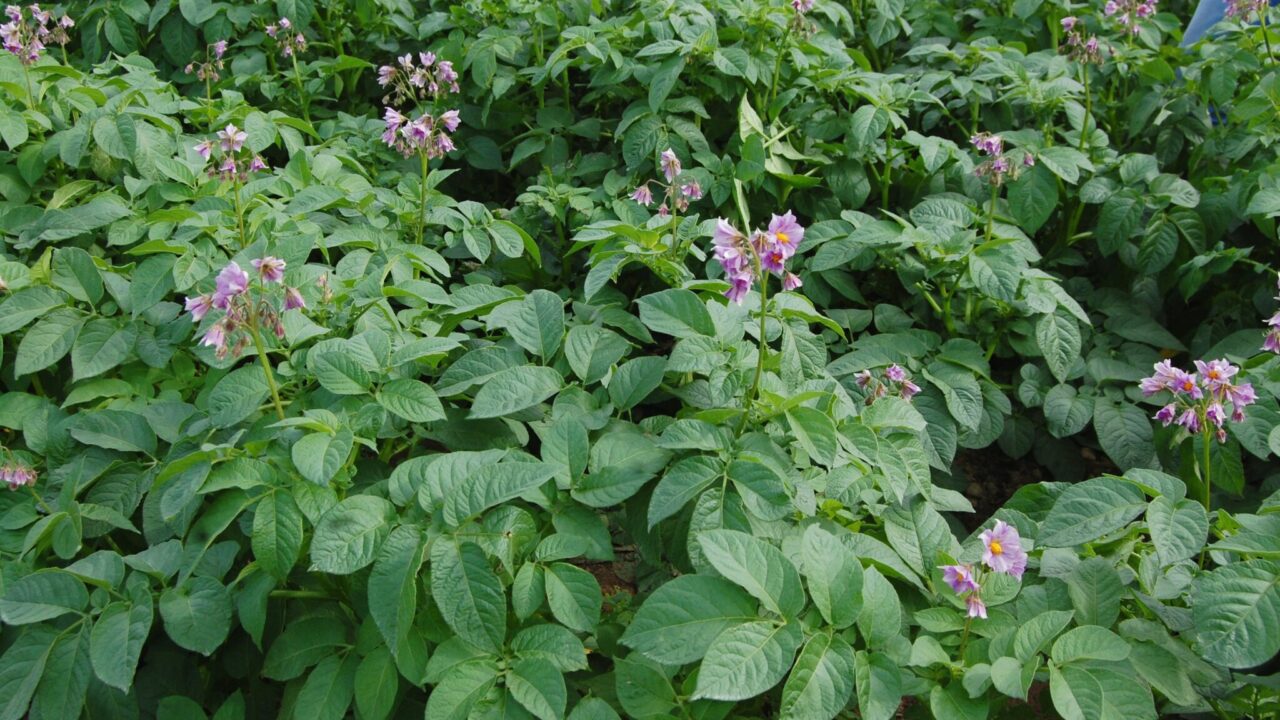
For potatoes, two-thirds of the potash requirement is taken up in the six weeks after plant emergence.
For winter cereals a small amount of phosphate and potash are needed for establishment, but most is taken up in the period between tillering and ear emergence, during canopy expansion.
During periods of rapid growth, crops can take up as much as 10kg K2O/ha each day from the soil solution.
With such large daily requirements, soils need to be well supplied with nutrient to allow for these levels to be released from exchange sites (clay particles and organic matter).
Soil nutrient
Research at Rothamsted through the 1960s and 1970s showed that, on many soils, potash reserves accumulated from applications of fertilisers and organic manures increased crop yields compared to those obtained on similar soils but without such reserves.
However, there is no need to continually build up reserves.
Yields of crops will follow the law of diminishing returns, i.e., as exchangeable P and K in soil increases, then yield will increase rapidly at first and then more slowly until it reaches a maximum beyond which there is no further increase in yield despite further increases in exchangeable P and K reserves.
The indices at which yield approaches close to the maximum can be considered the critical value.
Below the critical value the loss of yield is a financial loss to the farmer. Above the critical value, there is no justification for further increase in the available P or K because this is an unnecessary expense.
Current UK recommendations for phosphate and potash on arable soils are to maintain the soil at P Index 2 and K Index 2- for most crops and at P Index 3 and K Index 2+ for potatoes and vegetables.
Thus, if the crop rotation on an individual field includes potatoes and/or vegetables the soil should be maintained at these higher indices.
This is because the phosphate and potash fertilisation policy should apply to the whole rotation of crops on the farm and it is most important to maintain soil fertility for the rotation, according to the PDA.
Once the soil has been brought to the appropriate index for the rotation it should be maintained by replacing the amount of P and K removed in the harvested crop.
The last 40 years have seen a decline in phosphate and potash fertiliser inputs, to the point that most arable crops are now in a nutrient balance deficit, the association outlined.
Even accounting for the input from manures, the PDA said this declining use will have an adverse effect on soil fertility and on the production of economically viable crop yields of acceptable quality.