

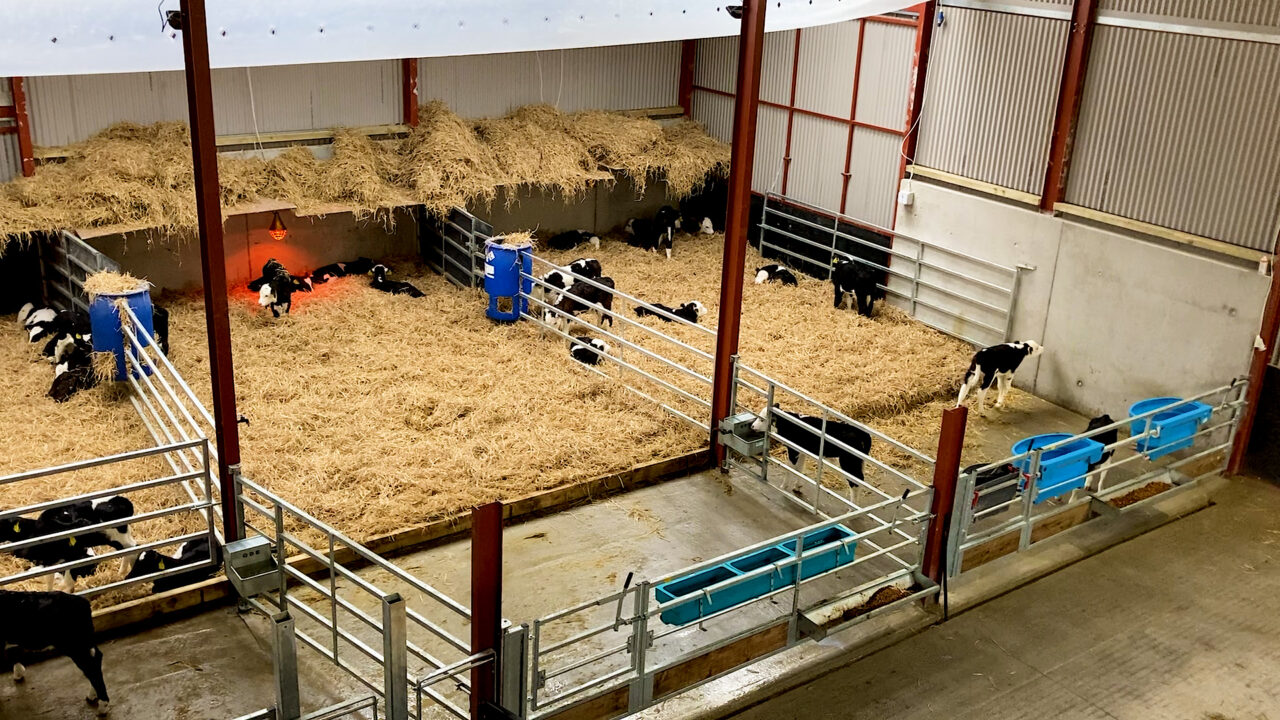
With the calving season rapidly approaching for spring calvers, getting the sheds, equipment and facilities ready must be bumped to the top of the ‘to do’ list.
It’s easy to let the month to slip away, but by preparing for calving in advance you can relieve stress on both yourself and the cows, allowing for an easy, clean and relaxed calving.
Putting this preparation task on the long finger will only come back to bite you once cows start calving down, as well as making tasks such as disinfecting virtually impossible.
A lot of farmers will already have these sheds prepared, but for those who do not, now is an ideal time to do so as the weather is not ideal for outdoor tasks and the farm is that bit quieter while cows are dry.
As well as that, it is important to continue upkeeping hygiene in dry cow housing as cows re-enter high risk periods for mastitis ahead of calving.
Calving shed
Cleanliness in calving sheds is critically important so neither the cow or the newborn calf with its low immune system do not contract infections.
If not done so already, sheds need to be be properly power-washed, removing all dung from the pens before a thorough disinfecting.
The presence of dirt will prevent the disinfectant from working properly and could allow pathogens to survive.
When disinfecting, ensure you use a use a product from the DAFM-approved disinfectant list, and follow the product’s instructions for contact time.
Once the disinfection process is complete, bed the pens with a thick layer of straw.
Remember – it should be thick enough for you to kneel in without your knees getting wet.
Each pen should have enough space for the calves to be comfortable. If the pens are overcrowded, calves will be stressed and will not thrive.
Calves under three weeks-of-age need a minimum of 1.5m2.
Once they reach about 70kg, they should be allocated a minimum of 1.7m2, but this should be nearer to 2m2 with loads of air space (at least 7m3).
Calving sheds also need to be well-lit, well-ventilated, and have an adequate supply of clean water prior to the calving season.
Have a clean pen available to move cows close to calving into, and have a calving gate in place for difficult calvings or sick animals.
Equipment
Ensuring you have all of the necessary equipment ready and easy to access ahead of the season is also important, whether that be ordering more disposable globes and ear tags, or replacing a broken calving jack.
Taking a look at what supplies are already on the farm, and making a list of everything that is needed should be done now so you can get orders in before the rush.
Below is an example of some of the things you will need for the calving season;
- Disposable plastic gloves (long and short);
- Gel and paper towels;
- Calving ropes (minimum of two pairs);
- Calving jack;
- Oxytocin, calcium bottles or boluses, and magnesium;
- Disinfectant for navel;
- Brix refractometer to test colostrum;
- Stomach tubes – have a minimum of two to have a separate one for electrolytes/sick calves and another for feeding colostrum to calves;
- Calf tags, notebook or a phone app to record calving information;
- Infrared lamp for sick calves;
- Footbaths with disinfectant.
If feeding milk replacer, calculate how much you will need and consider ordering it soon.
Check automatic feeders or milk carts to ensure they are still operating ok.
Consider ordering starter calf ration soon and ensure you have enough hay/straw for roughage and bedding.
Another thing that may be overlooked is electronics.
Farmers need to check if their calving cameras are in working order and if their medicine fridge is still cooling to the right temperature.