

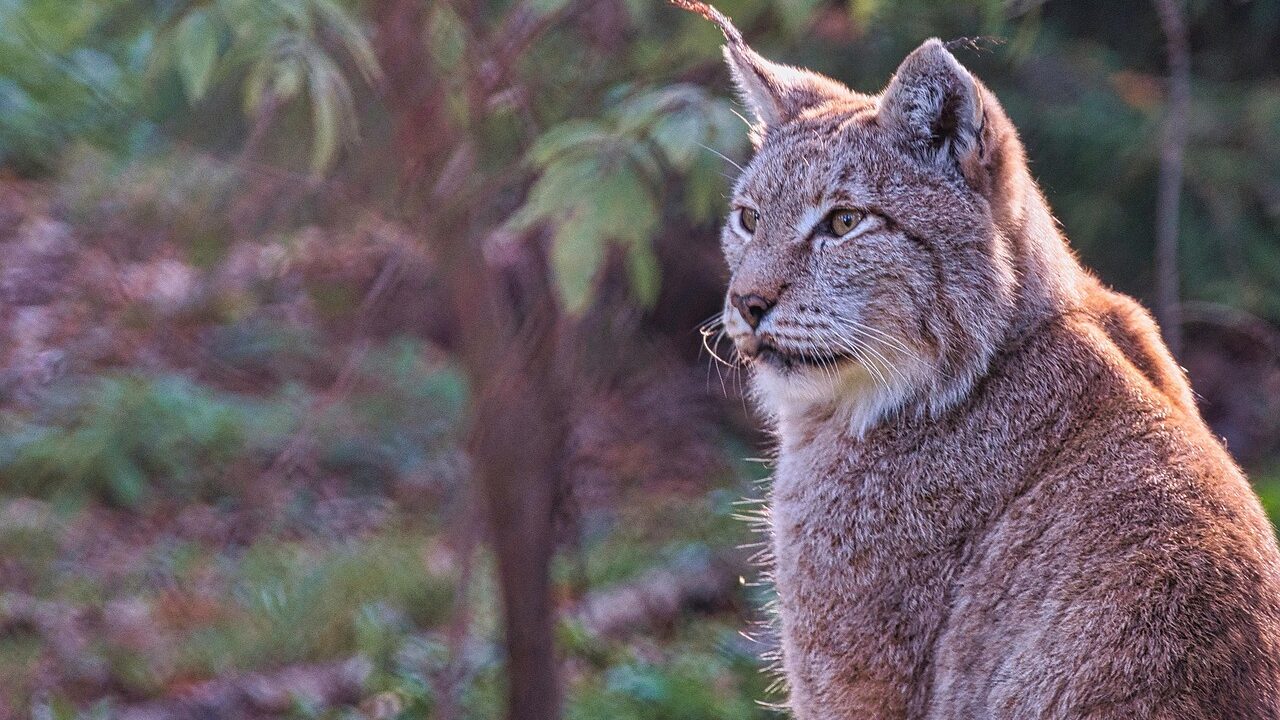
The Scottish government has recently confirmed that it currently has “no plans to reintroduce lynx or any other large carnivorous species” into the wild due to the impact it could have on farmers’ livestock.
While acknowledging that reintroducing species can have environmental benefits, the Cabinet Secretary for Rural Affairs, Land Reform and Islands, Mairi Gougeon stated that conversation interests must be considered alongside the concerns of farmers and landowners.
Gougeon added that the government would never agree a licence to release any new species unless it was “satisfied that the views of all those who would be affected by any proposal were properly taken into account.”
She also addressed the reintroduction of lynx that is currently being proposed he Department of Environment, Food and Rural Affairs (Defra) to take place in Kielder Forest in England.
“If this went ahead, the lynx would be likely to cross into Scotland and Defra has agreed that Scottish views need to be taken into account.
“We will ensure that Defra knows that Scottish farmers are very concerned about the risks to their livestock from this project,” Gougeon said.
NFUS
The National Farmers’ Union Scotland (NFUS) has voiced its support of the Scottish government’s opposition to the reintroduction of lynx or other large carnivores, stating that the proposals are “wholly unacceptable to farmers and crofters.”
The union outlined that there are still major unanswered question around livestock predation, animal welfare impacts and who would ultimately bear the responsibility and cost when problems arise following the reintroduction of such a species.
NFUS said claims that lynx primarily prey on roe deer “offer little reassurance”, noting that Scotland’s extensive sheep systems differ significantly from those in other European countries who have started reintroducing lynx, including Germany and Switzerland.
In these extensive systems, sheep are often spread over large areas and use trees, shelter belts and scrub for protection – features which could provide cover for ambush predators, such as lynx, according to NFUS.
Reintroducing species
The union also pointed to experience with other reintroduced species, such as sea eagles, where predator behaviour differed from expectations and believed to have contributed to impacts on lambs.
While consultation events continue, farmers and crofters have been urged to make their views known by NFUS, who highlighted that discussion around compensation would not change the union’s opposition to lynx reintroduction.
NFUS noted that any credible compensation scheme would need to cover worst-case scenarios, operate indefinitely as long as lynx remain in Scotland, and fully reflect the real costs to farm businesses and animal welfare, which is a commitment that the union believes would be “extremely difficult for any government to guarantee.”