

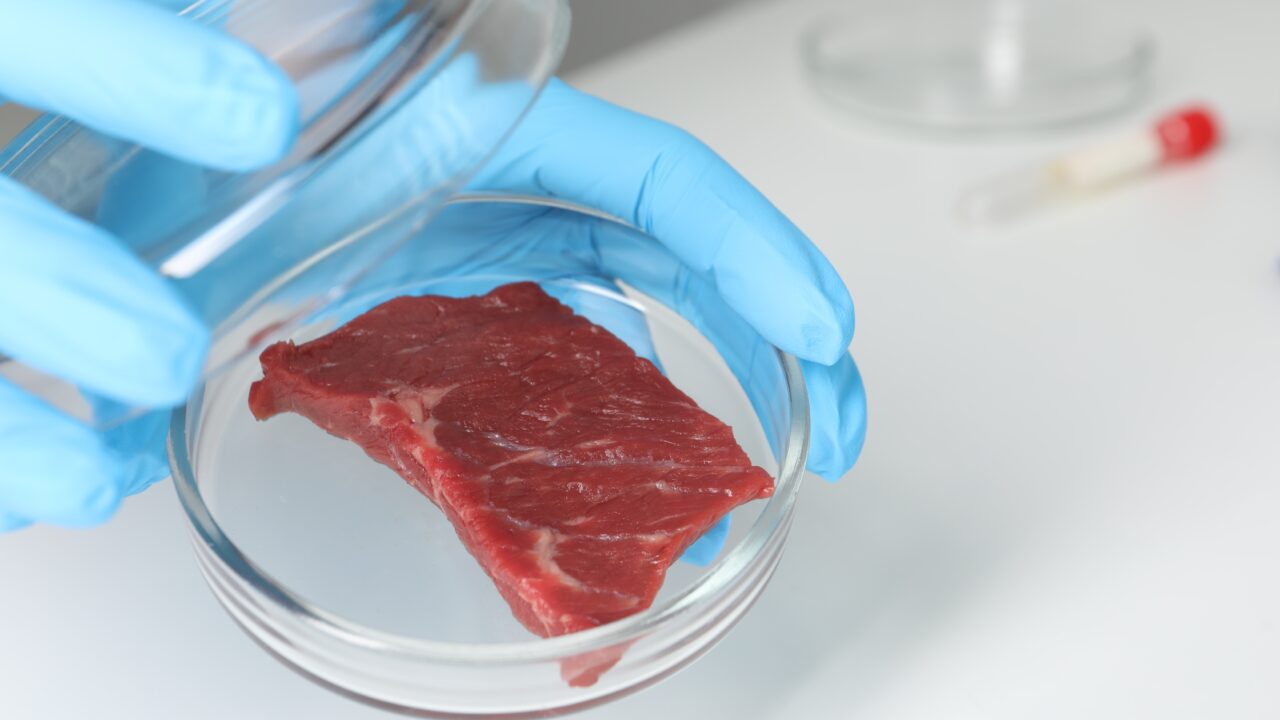
A new report from the Cellular Agriculture Manufacturing Hub (CARMA) has highlighted the need for stronger safeguards before cultivated meat is regulated for sale in the UK.
Cultivated meat, which is grown from animal cells rather than produced through traditional livestock farming, is “now transitioning from research into potential commercialisation” after decades of development, according to CARMA.
In order to ensure that the commercialisation of cultivated meat contributes to a fairer and safer food system, CARMA researchers assembled a panel – called the CARMA Citizen Forum – consisting of 18 people “representing the diversity of the UK public”.
Over the last year, this forum deliberated with scientists, regulators, and other experts on the wider social, ethical and environmental implications of cultivated meat.
Safeguards
CARMA researchers noted that while forum participants did express confidence in the UK’s food safety system, they emphasised that the potential health impact of cultivated meat remains a concern.
James Riley, who is a research fellow at the Royal Agricultural University, said: “In conversation with a range of experts, the forum members developed a set of recommendations to help address the concerns that they anticipated with the introduction of these products.
“For example on health, they recommended that we introduce two-year eating trials to assess any impacts, a requirement for mandatory, ongoing, long-term, and independent product testing, and the introduction of strict controls on imports of cultivated meat.”
The forum’s recommendations also span beyond public health and safety, with questions extending to “how cultivated meat could affect food equality in the UK and support for farmers through compensatory and transition schemes”.
Other recommendations included the establishment of a non-commercial governing body to oversee the cultivated meat sector and ensuring that industry accountability extends to include animal welfare, environmental impacts, and market power.
Cultivated meat
However, alongside their concerns, participants expressed “cautious optimism” about cultivated meat’s potential to reduce animal suffering, lower the environmental impact of diets, and improve food system resilience and security by offering an alternative protein source.
Forum members also called for clear, standardised, and mandatory front-of-pack labelling, including the use of the term ‘cell’ and concise explanations such as ‘grown from animal cells’ to avoid consumer confusion.
Senior lecturer in rural development at the Royal Agricultural University, Dr. Atenchong Talleh Nkobou outlined that the forum is a multi-year initiative and new groups of people will be invited each year “to deliberate on emerging developments in cultivated meat and the wider cellular agriculture sector.”
She added: “This first report marks the beginning of an ongoing public conversation, rather than a definitive verdict.
“The forum’s findings underline that the future of cultivated meat in the UK will depend not only on scientific innovation, but on how the technology is governed, regulated, and integrated into existing social, cultural, and economic systems.”
CARMA is a collaboration between the University of Bath, the Royal Agricultural University, University College London, Aberystwyth University, the University of Birmingham, and the University of Bristol, and it is funded by a grant from the Engineering and Physical Sciences Research Council.