

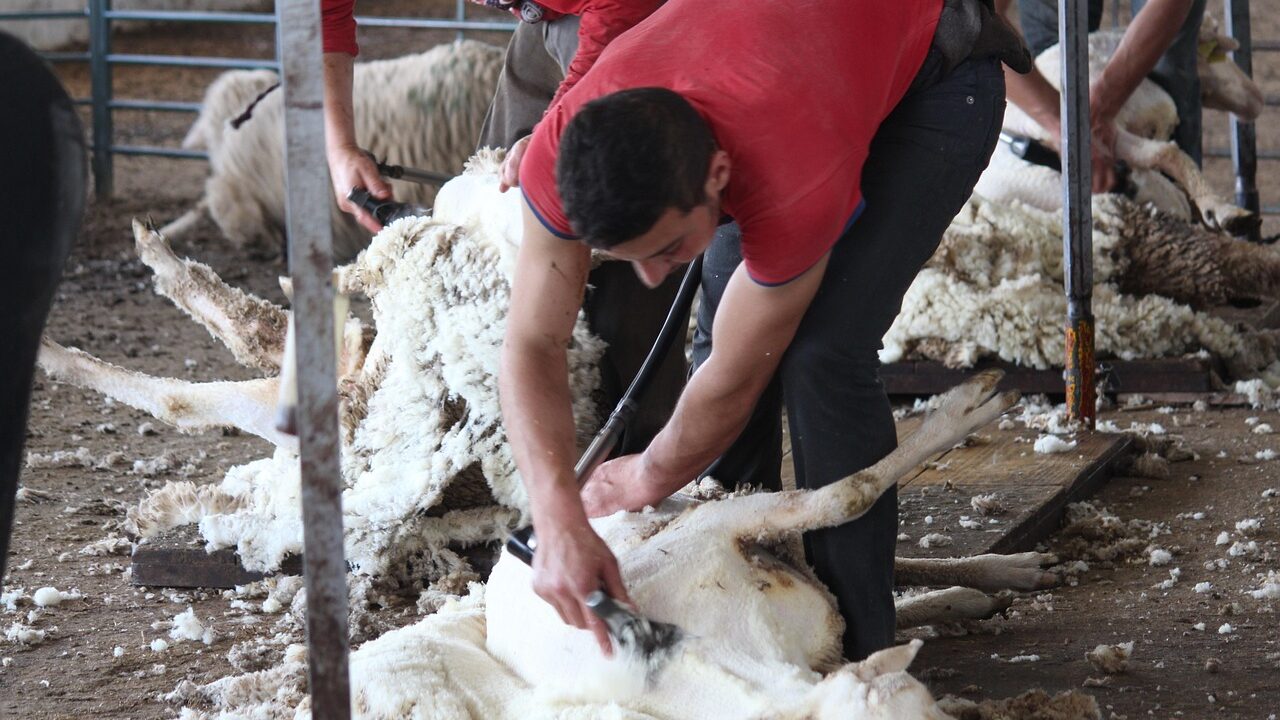
The UK’s sheep industry has voiced concerns over a potential sheep shearing “crisis” as around 75 overseas shearers have been denied entry to work this year.
Since 2011, a temporary governmental concession has allowed overseas workers, mainly from New Zealand and Australia, to enter the UK without work visas to shear sheep.
These 75 shearers have been responsible for shearing roughly 1.5 million sheep each year, according to the UK’s National Sheep Association (NSA),
Following a Home Office decision to end this concession, the chair of the UK’s agriculture committee, Alistair Carmichael noted that the census in the sheep industry is that there is “a looming animal welfare crisis” waiting to happen this year.
The NSA warned that this decision will likely cause shearing to be delayed for many farmers, increasing the risk of heat stress, fly
strike, and maggots.
Shearing
NSA policy manager, Michael Priestley outlined that the Home Office denied the concession because ministers believe that the sheep industry has had enough time to fill these workforce gaps domestically.
A government spokesperson told Agriland: “We recognise the importance of British agriculture and the value it brings to the economy.
“All concessionary arrangements are temporary, created to give UK domestic sectors time to strengthen their workforce, and they undergo regular ministerial review.”
On a national level, British Wool has been training more than 800 shearers annually.
However, the NSA acknowledged that the majority of these training courses are at “a basic level” and most people taking part are sheep farmers in their own right, which prevents them from travelling up and down the UK to shear.
Defra
Although it was ultimately a Home Office decision, this visa clampdown has also brought some scrutiny to the Department of Environment, Food and Rural Affairs (Defra).
At an EFRA committee meeting last week, senior Defra representatives were invited to answer questions on the department’s “perceived shortcomings and examples of poor communication with its stakeholders.”
Carmichael asked Defra permanent secretary, Paul Kissack, if there had been any discussion between Defra and the Home Office regarding the denial of visas to overseas shearers.
Kissack responded: “I confess I don’t know what our plan is on that.
“I suspect there has been conversation between Defra and the Home Office, but it hasn’t hit my desk at this point.”
Carmichael went on to question the permanent secretary on why he was not aware of this issue, considering that it “is seen in the industry as looming crisis”.
He queried: “What I’m suggesting to you is that this is seen in the industry as a looming crisis, and it might be interesting for you professionally to drill down into the reasons it has not filtered up through the system to your desk, if indeed there is anything being done about it at all.
“Does that not really illustrate why the industry holds the rather poor view that it does of the department?”
Kissack said: “I don’t think you should judge how well the department is doing by what happens to hit my desk.
“We might be doing a very active programme of work engaging with communities affected. I don’t know.”