

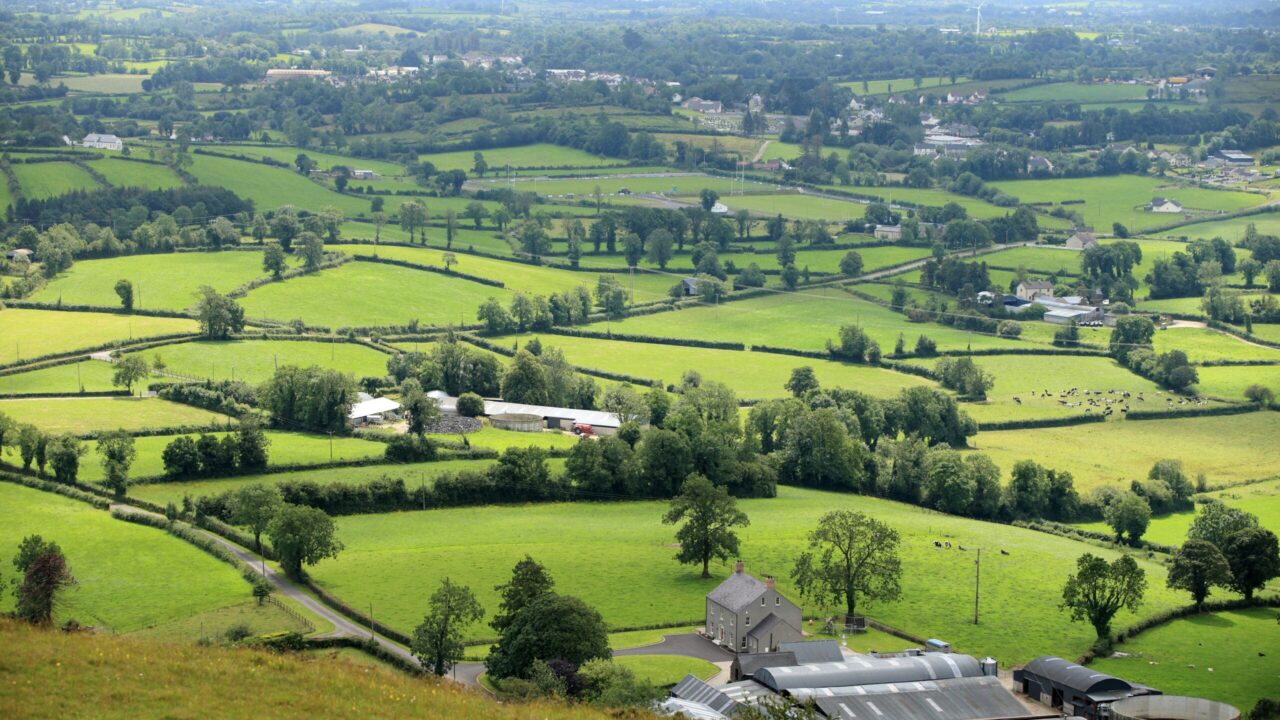
Agricultural land prices in Northern Ireland continue to strengthen, with new trends apparent in how this market is defined, according to a financial adviser.
Ulster Bank’s head of agriculture, Cormac McKervey commented: “Traditionally, there was very little difference in the overall price paid for bare land and acquisitions that also included farm buildings.
“However, this scenario is fast changing. Investors are now prepared to pay a premium prices for land parcels that also include buildings that are in a strong state of repair.
According to McKervey, this is particularly so where poultry units are concerned.
“This reality reflects the fact that it is very difficult to secure planning permission to develop a new poultry enterprise in Northern Ireland at the present time,” he said.
“So acquiring a facility that has housing is one way of getting around this issue.”
McKervey also pointed out that agriculture in Northern Ireland enters the spring of 2026 underpinned by high levels of financial performance.
“According to the most recent official figures, total bank borrowings for agriculture in Northern Ireland amount to £947 million – the lowest this figure has stood at in the past 10 years,” he said.
“However, monies on deposit total £741 million, the highest this figure has been at since 2016.
“It all adds up to a good news story for farming.”

The Ulster Bank representative noted that as ever “events can impact farming” and highlighted the effect the Middle East conflict has already had fuel and fertiliser prices.
“Feed prices are steady but longer term could rise.
“It seems finance costs are unlikely to fall given the Bank of England’s focus on base rate rather than risk adding to inflationary pressures,” he said.
Where the economics of farming are concerned, it is very much a ‘steady-as-she goes’ scenario for most of the sectors that make production agriculture in Northern Ireland, the Ulster Bank representative said.
“Milk prices seemed to have bottomed out, despite increased global supplies and at a higher level than was thought last autumn,” McKervey said.
“Current price is below the cost of production but thankfully the market downturns predicted for the milk sector last autumn were not fully realised.
“What’s more strong calf, weanling and cull cow prices also combined to help compensate for the fall in milk prices that did occur over the past number of months.”
But the Ulster Bank representative is also pointing to other positive trends that now define the milk industry.
“The quality of the milk produced on our dairy farms continues to increase. And this is worth real money across the sector,” he said.
“Securing an additional 2-3p per litre of milk on the back of improved butterfat and protein works out at an additional £20,000-£30,000 of additional income per one million litres of milk produced.
“Quality bonuses are also more significant during those periods when pressure comes on base milk prices.”
According to McKervey, the use of sexed semen has “significantly enhanced the rate at which genetic progress has been secured within the dairy sector”.
“And there is little doubt that the Sustainable Ruminant Genetics Programme will act to further accelerate this rate of positive change,” he added.