

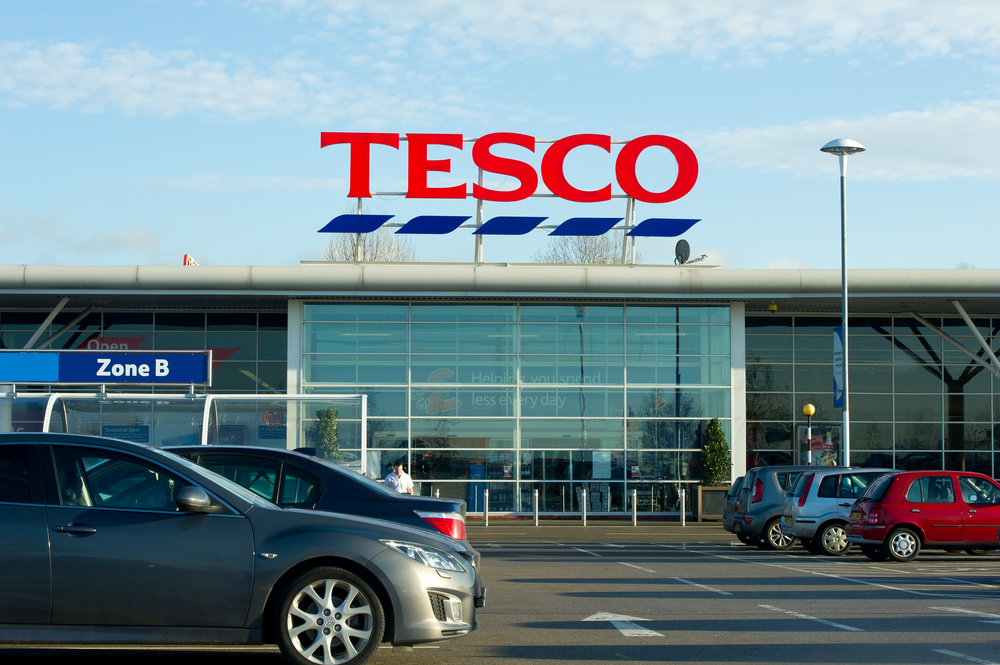
British retail giant Tesco has indicated that the conflict in the Middle East is generating some uncertainty over its profit margin for the next financial year.
The retailer has published its preliminary financial results for the year 2025/2026, and also issued an outlook for the 2026/2027 year.
The group said that it is providing a “wider range of guidance than we were previously planning” due to the increased uncertainty caused by the conflict in the Middle East.
Tesco said that much will depend on the duration of the conflict, and particularly the implications for households and the economy more broadly.
At this stage, Tesco said it is expecting to deliver an operating profit for 2026/2027 of between £3 billion and £3.3 billion.
In the preliminary results for 2025/2026 announced this week, Tesco said it sales reached £66.6 billion, a 4.6% increase on the prior year.
Its adjusted operating profit stood at £3.2 billion, a small increase of 0.8%.
Free cash flow was reported as just short of £2 billion, increasing by 11.8%.
Tesco’s earnings per share (EPS) was reported at 29p, an increase from 27.4p for the previous year, while its dividend per share is 14.5p, compared to 13.7p for the previous year.
Tesco said its Ireland business delivered sales growth of 6.6%, while its market share in Ireland increased to 24.2%, the fourth consecutive year of share growth.
In central Europe, Tesco said its like-for-like sales grew by 2.2%, with food growing by 2.6% across the region. Fresh food grew by 4.1%, while Tesco Finest sales also continued to perform strongly, up 33.5%.
Commenting on its results, the group’s chief executive Ken Murphy said: “We are committed to doing whatever we can to help keep down the cost of the weekly shop, and with the conflict in the Middle East creating further uncertainty for consumers and the economy more broadly, that commitment matters more than ever.
Murphy said that the business has delivered over £2.2 billion in savings over the last four years, funding lower prices for customers and higher pay for colleagues, including a recent 5.1% increase in UK hourly pay.
“Since setting out our multi-year performance framework in 2021, we have delivered meaningful progress for all our stakeholders. As new opportunities and challenges have emerged, we have evolved our strategic ambitions, positioning us well to deliver sustained long-term growth by providing even better value for customers,” he added.