

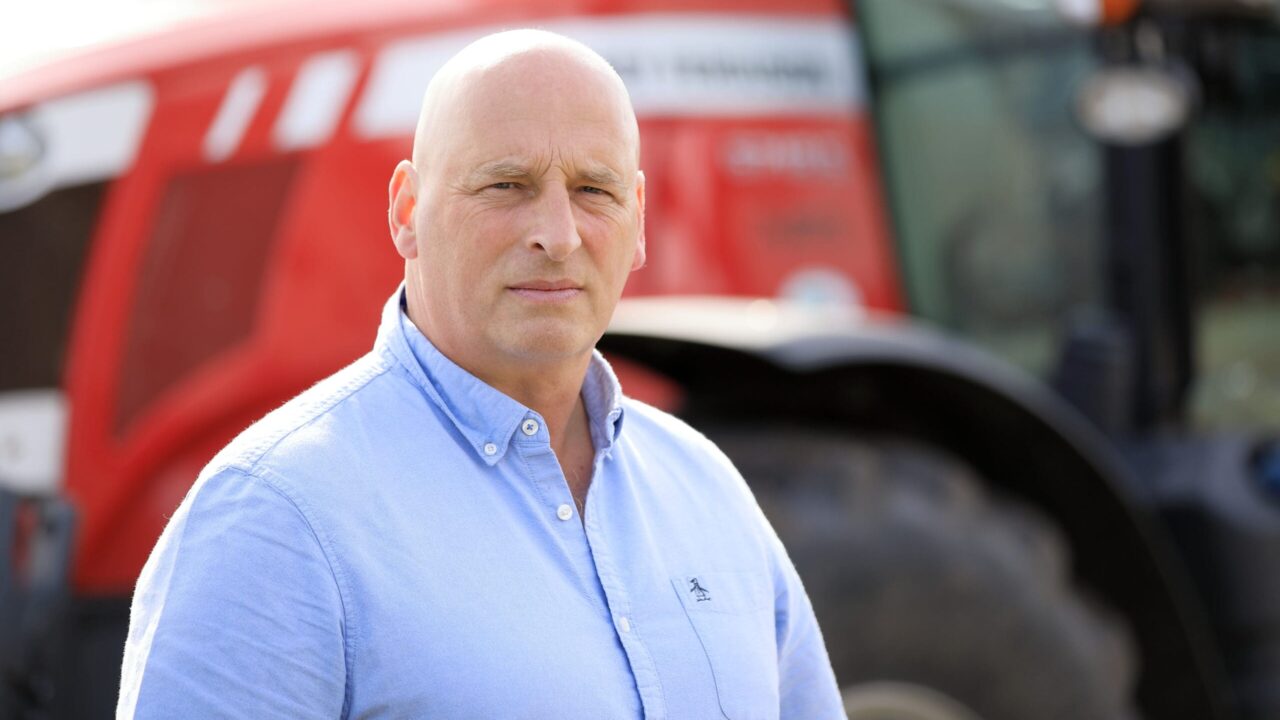
John McLenaghan assumes the presidency of the Ulster Farmers’ Union (UFU) at a time of significant challenge for farming in Northern Ireland.
However, given the track record of the man from Garvagh in Co Derry during his four years as deputy president of the union, no one doubts his abilities to strike the right balance on behalf of the farming sector during the period ahead.
Recent years have seen production agriculture placed at the very heart of two environmental challenges that impact on society as a whole: its response to climate change and the need to improve water quality.
Sustainable farming
For its part, the UFU has always signalled that farming is at the heart of the solution, where these issues are concerned.
But this assertion comes with the proviso that farmers must be fully recognised for the public goods they deliver.
However, one senses that the most important priority for John McLenaghan, as he looks forward to the two years of his presidency, will be that of securing the right for farmers to produce food in ways that deliver for their individual businesses.
And if it takes legislation at Stormont and Westminster to make this a reality, so be it.
Farmers believe they can produce more food on a wholly sustainable basis, if they are given the chance so to do.
And this seems like a very rational point to be making given that the UK is only 64% self-sufficient, from an indigenous food production perspective, at the present time.
Nutrients Action Programme
Food production has always been at the very heart of farming in Northern Ireland.
And John McLenaghan’s presidency of the UFU coincides with a period in time when this issue looks set to rise to the very top of the political agenda, not just in the UK but around the world.
At the very core of this debate in Northern Ireland will be the fleshing out of an amended Nutrients Action Programme (NAP).
The new measure must strike the right balance between farmers’ right to produce food while, at the same time, securing the highest standards of environmental stewardship.
New science and the development of technologies that will allow farmers make more efficient use of the inputs they use can deliver such an outcome.
So the question then becomes: can McLenaghan bring all the other stakeholders involved with the NAP process with him as farmers stake their claim to a future that sees indigenous food production recognised as a fundamental priority?