Settlement proposed in US meat packing industry ‘antitrust’ investigation

The US Department of Justice’s (DOJ) antitrust division has filed a proposed settlement to resolve US claims against ‘Agri Stats’ for “unlawful sharing of price, output, and costs among meat processors.”
The DOJ said the proposed settlement will “restore competitive prices for consumers by ending meat processors’ unfair advantage.”
The department suggested the proposed settlement, filed on Thursday (May 7) will “help lower food prices, undo decades of distorted competition in the broiler chicken market, and ensure that the pork and turkey markets remain free from these anticompetitive practices.”
In the DOJ’s statement, acting Attorney General Todd Blanche said “a stable and affordable food supply is critical to our country’s well-being.”
“A fair market depends on real competition, not privileged access to competitors’ playbooks.
“When dominant firms share sensitive data in ways that exclude buyers and the public, they gain an artificial advantage that weakens market discipline and drives up prices for everyday Americans,” he remarked.
Meanwhile, Acting Assistant Attorney General Omeed A. Assefi said: “This settlement delivers immediate relief in the meat section of grocery stores across our nation.”
Agri Stats
According to the DOJ’s statement, “Agri Stats is a data-sharing and consulting company that currently operates in the broiler chicken market and has historically operated in the pork and turkey markets.”
Agri Stats collects information on “prices, output, and costs directly from meat processors’ accounting systems, standardises that data, and redistributes it back to the processors”.
The DOJ claims that Agri Stats and meat processors have “historically refused to make this information available to meat buyers like restaurants, grocery stores, and food distributors”.
The DOJ alleges “this one-sided information exchange reduced competition and enabled systematic price increases and coordinated decisions about how much meat to produce”.
The proposed settlement brings “an end to important anticompetitive features of Agri Stats’ information exchange”, according to the department.
If approved by US courts, the DOJ’s proposed settlement will require Agri Stats to:
- Stop providing any sales reports or non-public pricing information, which chicken, pork, and turkey processors have systematically used to identify opportunities to increase prices;
- Make the vast majority of information that Agri Stats distributes available to all interested domestic purchasers.
Earlier this week
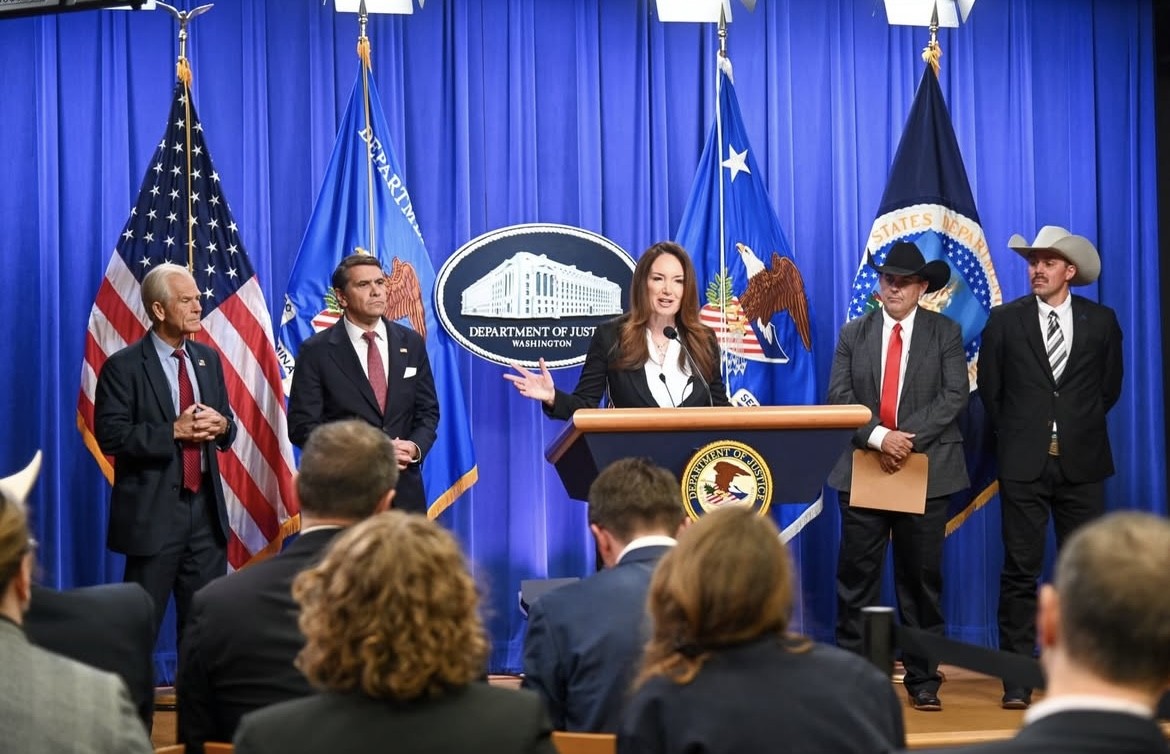
The DOJ and the United States Department of Agriculture (USDA) held a press conference on May 4, announcing it was to open an investigation into antitrust violations on US meat-packing operators.
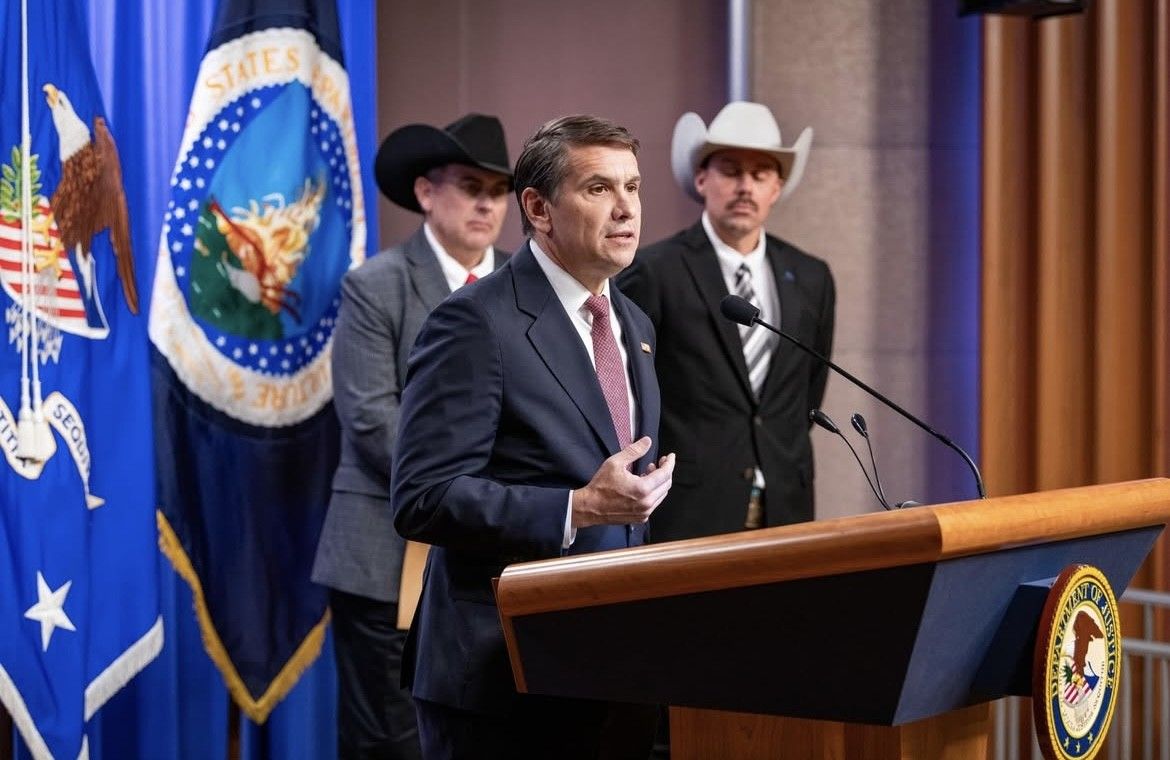
This came after President Trump tasked the DOJ to investigate the rise in the cost of beef, as according to the White House, “ground beef prices reached an average of $6.69 per pound in December 2025, the highest since tracking began in the 1980s”.
Consolidation in the US meatpacking industry had led to four “major” meatpackers: “Cargill, Tyson Foods, JBS and National Beef” Packing Company.
According to acting Attorney General Blanche, “the ‘big four’ processors in the industry “control over 85% of the beef processing market”.
He added that two of the ‘big four’ are “primarily foreign-owned”.
He said: “Multiple plant closures across the country, the current market structure and high concentration in the industry indicate anticompetitive activity.
“This business model has allowed competitors to exchange competitively sensitive information on every aspect of the protein industry, and has raised the prices on chicken, pork, and turkey.”
Whistleblower programme
Blanche added that since the president’s executive order, the department has been actively investigating [the processors] “with a review of over 3 million documents”.
He said “hundreds of industry participants including ranchers, cattlemen, producers and processors” have been interviewed as part of the investigation.
The DOJ and the USDA collaboratively signed a Memorandum of Understanding allowing them to share information aimed at “protecting competition and agricultural inputs like seeds and fertiliser”.
The DOJ introduced a ‘Whistleblower Rewards Programme’ that encourages stakeholders to share information regarding “antitrust crimes, price fixing, bid rigging, market allocation, or even procurement fraud”.

Through this programme, in partnership with the US Postal Inspection Service, participants can “be financially rewarded for coming forward with information about this behaviour.”
Blanche explained: “If the information [whistleblowers] provide helps us secure a criminal penalty in excess of $1 million, [whistleblowers] can be entitled to recover and receive 15-30% of the money we recover.”
The acting Attorney General said the DOJ “will use every law enforcement tool available to help reduce food prices and vigorously enforce the antitrust laws to ensure every aspect of the agricultural industry competes on a fair playing field”.
The USDA
Brooke Rollins, secretary of the USDA, said the rate of this four-firm control has “accelerated” since the 1970s.
She added that these four firms now in total own more than 70 subsidiary companies.
According to USDA data, Rollins said concentration for cattle slaughter from these four companies was only 25% in 1977, jumping to 71% by 1992, and today, is an “astounding” 85%.
The secretary said: “Industry consolidation reduces options for our ranchers looking to sell their cattle.
“It weakens their negotiating power, and it risks reliance upon a single buyer.
“Today, the concentration of larger plants opens the door to tighter coordination by the ‘big four’ with producers, and perhaps the exertion of control over them as well,” Rollins cautioned.
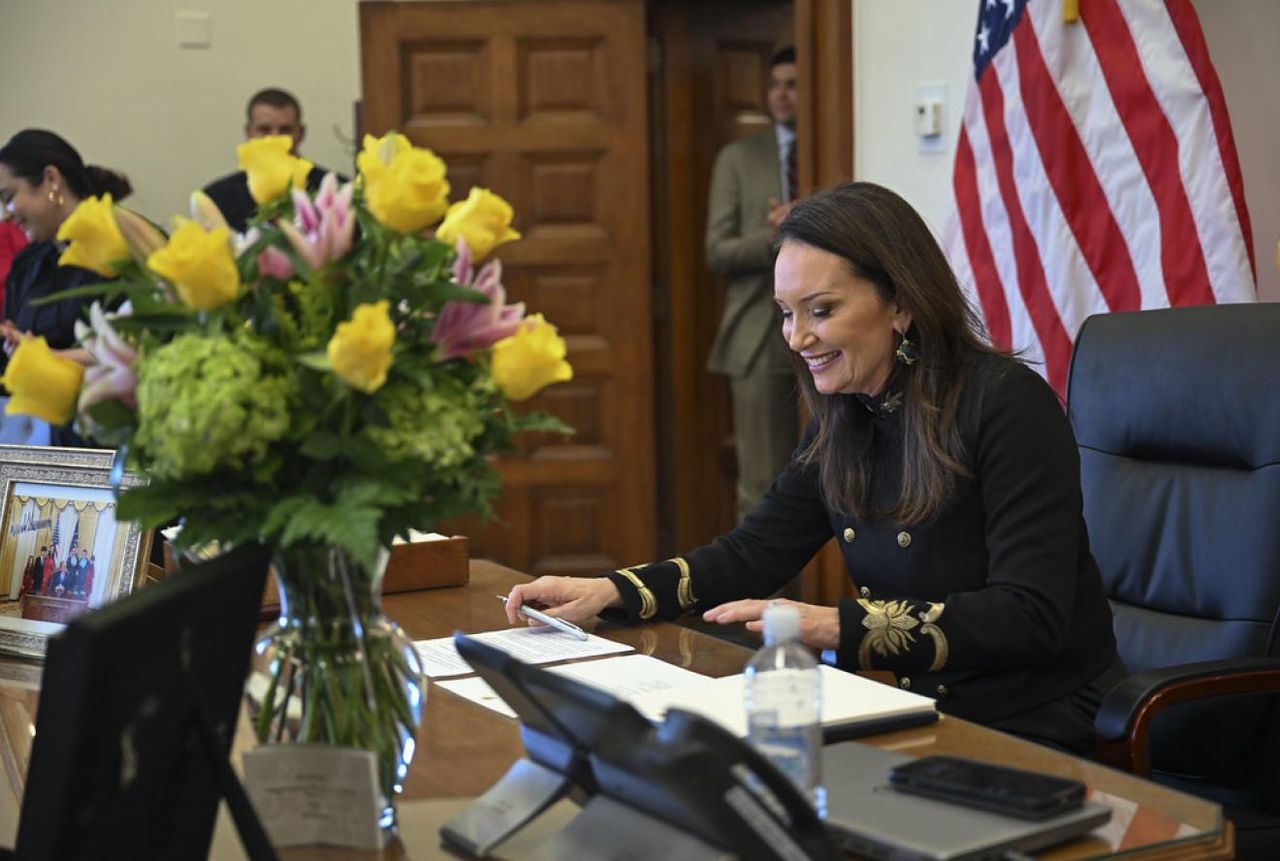
The secretary said the investigation efforts will protect “the American way of life and the American consumer”.
American herd size
Rollins also claimed that America is facing a “herd size crisis”.
She said: “As of 1 January of this year, we have about 86.2 million head of cattle and calves in America. That is the lowest since the 1950s.
“And this year we’re looking to be slightly down again. In the past decade alone, we’ve lost over 17% of our cattle ranchers and more than 100,000 ranches across this country are no more.
“Growing the herd size is an immediate problem in need of solutions.”
She claimed the US is in this position due to “droughts, wildfire, overregulation from previous administrations and volatile markets”.
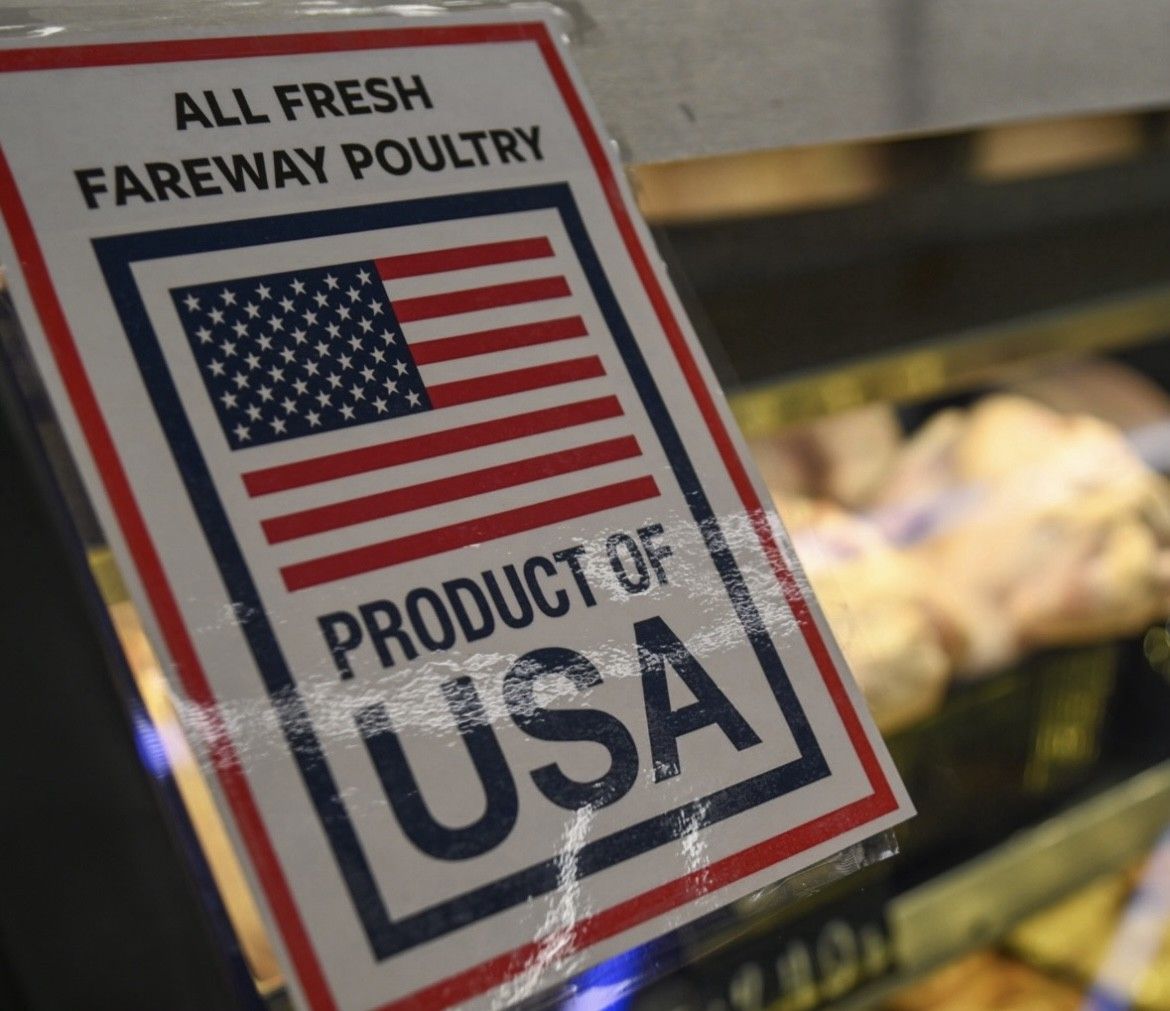
Rollins highlighted the initiatives the USDA have recently put in place including its ‘Product of the USA’ labelling measure which labels “meat, poultry and egg products as actually born, raised, harvested and processed in America”.
She said that the USDA spends approximately “$400 million every day on 16 nutrition programmes”, incentivising Americans “to purchase locally grown, processed, harvested beef.”
Rollins added that the USDA is “making big changes to keep incentivising the growth of [its] cattle herd and to get out of this this current situation”.