

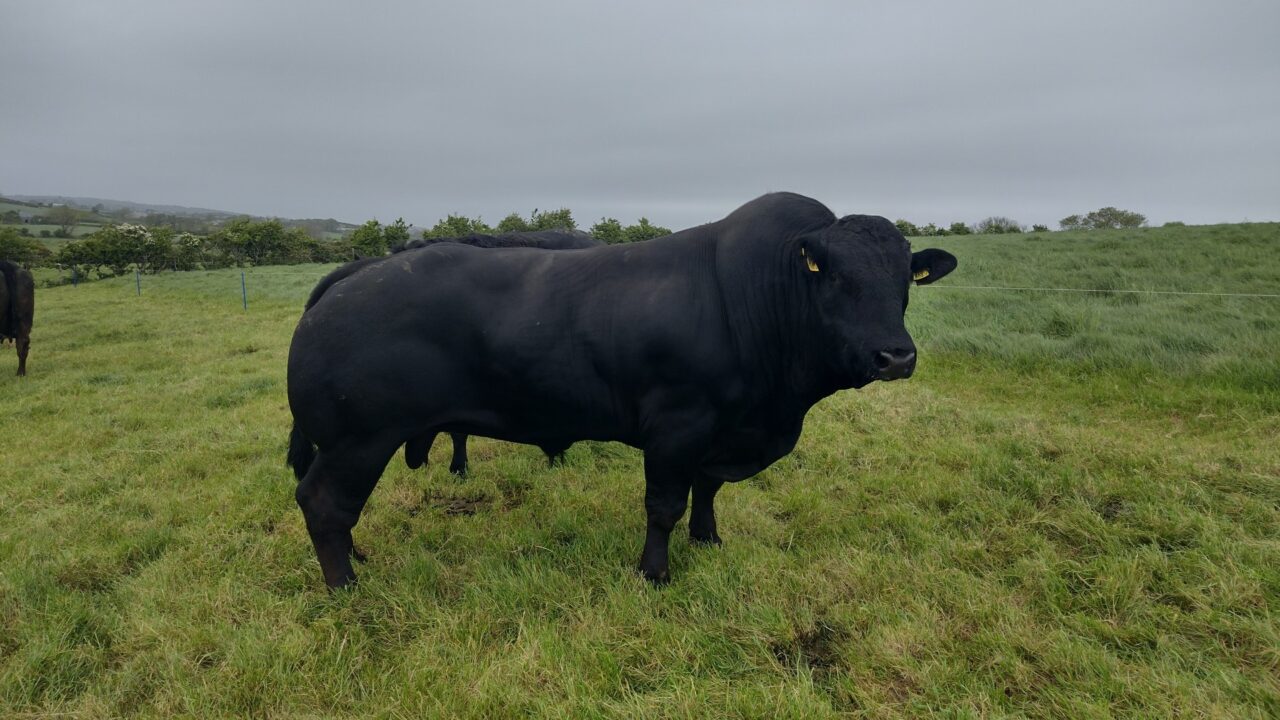
Breeding is well underway now, yet not too many fields you look into will have stocks bulls out yet, as the majority of farmers go with artificial insemination (AI) in the early season.
In recent years, farmers have been breeding a tight enough replacement rate, in that the number of heifers they are carrying for two years is not even sufficient for an optimal stocking rate.
Sexed semen is generally being used in conjunction with dairy-beef bulls, which means farmers are breeding the heifers they need and putting the rest to dairy-beef, leaving very few surplus heifers on the market.
To avoid paying excessive money on making up their replacement rate, farmers should continue breeding an extra few heifers this year to ensure they maintain their herd number or have surplus heifers to sell, for which there will be a high demand.
However, when wrapping up the use of dairy AI this season, the transition from AI to stock bull usage is an important factor in the breeding success.
AI to stock bull
Quite often, when a farm moves from using AI to letting out the stock bulls, a lull in the following calving season can be experienced.
This is because the stock bull, in most scenarios, will have spent months on a silage-only diet doing minimal daily walking before he is turned out with a flurry of cows in heat and expected to get them all covered which is next to impossible.
Bulls should have been monitored over the winter months for body condition score and hoof health, and may need to be hoof trimmed before going out to grass.
The bull is going to be going from barely moving to pacing up and down laneways and paddocks and mounting cows, which is going to test their feet, and so feet should be monitored monthly and ran through the foot bath every few weeks.
The bull should be fertility tested before he goes out to cows, and should also be supplemented with trace minerals such as zinc, copper, and selenium six weeks prior to breeding, as these are crucial for performance and fertility, according to Teagasc.
Farmers should continue to AI cows along with the introduction of the bull for at least a week to ensure there is no lull in the following calving season, and allowing the bull time to settle in before getting to work.
Another thing that has to be factored in the number of bulls needed for your herd of cows, which is often where high empty rates in herds derive from.
Farmers should aim to have one young bull for every 10 empty females, or one mature bull for every 20 to 30 empty females.
If more than two cows are in heat per mature bull on one day, then these cows should be inseminated to take the pressure off the bull.
When synchronisation programmes are being used, it is advised to serve the first round of repeats as that number of females coming into heat at the one time will be too much for a bull to deal with in a short space of time.