

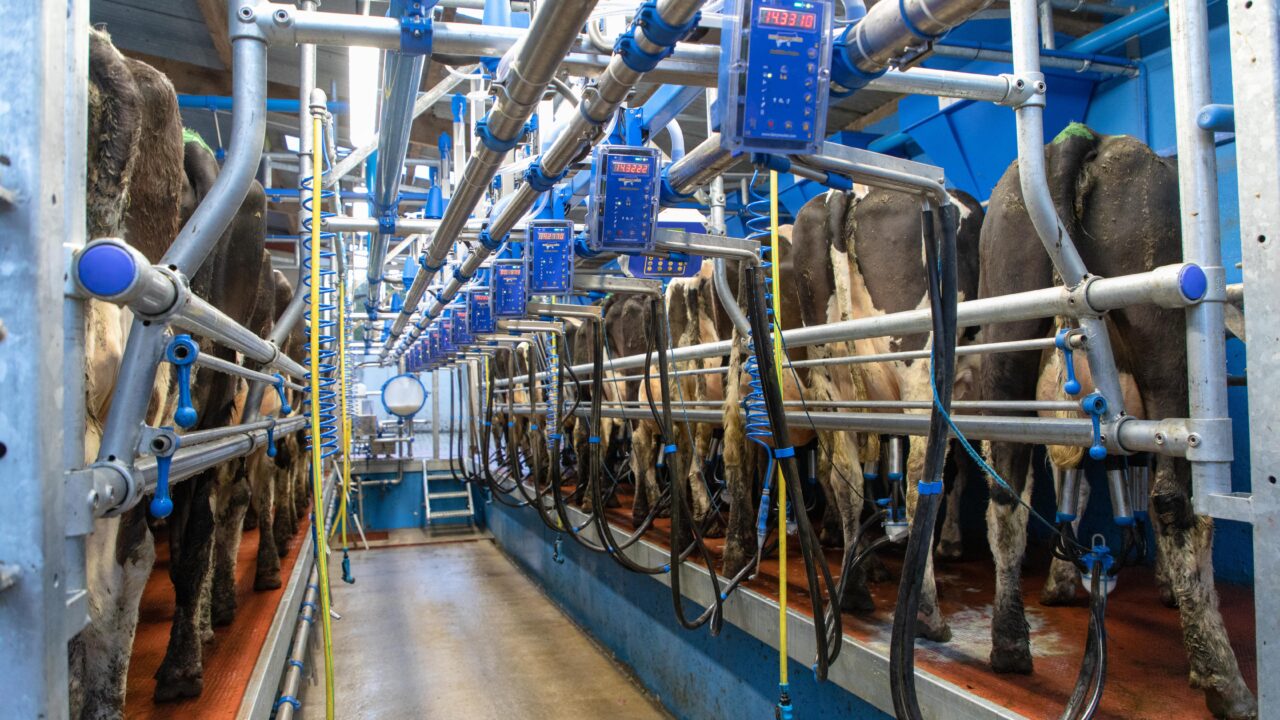
As we drift away from peak milk production, farmers will be focusing on holding solids through grass quality, but it is important to remember the role of hygiene and efficiency in the parlour.
Over the next few weeks, it may be worth considering if there is any few tweaks that can be made in the parlour to improve milking for both the milker and the cows.
Both the cows and ourselves are creatures of habit, so it is hard to think about making any adjustments to the current set-up.
However, simple things could make life a lot easier, while also boosting production.
Parlour routine
The milking parlour should always be ready before the cows are rounded up, to avoid causing any unnecessary stress on the cows waiting to be milked.
A clean milking apron should be used, with disposable nitrile gloves to help stop the spread of mastitis during milking, which could hit milk production hard at this time of the year.
As cows walk into the parlour, keep a close eye on their udders for any abnormalities.

Strip quarters that you may be sceptical of, and carry out a California mastitis test (CMT) on cows that are off form or have a high temperature.
Clusters should be attached to clean and dry teats – keep an eye out for when the cluster need to be changed – delaying it will only cost you money.
Keep the pulse and milk tubes on the cow exit side when attaching the cluster, as doing so will allow for quick movement along the pit from one cluster to the other.
Only manually remove clusters when there is only a single stream of milk visible in the claw piece.
When removing the clusters, avoid causing air blasts by kinking the milk tube or by using the button on the claw piece.
If you have automatic cluster removers (ACRs), ensure that they are in operating order.
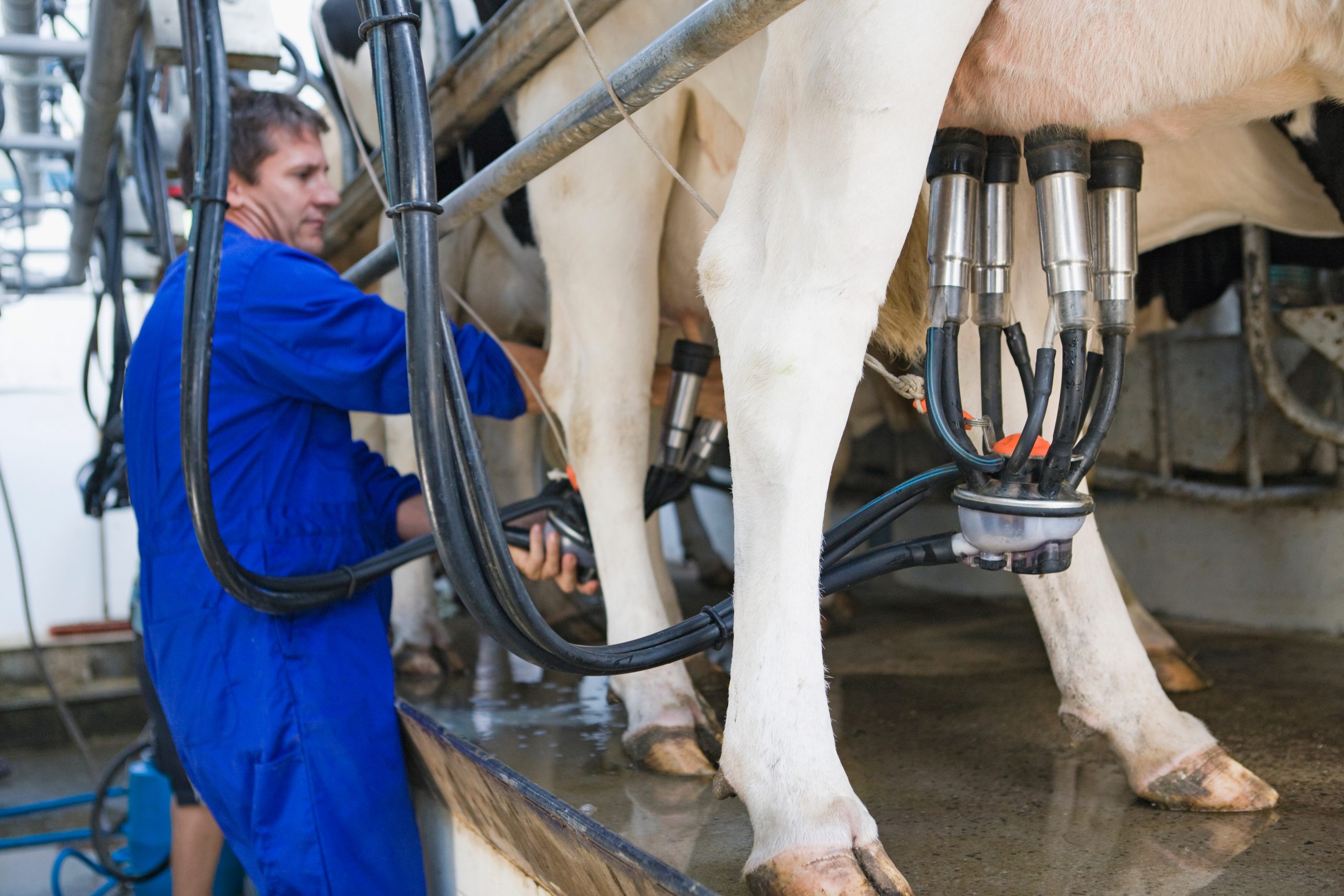
Teat spraying or dipping should be done as soon as possible after cluster removal, ensuring at least 10-15ml of the spray is applied evenly, covering all the teats, from top to bottom.
Once the last row of cows have left the parlour, commence start thoroughly washing down the parlour.
If you have employees, a standard operating procedure needs to be in place for both milking and washing down.
Do not forget that the milker is producing food and that the quality of this food is essential in sustaining and creating markets.
Cow space
Cow flow begins in the paddock or cubicle to the collecting yard, through the parlour and back out to the paddock or cubicles.
Cow flow has a massive impact on milking efficiency and time spent in the parlour and is dictated by: cow roadways; facilities (collecting yard and parlour); and the milker.
Roadways should be about 5m wide for 120 cows, with an extra 0.5m for every 100 cows thereafter.
Roadways need to be wide enough for the number of cows with a good surface, to make sure that there are no pinch points or restrictions along the roadway.

A farmer needs to ensure that the gathering yard can fit all of the herd, typically allowing for 1.52m2/cow, so cows are not getting pushed and shoved, causing stress and potentially lameness issues.
Where there is a backing gate in the gathering yard, ensure it is used solely to decrease the size of the gathering yard, rather than forcing cows into the parlour.
It is easy to overlook factors like your milking routine at this time of the year, but as cows are at peak, you want to do everything in your power to make sure they hold that peak – and that comes down to environment, as well as nutrition of course.
You also want to maximise your milk price during the cows’ peak and having a high somatic cell count (SCC), total bacteria count (TBC) or thermoduric count is only going to deteriorate the price you receive per litre of product sold.
.editor-styles-wrapper .wp-block-acf-related-stories-block {
max-width: 960px !important;
background-color: var(–color-gray-default);
padding-inline: 40px;
padding-top: 8px !important;
padding-bottom: 20px !important;
}