

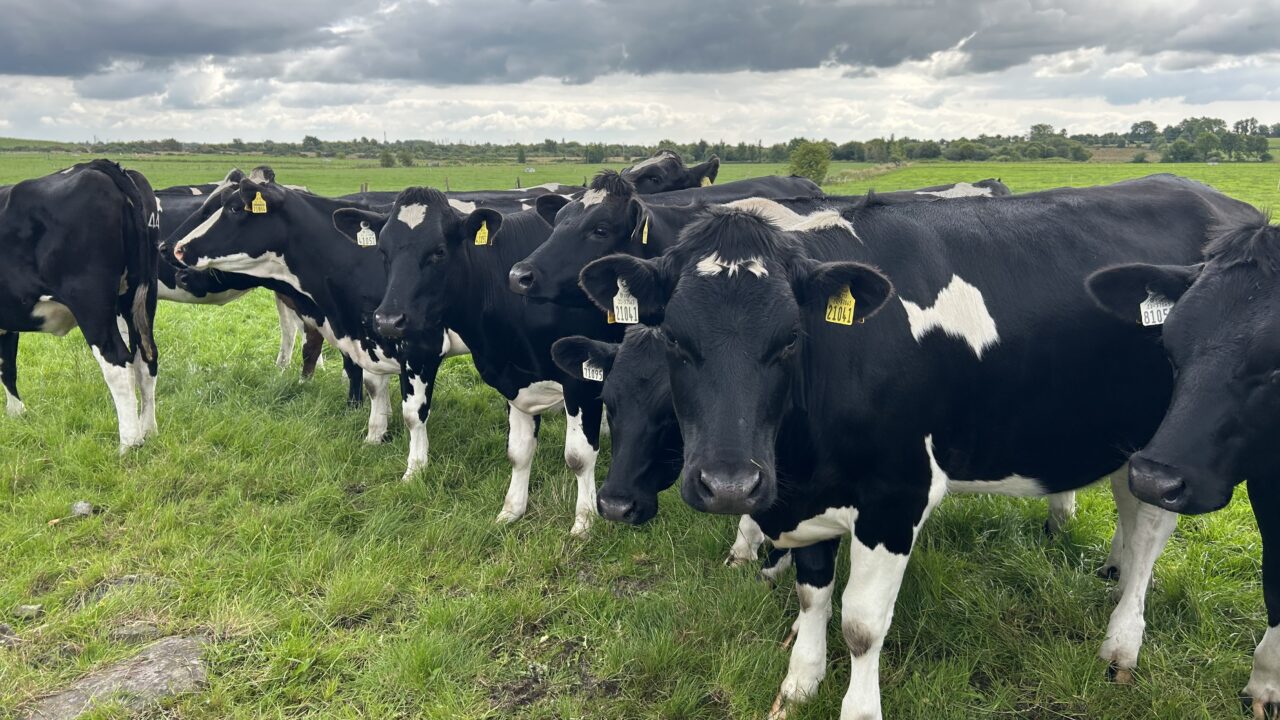
After such a dry and warm week, the rainfall this week may create the perfect environment for lungworm development.
The respiratory disease lungworm, also known as ‘hoose’, is caused by the roundworm parasite Dictyocaulus viviparous.
It is known to thrive and multiply in humid conditions following rainfall.
Farmers need to stay vigilant in an effort to catch the disease early, and stay on top of dosing routines.
Infections typically start with one or two animals struggling to catch their breath or coughing. It is often only identified as animals struggle with breathing when being moved.
If an infection is not caught on time, it can quickly spread and affect cows within the herd, and can result in an outbreak of pneumonia.
Lungworm
Lungworm goes through a number of phases throughout its life.
Adult lungworms live in the lungs of an infected animal and lay eggs, which are coughed up and swallowed.
These eggs are usually in older animals such as yearling or adults, who act as carriers over the winter.
These eggs will then hatch and develop into stage one larvae as it is passed through the intestine before being released in the dung, where the larvae will then develop in stage three in the dung pat.
With rain forecast for the week ahead, the splashing effect helps the stage three larvae travel from the dung up the grass plant, ready to be ingested by the animal.
Once it is ingested, the larvae is passed from the intestine to the lung and grow into adult worms.
Here they pierce their way through the intestinal wall to move into the blood and lymphatic system to get to the lungs.
It may take up to 28 days from the larvae being eaten to the passing of eggs.
But when the weather is warm and humid like last week, infectious larvae may be available on pasture within seven days.
Calves
A lot of young calves will now be out at pasture on their first season of grazing, these animals are the most susceptible to pick up lungworm, so they should be closely monitored for any clinical signs.
Paddocks that were grazed by calves the year before are at a higher risk of contamination due to over-wintering of larvae.
The risk assessment of different pastures at spring and mid summer as per Animal Health Ireland (AHI) are as follows:
Time
High-risk pastures
Medium-risk pastures
Low-risk pastures
Spring
Grazed by young calves in the previous year.
Grazed by lungworm-infected cattle in the previous yearGrazed only by cows or yearlings with no history of hoose in the previous year
New pasture.
Grazed by sheep or used for hay or silage only in the previous year
Mid-summer
Grazed by young calves in the spring
Grazed only by cows or yearlings with no history of hoose
Grazed by sheep or after grass (used only for silage or hay in the first half of the season)
So, symptoms normally are seen in young cattle in their first grazing season, typically in the latter part of the summer.
Symptoms will vary depending on the number of larvae ingested and on the animals immune response, but are as follows:
- Mildly affected animals will be coughing on and off, especially after exercise;
- Moderately affected animals will cough regularly at rest and have an increased respiratory rate;
- Severely affected animals will have difficulty breathing and may adapt a stance where the head and neck stretch out, mouth is open, and the tongue hangs out;
- Lung damage can be severe and the damage can sometimes be irreversible, so mortality can occur despite the removal of worms with an anthelmintic;
- In milking cows, it can cause a severe drop in milk yield and this can occur before coughing;
- The problem is that when cows are affected, they are more susceptible to other respiratory pathogens such as viruses and bacteria.
If a lungworm infection has been identified, treatment with one of the three classes of anthelmintic (white, yellow, clear) will be required.
Treatment of the whole group should be done quickly after the appearance of clinical signs in order to limit the impact of the infection.
If lungworm treatment gets delayed, lung damage may become severe and be untreatable and if heavy infections of lungworm are suspected within your calves or in your herd, your vet should be contacted to seek advice before treatment.