

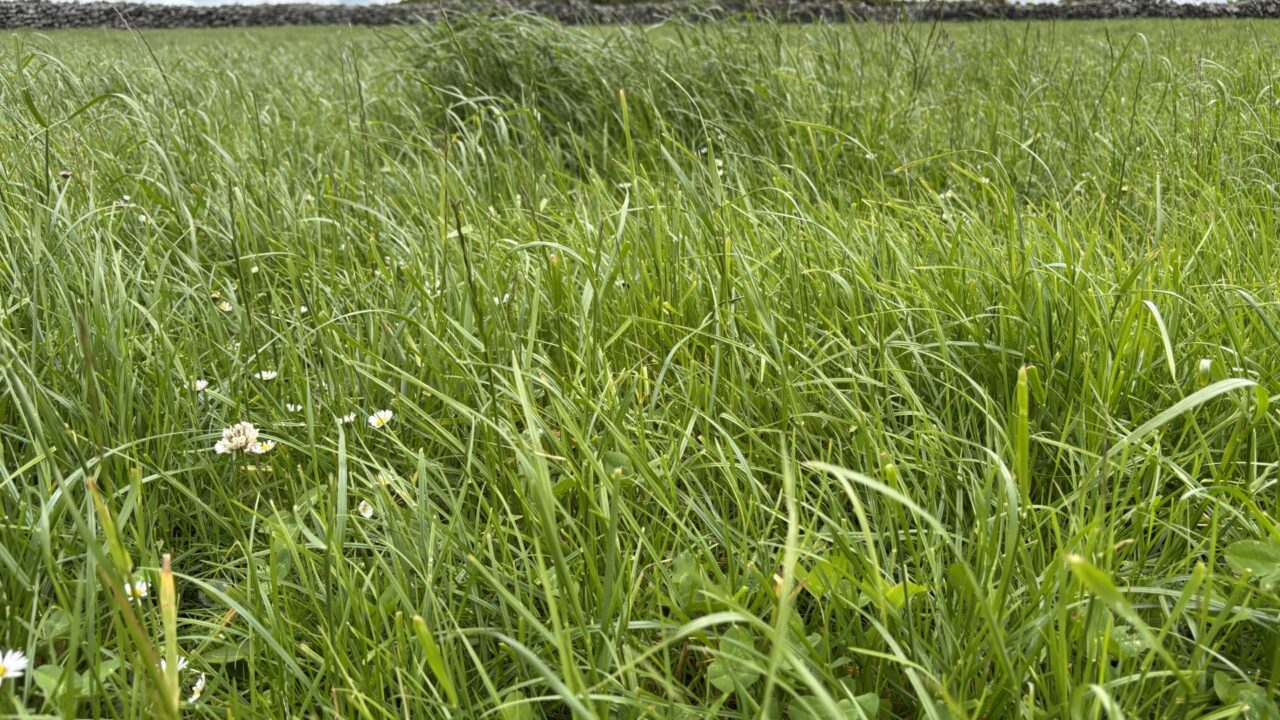
Reseeds were late getting done this year given the poor spring, however there are a few drier places ready to graze now with heavier farms set to follow in a few weeks' time.
Farmers who managed to get ground reseeded during brief dry-spells in early to mid-April will be preparing to let animals in for the first grazing very shortly.
The hard work may be done, but getting the first few grazings right post-reseeding is critical, to ensure successful establishment and regrowth.
We need to be getting in six to eight weeks after reseeding, and considering there has been no soil moisture deficits with grass growing well, that may be airing on the six-week side of things.
Managing reseeds
With growth rates well surpassing demand over the last month, a lot of farms have been taking paddocks out of the rotation for surplus bales.
And considering reseeds were that bit later this year, farmers will be eager to get back in grazing.
However, it is vital for the success of the pasture that you do not go in too early, and even when you do, management needs to be strict.
The reseed should be grazed as soon as the new grass roots are strong enough to withstand grazing – this is tested through the ‘pull test’.
If roots are pulled up, it means that the reseed should be left another few days to anchor into the soil.
Grazing as soon as the grass is fit for it will also allow light to reach the base of the plant, which will encourage tillering and clover establishment.
Ideally we should be aiming for pre-grazing covers of 800–1,000kg dry matter (DM)/ha, which is usually 60-65 days after sowing.
A lot of farms are currently entering paddocks with covers of 1,600-1,700kg DM/ha, but it is crucial not to let happen with reseeds, especially with clover in the sward.
Remember, the first grazing should not be about achieving good residuals or maximising cow's intakes, but rather encouraging tillering and encouraging the grass and clover to take up space and to suffocate out any weeds, especially thistles.
Grazing
The weather will be a challenge once again for the first grazing as it needs to be done in dry conditions to prevent any damage.
The grass will be growing quick, but it is important not to let it grow too strong as cutting silage should be avoided in the first year, as this will inhibit tillering of grass and clover.
It should be grazed frequently throughout the year, always targeting low covers to boost establishment and sward density.
Reseeded paddocks should not be allowed to exceed covers of 1,000-1,100kg DM/ha for at least five to six grazings and they should be grazed late in the final rotation.
The management of clover post-reseeding is essential, as allowing covers to get too high will shade out the clover seedlings.
The management of clover is similar to grass, except grazing should continue at low covers for the first five to six weeks post-sowing.
Spraying and fertilising
Applying chemical nitrogen (N) at the same rate for the first eight to 12 months after sowing is essential, as the clover will not uptake N until then.
After the initial grazing, ideally go in with about 20 units of nitrogen and if you have a phosphorus allowance, go in with about a bag/acre of 18-6-12.
If you have not yet done so, you should be spraying reseeds with a post-emergence herbicide before grazing. Ideally, this should be done 45-55 days after sowing when the paddock has a cover of around 400-500kg DM/ha.
However, with weather challenges over the last two weeks, this may not have been possible, and considering there should be 10 days between spraying and grazing, the window may have passed.
If the first grazing is done right and grass emerges properly, weed infestation should be minor as a good level of tillering will produce dense swards and suffocate the weeds.
Monitor the paddock to see if spraying is needed ahead of the second grazing.