

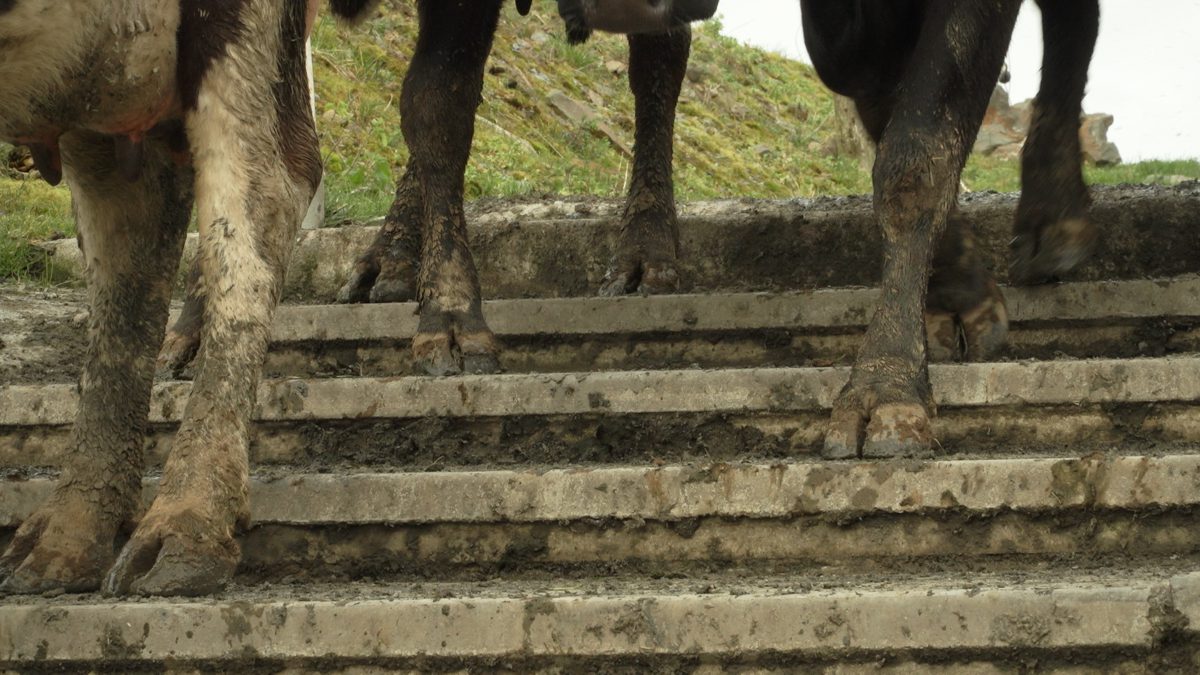
The wet weather still has not let up, however dry farms that can get cows to grass will need to keep an eye out for lameness as they transition from hard concrete to soft land.
As well as that, cows will be used to limited walking during the winter months, so walking on roadways out to paddocks can come as a bit of a shock to an already weakened hoof after calving, especially if drier paddocks are further away.
The majority of farmers still do not have cows out, as most places are remain saturated. However, these farmers also need to be on the lookout for lame cows as they remain on hard concrete post calving.
The weakened hoof
As cows calve down, they release a hormone called relaxin, which causes their ligaments to soften, a process commonly known as the ‘the dropping of the pin bones’.
However, the hormone also softens the ligaments around the animals’ pedal bone, which sits in the hoof of the cow.
This softening can ultimately cause the sole of the hoof to bruise and result in a weaker hoof horn developing and the cow becoming lame.
The hormone affects all cows for a couple of weeks before calving, and continues to affect them for one or two weeks post-calving, meaning that we are in the midst of the high-risk period right now.

As well as that, cows that lose body condition during the calving period will also be at risk.
This is often the case if a cow’s body condition score (BCS) drops under 2.75, as there is a pad of fat within the hoof that acts as an anti-concussion or shock absorber.
This fat becomes smaller as the cow looses weight, which will result in less absorption and can lead to the cow becoming lame.
Therefore farmers need to ensure they are maximising the cow’s dry matter intake (DMI).
Farmers also need to ensure their herd is getting adequate minerals and vitamins.
Preventing lameness
The main thing farmers can do to reduce the onset of lameness is letting cows move at their own pace rather then herding them.
When moving cows around during and prior to calving, they should be moved gently and avoid running, pushing, or competing for space.
Keep roadways as clean as possible, paying particular attention to the area between the roadway and the concrete as pebbles can often flick up.
When a cow stands on a pebble or stone on concrete, there is no give on the concrete, which means the stone will cause bruising on the sole of the hoof.
This concrete to roadway area should constantly be swept and cleaned.
Some farmers install a strip of astro-turf in areas like this for additional comfort.
Carry out routine hoof trimming and mobility scoring to identify mildly lame cows, treating them before the issue severely develops.