

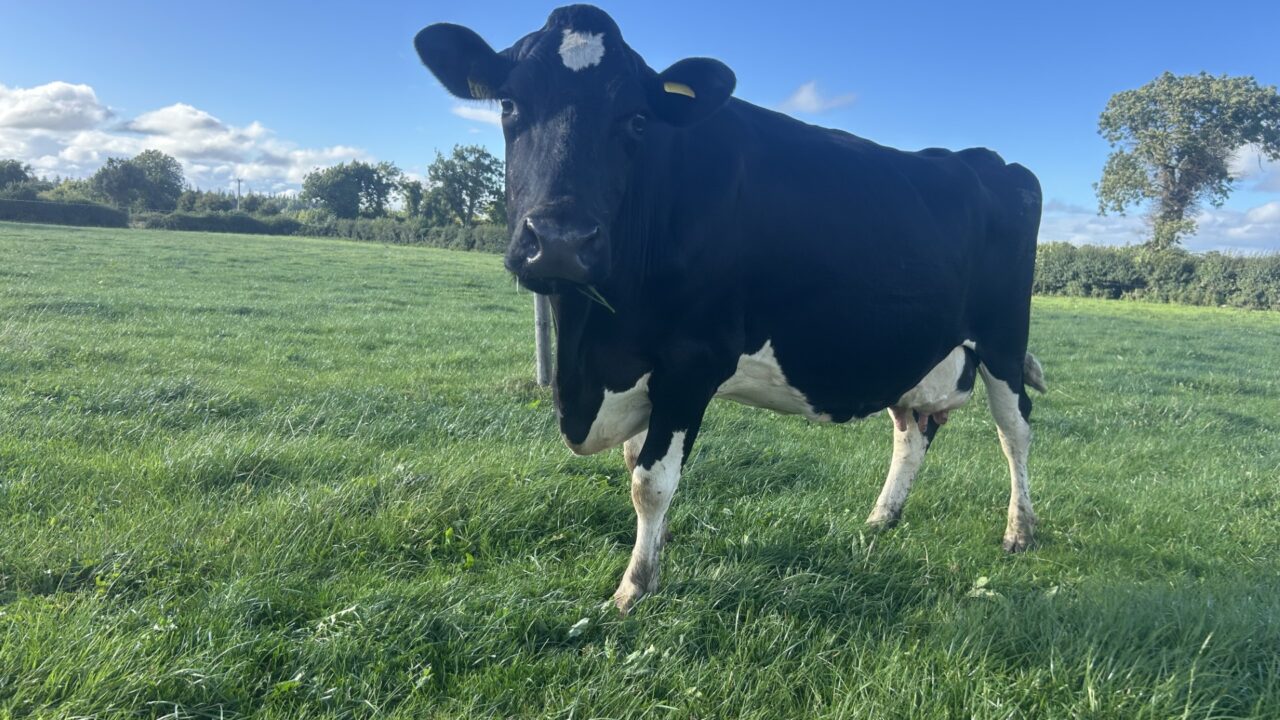
Unsettled weather means spring grazing is still quite messy, but its important to push on as the risk of negative energy balances (NEB) rise.
NEB is often an issue at this stage, as much of the herd begins to reach their peak milk production but have not yet reached their maximum dry matter intake (DMI).
The herd’s DMI is still limited as it can take up to 10 weeks post-calving for them to reach peak DMI, yet they hit peak milk production at the eight-week mark.
That means it’s easy for a cow to go into a NEB over the next two weeks and end up ‘milking off her back’ as she tries to drive on with milk production.
If this does happen, the cow will end up losing condition, which further prolongs the NEB as she pulls energy for maintenance. This can ultimately drive her into a state of ketosis, as well as affecting fertility and even causing lameness issues.
That is why it is important to try and push on with spring grazing and maximise the amount of grass in the cow’s diet.
Grass diet
The importance of getting grass into the diet can never be understated, especially at this stage of the lactation as it can help the cow maintain condition and drive on solids thanks to its richness in energy.
This is especially important during peak production, as it happens to align with dropping milk protein, which is currently averaging 3.41%, according to the Irish Cattle Breeding Federation (ICBF).
However, severe cases – especially in this weather where cows are in and out to grass – can result in milk protein dropping below 3.2%, which will have a big affect on the month’s milk cheque.
Going from high quality spring grass with a UFL of about 1.0-1.1 kg/DM back into sheds, getting fed 70% DMD silage – which only has a 0.8 UFL kg/DM – affects milk protein, as the energy density of the diet and digestibility of the forage is lower.
By keeping grass in the diet, you can drive on milk protein as well as preventing back-pedalling in body condition.
Ideally, you do not want to lose any more than 0.5 units of BCS in the first 10-12 weeks of lactation, especially considering how you will want cows to have at least a 2.75 BCS at breeding in a couple of weeks.
Spring grazing
Dry farms are pushing on hard with spring grazing now, however there is still plenty of heavy farms that have the bare minimum done as conditions are still poor.
Farms that are out at grass are at danger of mowing through it too quickly, with 17% of farms currently dealing with a an average farm cover (AFC) below 700kg DM/ha.
These farms need to pull the reins to ensure they do not overgraze ahead of the second rotation. They should be carrying out grass walks and creating grass wedges/budgets to ensure they maintain an AFC of 650kg/DM.
These farms may be close to starting their second rotation, so ensuring grass growth is equal to or above demand is important.
Aim for 1,200-1,500kg DM/ha on first paddocks grazed when starting the second rotation.
If grass is getting tight, supplement with silage in the shed and continue to let cows out hungry.
13-14kg of grass DM allowance complemented with 4kg of a high-energy dairy nut daily should be sufficient to ensure a good energy balance in at this stage of the lactation.
Herds that are well behind on grazing targets should push to get cows out full-time and aim to have the AFC drop by 100kg DM/ha per week.
Meanwhile, the longer days is improving drying conditions, so herds still struggling to get out at this stage may be able to start motoring now.