

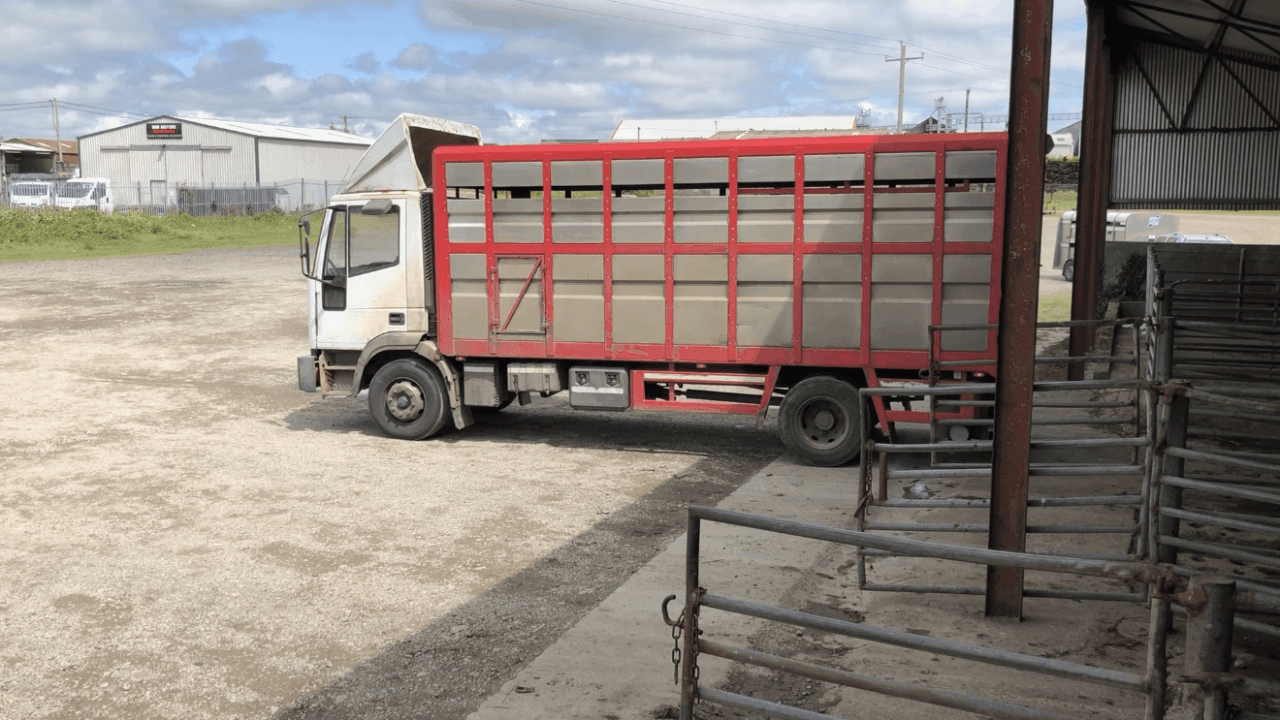
Inspecting livestock at an earlier time during transport could “significantly improve” their welfare and help guide future abattoir practices, a new study from the Royal Veterinary College (RVC) has said.
Researchers from the RVC, which is based in London, argued that animal welfare issues, such as injury, fatigue and distress, can occur during transport but are not always identified under current inspection systems at abattoirs.
The research shows that these issues are more likely to be detected when observing livestock as they are unloaded from vehicles, rather than once they are settled in holding pens.
The study also stated that earlier identification of these concerns could help reduce unnecessary suffering and improve conditions for animals up to the end of life, while supporting food safety standards as well.
Study
The new research, published in the medical journal Veterinary Record, was spearheaded by a team of researchers at the RVC, including final-year veterinary student Sayaka Mochizuki, and senior lecturer in veterinary public health, Kurt Arden.
They set out to understand how effectively welfare issues are identified during routine ante-mortem inspections, comparing observations made during unloading with those carried out later in lairage holding pens.
Over the course of the study, thousands of cattle, sheep and pigs were observed at a UK abattoir by researchers, who deemed assessing livestock during unloading to be the most effective method of detection.
In fact, the researchers noted that welfare problems – such as lameness, slipping and falling – were far more likely to be identified at this stage, with detection rates increasing more than tenfold in some cases.
The study credited the effectiveness to the fact that these welfare issues are much easier to spot while the animals are in motion, rather than while they are stationary.
Checks during unloading
With the findings from their research, Mochizuki and Arden have proposed a new, practical inspection approach to abattoir inspections, which is called Animal-based Measurement (ABMs).
The proposed inspection practice would implement simple visual checks during unloading to identify potential health issues, allowing vets to assess problems earlier and provide quick feedback to farmers and transporters.
Importantly, the researchers argued that this method can be be put in place in real-world settings without disrupting abattoir operations.

Speaking on the research, Arden emphasised that “improving animal welfare does not always require complex solutions, sometimes all it requires is a new perspective.”
He said: “This study demonstrates how simple, practical changes can reduce suffering, and underscores the important role veterinary students play in producing research that delivers real-world impact.”
Mochizuki also commented on the research, highlighting the importance of animal transport for the world economy.
She said: “We have a moral obligation to undertake this process as ethically as possible, and our proposal provides a simple but effective way toward a more improved norm.”
Although it is a study from the RVC, the research was also assisted by Declan Arden from the University of Plymouth.