

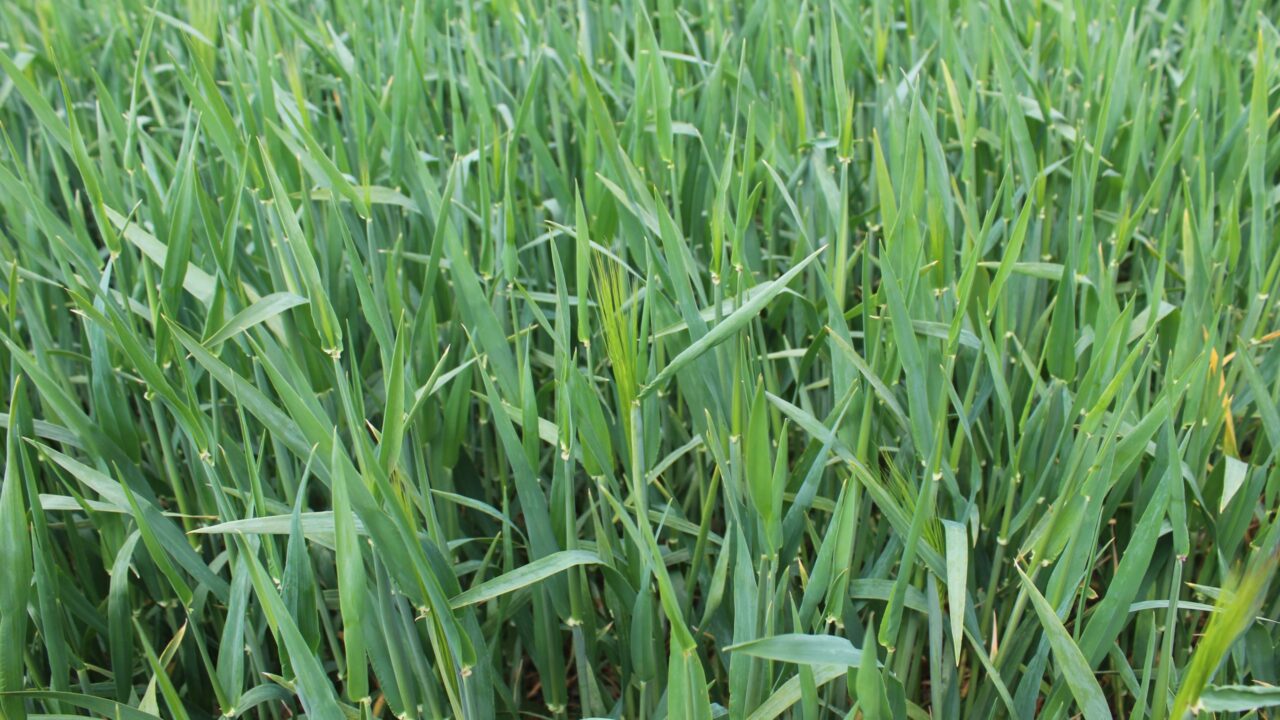
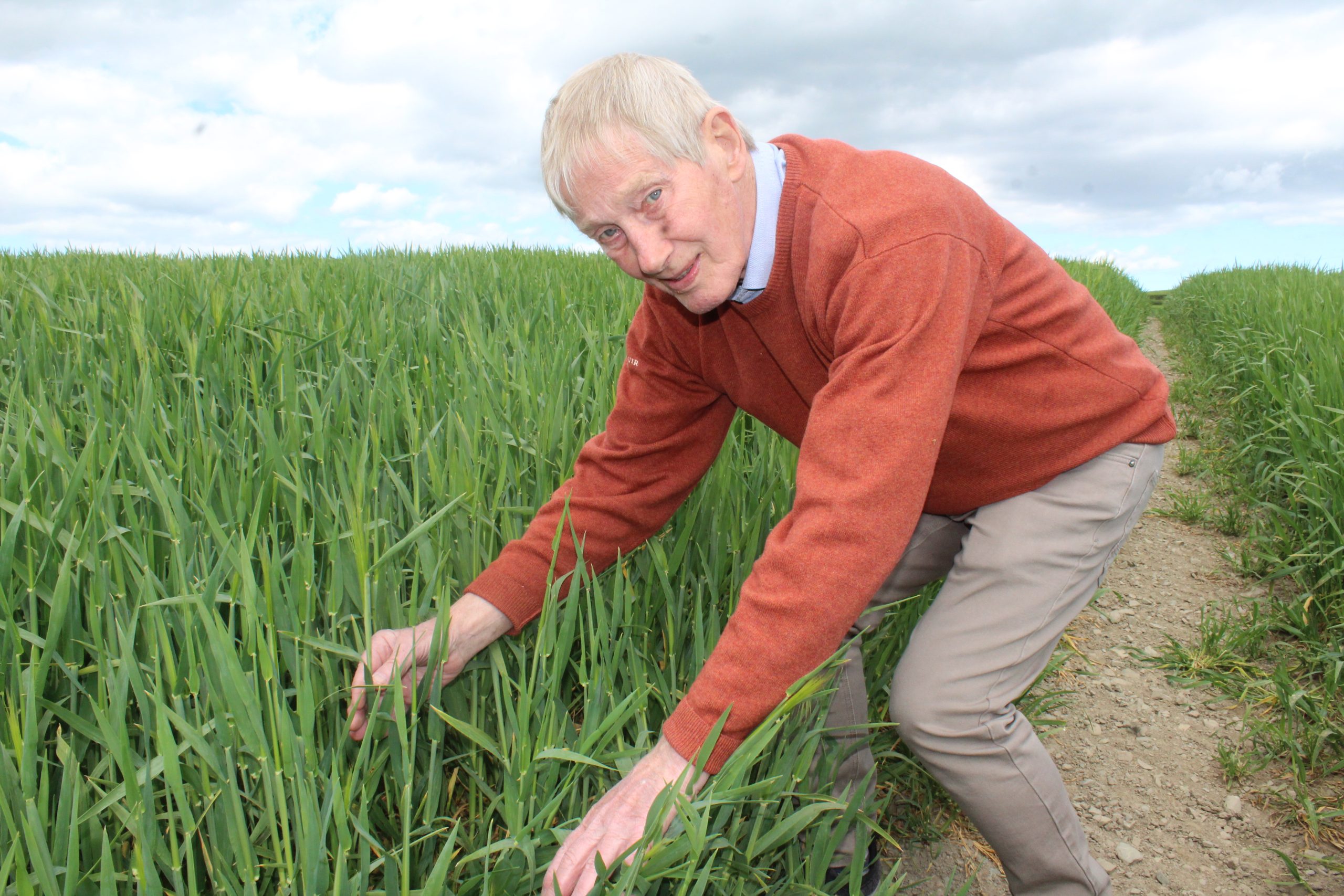
Co. Down cereal grower, Allan Chambers believes that cool, dry weather conditions at this time of the year can boost winter cereal yields.
He explained: “Yield is determined by tiller numbers, the number of grains per tiller, and grain weight.
“I have always held to the view that cool, dry conditions at this time of the year bring about a slower maturation process. In turn, this gives crops a better chance to build yield.
“This year is providing a perfect opportunity to have this theory tested.”
Allan farms close to the village of Clough in partnership with his nephew, Neill Patterson.
Half of the 360ac farm is dedicated to winter cereal production: winter wheat and winter barley. Spring-planted forage maize accounts for the other 180ac.
A big driver for the cropping enterprise is the availability of broiler litter from the farm’s chicken houses.
According to Allan, establishing the right rotation is at the heart of every arable system.
“In our case, the maize is followed by winter wheat and then winter barley. We establish a cover crop mix of stubble turnips and other brassica on winter barley ground directly after harvest,” he said.
“Taking this approach allows us to build up soil organic matters. Sheep have access to the cover crops prior to ploughing in the spring.”
Allan is confirming that all the winter cereal crops are looking very well at the present time.
He continued: “Some of the barley crops are a little bit uneven, a consequence of the very wet winter. However, all our wheat crops have genuine yield potential.
“We sow barley at the end of September and wheat a month later.
“At this stage all of the crop husbandry operations have been completed, where the barley is concerned.
“In the case of the wheat, a flag leaf fungicide and a final ear wash will be applied over the coming weeks.”
Allan and Neil work on the basis of achieving a base 4t/ac yield for wheat each year. The equivalent figure for barley is 3.75t.
“Straw is a valuable component to the overall economics of our cereal enterprise. It can be worth up to £400/ac,” Allan said.
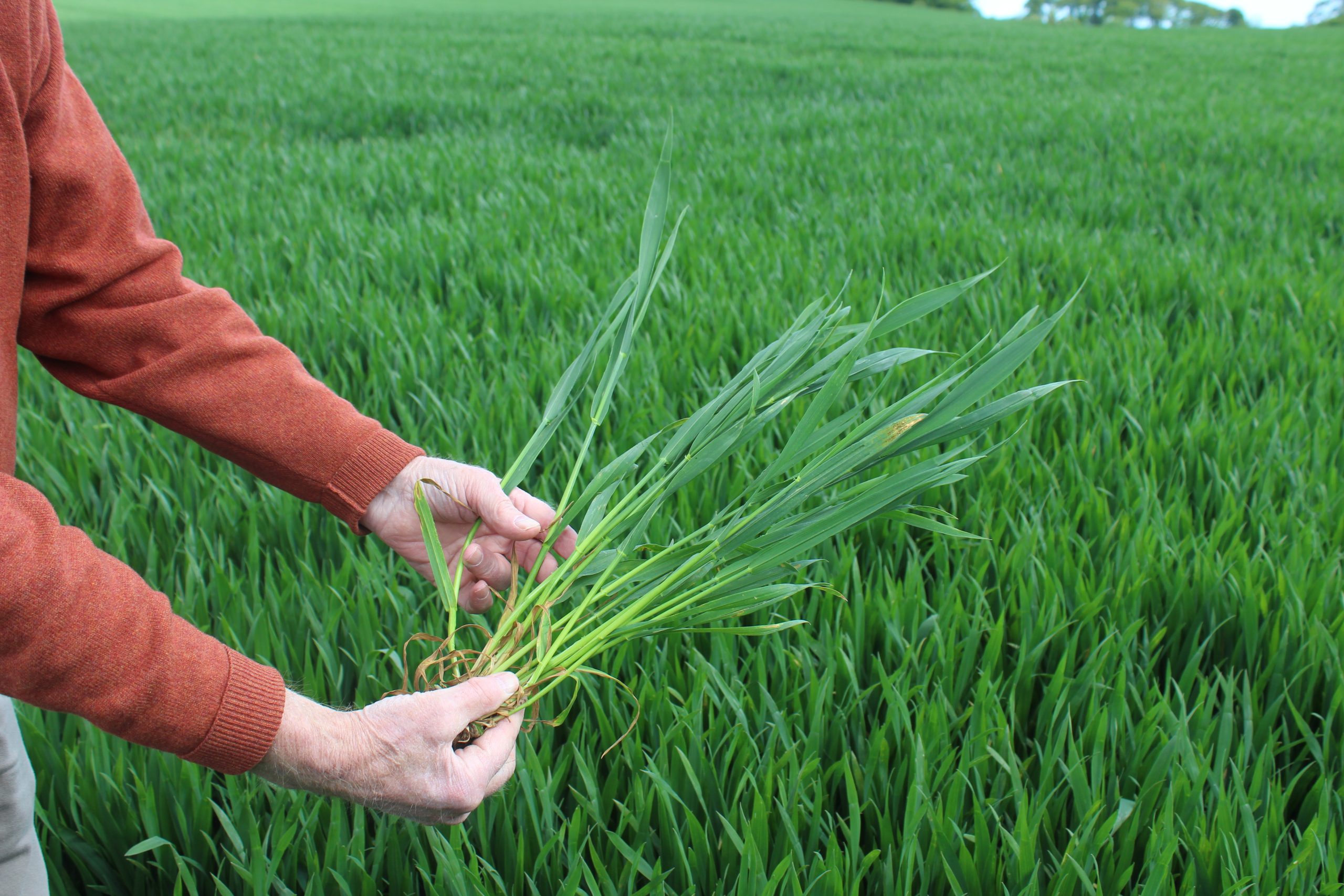
Allan and Neill plant six-row winter barley hybrid varieties only.
“The late September sowing date prevents Barley Yellow Dwarf Virus becoming an issue. We also apply an aphicide to the new established autumn crops,” Allan said.
Where disease prevention in wheat is concerned, septoria remains the key challenge.
“Yellow rust has not been an issue as yet in this part of the world,” he stressed.
“There is significant yield potential in all our winter cereals at the present time. Obviously, the weather over the coming weeks will determine how they actually perform.”
He noted that cereal prices have increased over recent weeks as a result of the war in the Persian Gulf.
“But there is still a lot of grain available in the world.
“Arable farmers will need to secure stringer prices at harvest 2026, given that all their input costs have increased significantly since the beginning of the year,” Allan continued.