

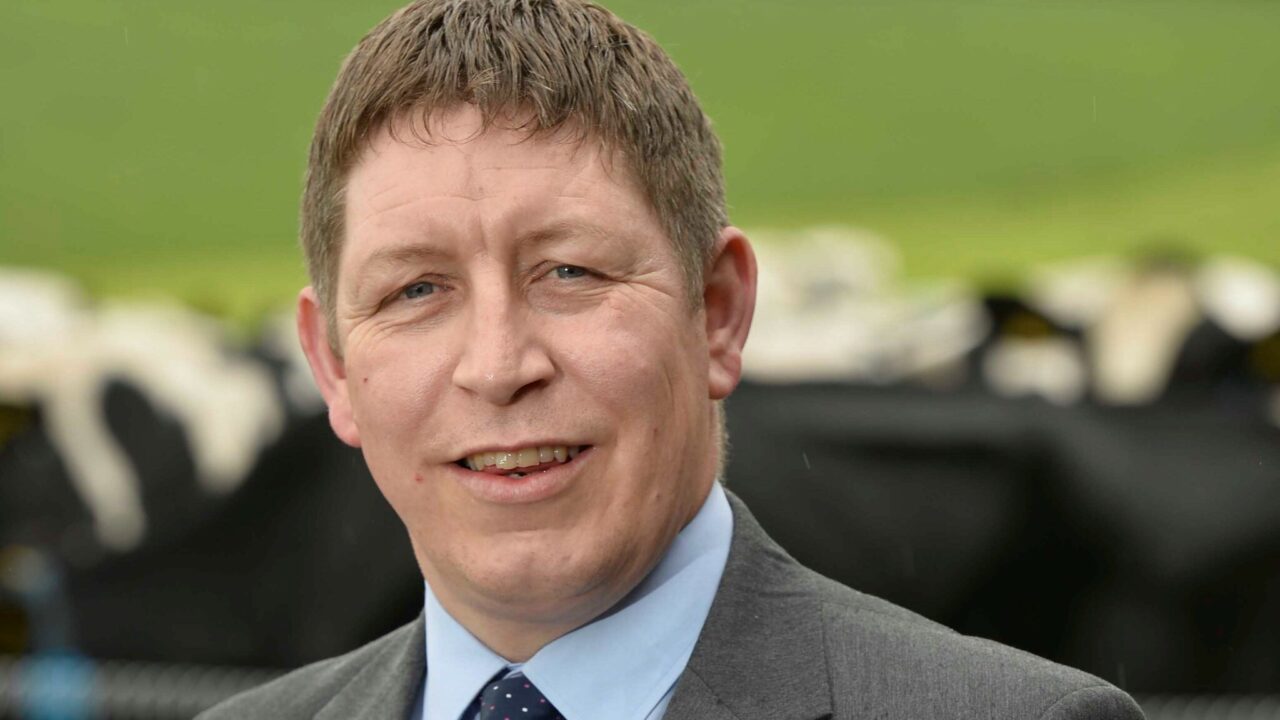
Danske Bank’s head of agriculture, Rodney Brown, is cautiously optimistic regarding the prospects for agriculture in Northern Ireland in 2026.
He told Agriland: “The big concern centred on the significant reductions in world dairy prices recorded during the latter part of 2025.
“On the upside, however, recent increases in Global Dairy Trade auction results would signal a welcome strengthening of international milk markets.
“But it will take time for these changes to impact positively on farm gate returns.”
The Danske Bank representative highlighted that “a significant number” of dairy farms are receiving prices for their milk that are below cost of production levels.
“In such cases it’s important that cash flows are maintained. And Dansk Banks is supporting these businesses accordingly,” Brown said.
“On the back of the strong returns made within the dairy sector during the first nine months, some dairy farmers will be able to relay on their own resources to, at least, partly buffer the impact made by the recent fall in milk price.
“However, others will not be in this situation.”
Brown is conscious that dairy farmers must continue to invest in their businesses in order to remain competitive.
He said: “Fertiliser must be bought at this time of the year in order to grow the grass that stock will need over the coming months.
“Cutting costs recklessly in the short-term makes no sense if such an approach damages the long term prospects of a farming business.”

Meanwhile, it’s steady as she goes for most of the other sectors making up agriculture in Northern Ireland, according to Brown.
“Beef and lamb prices have strengthened again over recent weeks and there is little or no prospect of cattle and sheep prices faltering throughout 2026,” he said.
“And, looking ahead, the prospects for pig production seem to be quite stable.
“But in all instances, it’s a case of driving efficiencies within a business and having a strong control of production costs at all times.”
Northern Ireland farm support
Looking ahead, the Danske Bank representative is very aware of the changes that have already started to take place where the future provision of farm support in Northern Ireland is concerned.
He noted that the Soil Nutrient Health Scheme and the Beef Carbon Reduction Scheme “are already with us” and “will soon be joined” by the new Carbon Footprint measure and the new Bovine Genetics Programme.
“It’s important that farmers support these measures” Brown commented.
“There is very clear evidence to confirm that reductions in carbon footprint and the securing of improved farm efficiency levels go hand-in-hand.
“In addition, farmers will have to have to work around the reality that levels of direct support available from the government will continue to be eroded over the coming years.”
However, Brown is adamant that farmers must be allowed to invest in the future of their farming operations
“Only in this way will they be able to secure higher efficiency, environmental and animal welfare standards that are required to enhance sustainability levels within their businesses,” he said.
“These are objectives that everyone within society at large wants to see secured.
“But this will only happen if our planning, ammonia and other environmental regulations recognise this reality. These are issues that must be addressed in a holistic sense.”
The year ahead will continue to see significant change continuing to impact across agriculture in Northern Ireland.
Brown said: “The market prospects for most sectors seem stable for the period ahead.
“But farm businesses must take nothing for granted. Margins generate profit and future sustainability.
“Making this happen will require farmers to continually seek out those aspects of their operations where key improvements in efficiency can be achieved.”