New project targeting invasive pest attacking NI native ash trees

Protecting Northern Ireland’s native ash trees from an invasive insect is the aim of a new three-year project by Agri-Food and Biosciences Institute (AFBI) scientists.
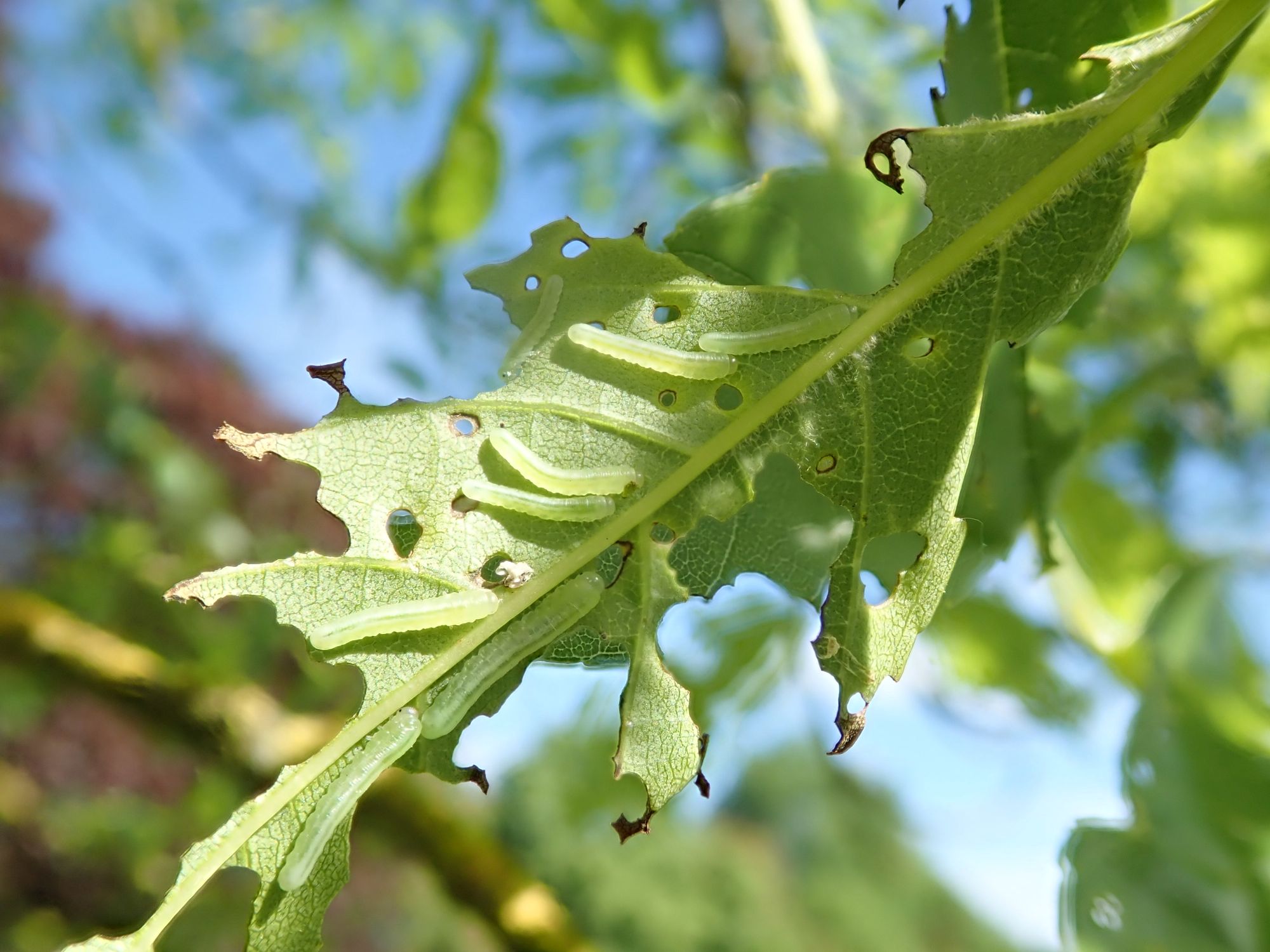
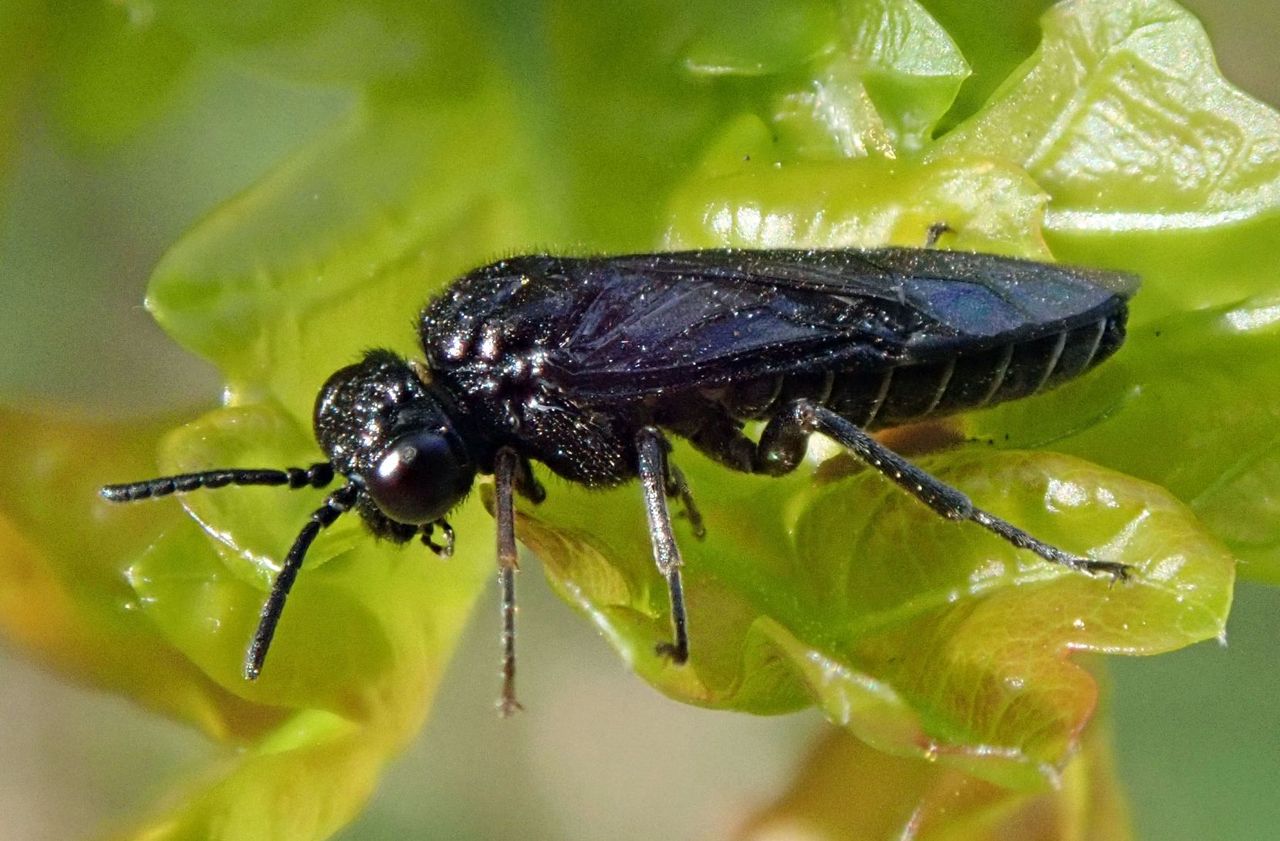
The ash sawfly, which is not native to the island of Ireland, feeds on ash trees between May and June. Ash sawfly larvae can strip a tree bare by eating all the leaves.
The invasive insects, which are native to mainland Europe, were first recorded in Belvoir Park in Belfast in 2016 and have since spread throughout the greater Belfast area and Lisburn.
AFBI scientists will spend the next three years looking at the best, environmentally-friendly, ways to deal with the pest.
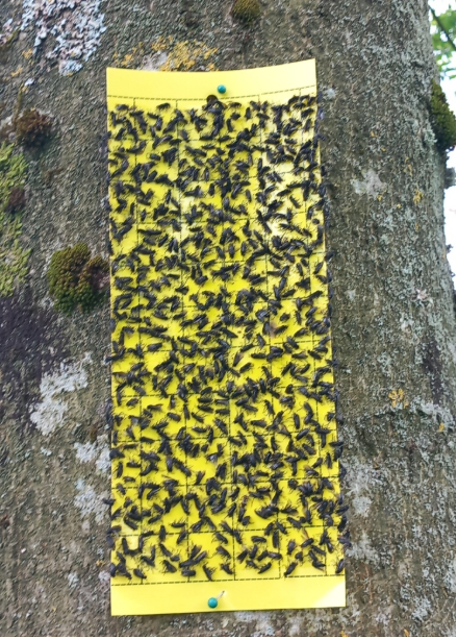
They will test several methods including: using nematodes, which eat ash sawflies; installing mesh traps under the tree canopy; removing adult ash sawflies from trees using a portable vacuum; and installing sticky traps to trunks.
Some traps have already been placed on trees in the Belvoir Park area of Belfast.
During the project, scientists will also carry out laboratory work to find out which smells or chemicals attract or repel the insects.
They will also test different types of ash trees to see if any specific species or varieties are more resistant or better able to cope with the insects.
Although healthy ash trees that have been infested by ash sawfly can usually recover later in the year, their growth will be affected.
Also, if the tree is already suffering from ash dieback – a severe fungal disease which has devastated ash tree populations across Europe – an ash sawfly infestation will eventually be fatal.
Ash sawfly damage
An earlier AFBI study, carried out between 2019 and 2021, found that 90% of trees surveyed along the Lagan Towpath in Belfast showed signs of ash sawfly damage.
Over the past 30 years, outbreaks of ash sawfly have become more common, with ash tree damage reported in Italy, Scotland, England, and Czechia.
Although the ash sawfly is native to Europe, scientists said it appears that weather extremes associated with climate change are facilitating more outbreaks.
Dr. Daniel Leybourne, principal scientist at AFBI, said: “This is a hugely important project which aims to protect the health of native trees across our public parks.
“Over the past 10 years, plant health scientists at AFBI have tracked the expansion of the ash sawfly from Belvoir Park.”
According to Dr. Leybourne, scientists have found that ash sawfly is now widely distributed in and around Belfast, with populations established at Belvoir Park, Lady Dixon Park, Ormeau Park, Shaw’s Bridge, along the Lagan Towpath, Drumbo, and extending out to Stormont Estate to the east, Lisburn to the west and likely as far north as Hazelbank Park.
“Our aim is that this three-year project will develop sustainable solutions which protect our native trees and natural environment from ash sawflies,” he added.