Tips on managing a compact calving pattern in suckler herds

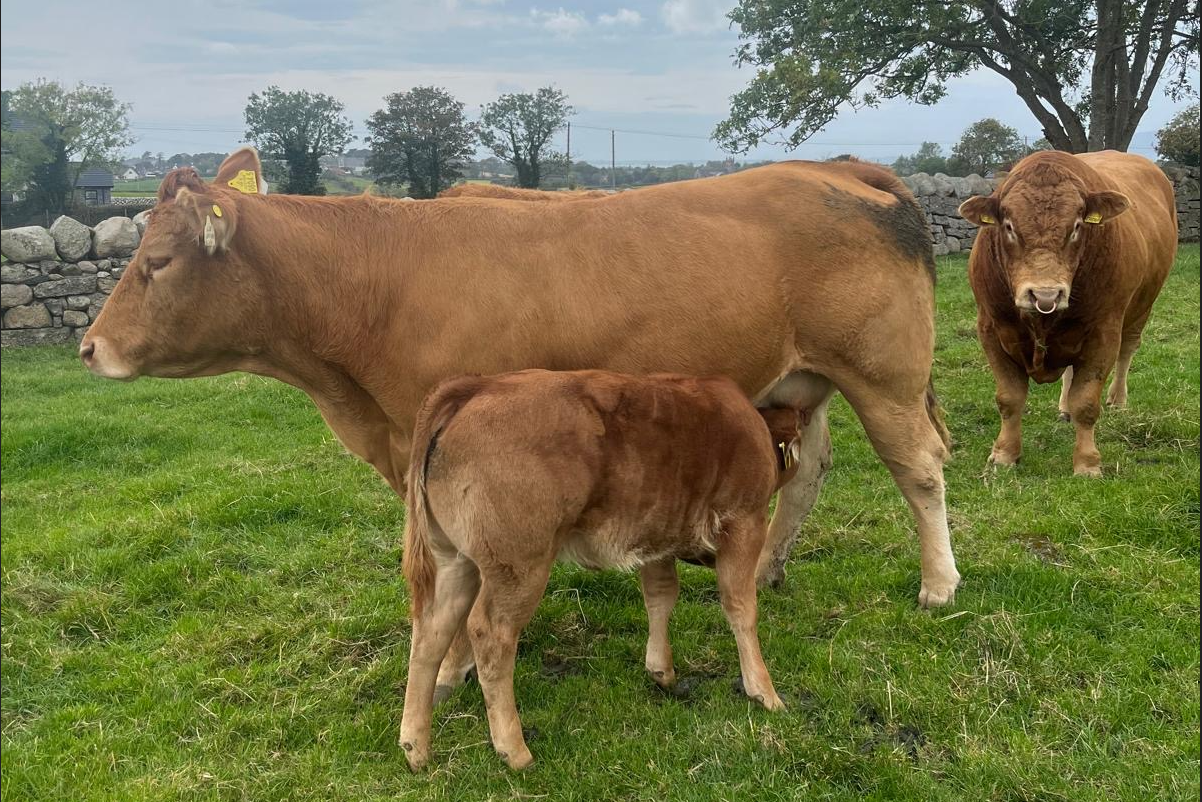
A compact calving pattern in a suckler herd is “one of the clearest indicators of reproductive performance within suckler systems”, according to College of Agriculture, Food and Rural Enterprise (CAFRE) beef and sheep adviser, Jack Friar.
Some suckler farmers often make the case that their facilities are not set up for high numbers of their cows calving at the same time but, where facilities will allow, there are many benefits in maintaining a compact calving pattern.
The CAFRE adviser said: “A tight calving spread is a strong indicator of good herd fertility.
“Where calving is spread over a long period, it usually points to underlying weaknesses in breeding management, submission rate, conception rate or cow recovery after calving.”
Calving interval guidelines
The proportion of cows calving early in the season is one of the key indicators of herd fertility.
Ideally, around 80-90% of cows should calve within the first six weeks of the calving period, according to CAFRE.
Cows that calve early have more time to recover before the next breeding season, while late-calving cows often struggle to maintain the herd calving pattern.
“This is why a compact calving spread tends to reinforce itself in well-managed herds, while an extended calving season often becomes progressively harder to tighten without deliberate action,” the adviser explained.
Friar said that calves born in the first six weeks of the calving season can often be 20-30kg heavier at weaning than those born later, simply because “early born calves also benefit from a longer growing period before weaning”.
Ease of management
Farmers will also know that having one batch of calves of a similar age is often easier to manage than several batches of ranging ages.
“In practical terms, a compact calving pattern improves labour efficiency at calving, simplifies vaccination and dosing programmes, and produces a more even batch of calves for sale or retention.”
Where farmers are working to reduce the duration of the calving season on their farm, the best place to start is with careful management of the breeding season.
“In most suckler herds the breeding season should ideally be limited to 9 to 12 weeks,” Friar advised.
“If breeding is allowed to drift on for too long, late conceptions become late calvings, and those cows often slip later again the following year.”
Submission rates
Friar advised suckler farmers to monitor submission rates early in the breeding season.
He said that this “is one of the most useful ways of assessing whether the herd is on track”.
“If too many cows are not cycling or not being served early, the calving pattern will widen.
“Poor submission rate may indicate cows are in inadequate body condition, recovering slowly from calving, not showing heat clearly or being missed through poor observation.”
Heat detection
Accurate heat detection is essential when managing breeding.
Farmers should observe cows regularly during the breeding season to identify animals showing signs of heat such as mounting behaviour, restlessness, standing to be mounted, and increased activity.
He said that observation needs to be consistent rather than occasional, particularly in herds using artificial insemination (AI).
“Some farms may also use heat detection aids such as tail paint, chin-ball harnesses, teaser bulls or activity monitors.
“These tools can improve the accuracy of heat detection and help ensure cows are served early in the breeding period.”
Conception rate
Conception rate is the next major factor influencing calving spread.
In well-managed suckler herds, first service conception rates of 60-70% are achievable.
When conception rate falls, attention should be given to:
- Bull fertility;
- Service timing;
- Cow health;
- Nutrition;
- Heat detection accuracy.
“There is little value in identifying heats accurately if cows are then being served at the wrong time or by a sub-fertile bull,” Friar said.
Bull management is therefore central to maintaining a compact calving pattern. Bulls should be fertile, fit and in good working condition before breeding starts, he stressed.
“Bulls should also be physically sound, particularly in feet and legs, as lame or unfit bulls may fail to serve cows effectively.
“In natural service systems, close observation of bull activity early in the breeding season can provide useful reassurance that cows are being served and that the bull is working normally.”
Attention to late calvers
Late-calving cows require particular attention. Cows that calve late have less time to recover before breeding begins again, and these animals are more likely to slip further behind the herd calving pattern.
“Monitoring late-calving cows closely for body condition, calf demand and return to heat is important,” the CAFRE adviser said.
“In some cases, repeatedly late-calving cows may need to be culled if they are consistently failing to maintain the herd pattern.
“Carrying too many regularly late cows can make it very difficult to tighten the calving season.”
Herd recording
Accurate herd recording is essential if farmers are to manage calving spread properly.
“Recording calving dates, breeding dates, service dates and pregnancy outcomes allows reproductive performance to be monitored rather than guessed at.”
Records help to identify which cows are repeatedly late calving, which cows fail to conceive promptly and whether the breeding season is going to plan.
“Without records, an apparently small drift in calving pattern can continue unnoticed from year to year.”
Scanning
Pregnancy scanning is “another valuable management tool,” Friar said.
Scanning cows around 30-50 days after the end of the breeding season allows empty cows to be identified early and gives a clearer picture of conception spread.
In well-managed herds, the proportion of barren cows should ideally remain below 5%.
Empty cows reduce overall herd efficiency and consume feed without producing a calf.
Early identification of empty cows allows culling or management decisions to be made before winter feed costs accumulate.
“By controlling the breeding season, monitoring submission and conception rate, using accurate heat detection, scanning cows and taking action on late-calving animals, farmers can maintain a compact calving pattern and improve overall herd performance,” he said.